
Overview
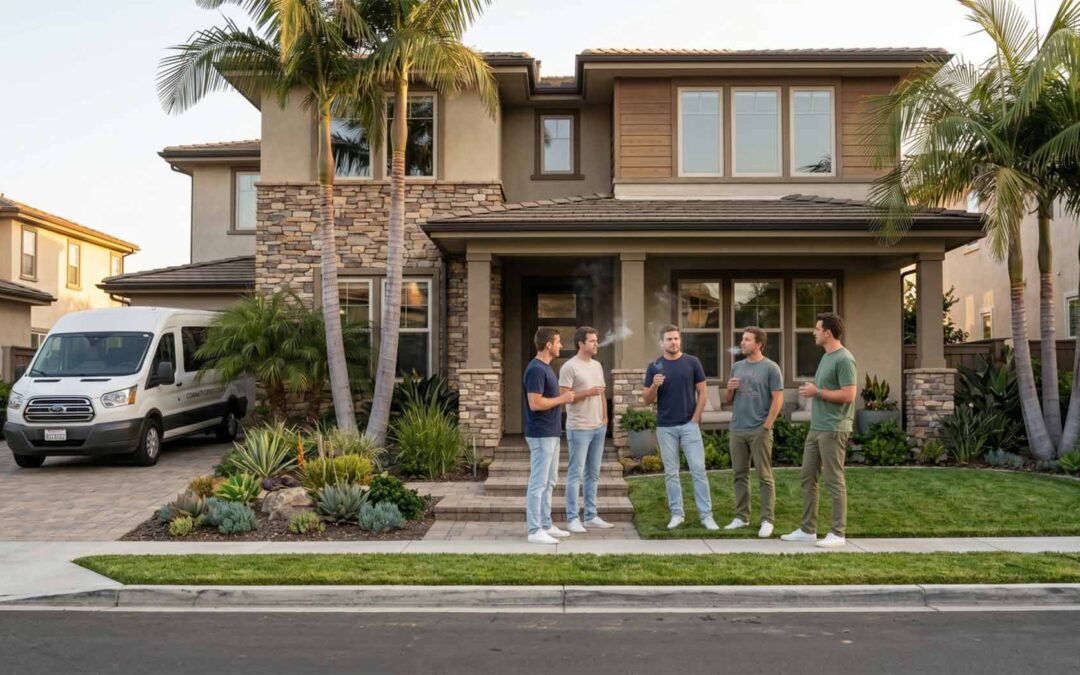
Few issues generate more tension inside California HOAs than sober living homes. Homeowners often worry about increased traffic, smoking, noise, parking congestion, litter, vandalism, or criminal activity associated with residents recovering from drug or alcohol addiction. Some residents also object to the idea of numerous unrelated adults living together inside what was designed and marketed as a traditional residential neighborhood. Those are all legitimate concerns.
Despite those concerns, however, California law bars HOAs from banning qualifying alcohol and drug recovery facilities serving six or fewer persons. For one thing, Health and Safety Code 11834.23 and 11834.25 not only include such facilities within the definition of “single-family use,” but both statutes explicitly exclude such facilities from the definition of business or commercial use. This means an HOA generally cannot rely on otherwise enforceable residential-use, single-family-use, or no-business restrictions to ban a sober living home serving six or fewer residents. Those statutes matter because HOAs have historically tried to force sober living homes out of residential communities by labeling them as businesses, boarding houses, short-term rentals, or non-family occupancy arrangements.
That does not mean HOAs lose all authority over sober living homes or the conduct occurring inside them. California law does not immunize sober living facilities from neutral nuisance restrictions, parking rules, smoking restrictions, safety regulations, or conduct-based enforcement that applies equally to every resident in the community. A sober living facility that generates repeated parking violations, dangerous traffic conditions, vandalism, excessive noise, litter, or other genuine nuisance conditions may still face enforcement under otherwise lawful HOA rules. What matters is whether the HOA is targeting actual conduct or attempting to enforce a de facto prohibition of the facility itself.
This issue also requires nuance because not all sober living homes operate the same way. Poorly managed facilities do frequently create legitimate neighborhood concerns and place substantial strain on surrounding communities. At the same time, conscientious operators, and I’m familiar with some of those, often work aggressively to minimize disruption, enforce strict house rules, manage parking and transportation issues, and maintain the surrounding property at a high level.
This Fact Sheet explains California law when it comes to sober living homes, including the difference between lawful conduct-based enforcement and unlawful attempts to pretextually prohibit sober living facilities altogether.
Key Points
California law sharply limits the ability of HOAs to prohibit sober living homes serving six or fewer residents. At the same time, those protections do not transform sober living facilities into enforcement-free zones. This statutory framework requires a careful distinction between unlawful attempts to ban sober living homes outright and lawful enforcement directed at actual misconduct, nuisance conditions, safety issues, or rule violations occurring at a particular property.
- California law prohibits HOAs from banning sober living homes serving six or fewer people. Before Health and Safety Code 11834.23 and 11834.25 went into effect, HOAs frequently used governing document provisions barring businesses or requiring single-family use to exclude sober living homes from their communities. However, now that these statutes are in effect, alcohol and drug recovery facilities serving six or fewer residents have acquired protected status. These statutes explicitly exclude qualifying sober living facilities from the definition of a business or commercial use and declare that operators use them as single-family properties. Consequently, HOA boards cannot rely on residential-use restrictions, no-business rules, single-family occupancy limits, or similar CC&R provisions to prohibit these facilities outright.
- Sober living homes are not protected from neutral nuisance and conduct-based enforcement by an HOA. This is where many HOA disputes become highly fact-specific. The law protects sober living homes with fewer than seven residents from categorical bans, but it does not prevent HOAs from enforcing neutral rules that apply equally to everyone in the community. If a sober living facility generates repeated parking violations, excessive noise, dangerous traffic conditions, vandalism, litter, smoking violations, threats to resident safety, or other genuine nuisance conditions, the HOA may still enforce otherwise lawful rules addressing those problems.
- The distinction between conduct-based enforcement and de facto prohibition is critical. An HOA may generally enforce neutral parking restrictions against residents or visitors who repeatedly block fire lanes, exceed parking limits, or create dangerous traffic congestion during shift changes or group transportation pickups. Likewise, an HOA may enforce generally applicable nuisance restrictions if residents repeatedly violate quiet hours, smoke in prohibited areas, damage common areas, or create documented safety concerns. The legal problem arises when the HOA uses those issues as a pretext to eliminate the sober living home itself rather than addressing the underlying conduct.
- Despite their protected status, sober living homes create real-world challenges for both HOAs and other homeowners. Very few homeowners are happy to learn that the home located next door to their house will be operating as a sober living facility. That’s simply a fact. And there are very good reasons to be wary of such facilities.
- Not all sober living homes are created equally. Some facilities are poorly managed, and generate repeated complaints involving noise, smoking, criminal activity, vandalism, parking problems, or deteriorating property conditions. Others operate quietly and responsibly with little noticeable impact on surrounding residents. Conscientious operators, for example, work very hard to make themselves good neighbors by imposing strict internal house rules, prohibiting disruptive behavior, actively supervising residents, coordinating transportation logistics carefully, and working aggressively to minimize disruption to neighboring homes. The former can be nightmares for homeowners who wanted nothing more than to live in a family neighborhood, and are therefore often the subject of nuisance lawsuits. [Parking in particular is a frequent source of tension between HOA members and HOAs on the one hand, and residents of sober living homes on the other, because one of the services offered to the residents of sober living homes is transporting them to offsite counseling sessions, medical appointments, treatment programs, or recovery meetings using large passenger vans.]
- If you are navigating a dispute involving a sober living home, call the HOA attorneys at MBK Chapman. Because California law balances the protected status of these facilities against the rights of the community to be free from nuisances, these cases require expert legal analysis. The HOA attorneys at MBK Chapman understand how to distinguish between illegal discrimination and the enforcement of legitimate, neutral HOA standards. If you need to evaluate whether an HOA is overstepping its authority or failing to address a genuine nuisance, call MBK Chapman.
While California law prohibits HOAs from banning small sober living homes, it does not grant these facilities a license to create community-wide nuisances. Enforceable HOA governance depends on a board’s ability to distinguish between a resident’s protected status and their actual conduct. Once homeowners and boards understand this framework, they can pivot away from illegal categorical bans and focus instead on enforcing the neutral parking, safety, and nuisance rules that preserve the quality of life for every resident in the neighborhood.
FAQs
Can my California HOA ban a sober living home?
No, not if the sober living facility serves six or fewer residents and falls within the protections of Health and Safety Code 11834.23 and 11834.25. Those statutes classify qualifying alcohol and drug recovery facilities as residential and single-family use rather than business or commercial activity. As a result, HOAs cannot rely on no-business rules, residential-use restrictions, or single-family occupancy restrictions to prohibit those facilities outright.
Can my HOA enforce parking, smoking, or nuisance rules against a sober living home?
Yes. California law does not immunize sober living homes from neutral HOA rules that apply equally to everyone else in the community. HOAs may still enforce lawful restrictions involving parking, smoking, excessive noise, litter, vandalism, dangerous traffic conditions, or other genuine nuisance conditions.
Why does California law treat sober living homes as “single-family use” even when unrelated adults live there?
Because Health and Safety Code 11834.23 and 11834.25 expressly classify qualifying alcohol and drug recovery facilities serving six or fewer persons as residential and single-family use for purposes of contracts, deeds, and covenants governing real property. That statutory classification overrides reality.
Can an HOA use repeated rule enforcement to pressure a sober living home into leaving the community?
No. An HOA may enforce legitimate, neutral rules addressing actual misconduct or nuisance conditions, but it cannot use selective enforcement, excessive hearings, arbitrary fines, or pretextual rule violations as a disguised method of forcing a protected sober living home out of the neighborhood. Courts and statutes focus on whether the HOA is addressing genuine conduct problems or attempting to accomplish indirectly what California law prohibits directly.

About Michael Kushner
Michael Kushner is a California attorney with over 30 years of experience representing homeowners in disputes with their HOAs. He is widely regarded as California’s leading homeowner-side HOA attorney, and has built one of the state’s most prominent law practices dedicated to holding HOAs accountable under the Davis-Stirling Act and California law.
In addition to his law firm’s work, Michael is a recognized lecturer, author, and the host of the hit HOA HELL podcast, where he provides homeowners living in HOA-governed communities with clear, practical strategies for dealing with bad HOAs. He’s also the author of the best-selling book, HOA HELL | California Homeowners’ Definitive Guide to Beating Bad HOAs, which has become a go-to resource for both homeowners seeking real-world solutions to their HOA disputes, as well as those good HOA board members who are interested in doing a good job.
About MBK Chapman Fact Sheets
Homeowners searching for answers online will often come across articles that appear authoritative, but are actually written as search-engine marketing content rather than by an experienced HOA lawyer. These pieces tend to prioritize keyword density over clarity, accuracy, or legal context, which often leaves homeowners more confused than informed.
At MBK Chapman, our Fact Sheets are part of our HOA Law Library and are written by Michael Kushner, an HOA lawyer with decades of hands-on experience representing California homeowners. In fact, Michael Kushner is the HOA lawyer who pioneered the systems and strategies used by some of California’s most successful homeowner-side HOA law firms.
Each Fact Sheet is deliberately concise, statute-based, and designed as a quick-reference guide to help homeowners understand key HOA laws and enforcement rules at a glance.
AND DON’T FORGET TO TUNE INTO MY PODCAST, HOA HELL
YOU CAN ALSO ORDER MY GROUNDBREAKING BOOK
HOA HELL | California Homeowners’ Definitive Guide to Beating Bad HOAs
Amazon | Barnes & Noble
