
Overview
For most California homeowners, a neighbor’s neglected property isn’t just an eyesore, it’s a direct threat to their own home’s value. Neglected landscaping, overflowing trash, blinding exterior lighting, poorly maintained homes, unauthorized architectural changes, and hoarding conditions, whether they involve visible piles of debris or invisible hazards like rodent infestations and fire risks, routinely trigger conflict because these issues directly invade and damage a neighbor’s separate interest. While boards often focus on community aesthetics, the real friction occurs between homeowners who are far less concerned with general neighborhood appeal and far more concerned with protecting their own property, their own safety, and their own financial investment from a neighbor who refuses to correct the problem.
While neither the Davis-Stirling Act nor an HOA’s CC&Rs requires homeowners to maintain magazine-perfect properties, most California HOAs have in place architectural standards, maintenance obligations, lighting restrictions, landscaping rules, and nuisance provisions specifically designed to prevent one homeowner’s property condition from negatively affecting surrounding homes or the common areas. But once conditions in an owner’s unit violates those standards to the point where it begins interfering with another homeowner’s use and enjoyment of their property, legal disputes erupt.
This Fact Sheet explains how HOA governing documents regulate visual blight, excessive lighting, maintenance failures, hoarding-related conditions, and architectural violations inside California HOA communities, and when those issues evolve from ordinary aesthetic disagreements into disputes that directly affect neighboring homeowners’ property rights, safety, quiet enjoyment, and financial investment. It also examines why HOA boards that refuse to consistently enforce these restrictions often allow relatively minor problems to escalate into far more serious disputes later.
This is the third installment in a six-part series examining nuisance disputes inside California HOAs. In the first Fact Sheet in this series, “California HOA Nuisance Laws: The Complete Homeowner Guide,” I explained the broader legal framework governing nuisance claims within both the context of HOA life and under Civil Code 3479. In the second Fact Sheet, “California HOA Noise Complaints: When Noise Becomes a Nuisance,” I focused on noise-related nuisances. The remaining Fact Sheets in this series will include:
- “California HOA Odor Complaints: Smoke, Trash, and Other Nuisances.”
- “Toxic Neighbors in California HOAs: Harassment, Threats, and Nuisance Conduct.”
- “Does Your California HOA Have to Investigate Nuisance Complaints?”
Key Points
Visual blight disputes inside California HOA communities rarely involve just arguments about taste, style, or aesthetics. Most homeowners do not contact their HOA because they dislike a neighbor’s decorating preferences. They complain because they believe the neighboring property condition directly affects their own property rights, safety, quiet enjoyment, or financial investment. In many HOA communities, these disputes become especially contentious because while the governing documents already prohibit many of the conditions at issue, some weaker HOA boards hesitate to consistently enforce those restrictions once the conflict becomes personal or politically divisive within the community.
- Visual blight becomes legally significant when property conditions begin materially interfering with neighboring homeowners’ quiet enjoyment or safety. In HOA communities, visual blight-related disputes usually escalate after homeowners conclude that the condition regarding an offending neighbor’s property is no longer confined to the offending property itself, but instead directly affects surrounding homes or daily living conditions within the community. In HOA communities, homeowners frequently become frustrated not simply because they dislike what they see, but because they believe the HOA allows one owner’s property condition to negatively affect everyone living nearby.
- Not every unattractive property condition qualifies as an actionable nuisance. The Davis-Stirling Act and most HOA governing documents do not require homeowners to maintain perfect landscaping, flawless paint, or universally admired design choices. Homeowners frequently disagree about aesthetics, and HOA boards generally cannot enforce subjective personal preferences untethered from actual governing-document violations or meaningful interference with neighboring properties. The fact that a particular homeowner dislikes another homeowner’s landscaping style, exterior color, or decorative choice does not automatically transform the condition into an actionable nuisance.
- The most common visual blight disputes involve four recurring categories of property conditions. While the underlying facts vary from HOA to HOA, the overwhelming majority of visual blight-related disputes tend to involve excessive lighting, neglected maintenance, hoarding-related conditions, or unauthorized exterior modifications.
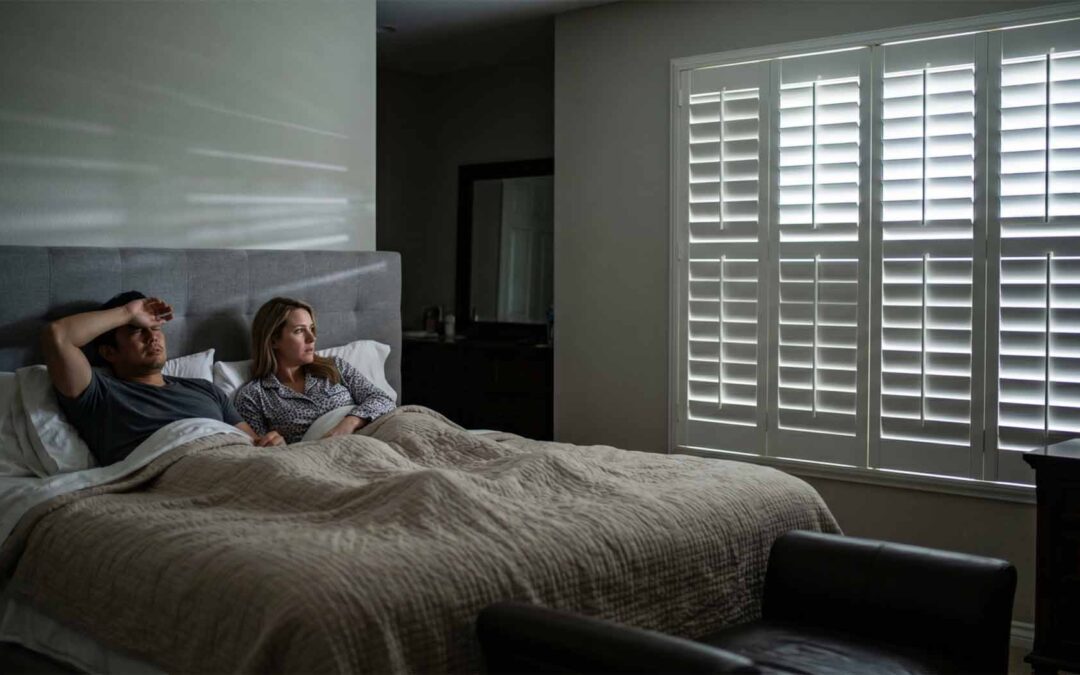
- Excessive exterior lighting is often at the heart of visual blight nuisance cases. Bright floodlights, improperly directed security lighting, decorative lighting systems, and excessively illuminated exterior features frequently trigger disputes when the light repeatedly shines into neighboring homes or properties. These disputes become more serious when the lighting interferes with sleep, privacy, nighttime use of the property, or ordinary residential living.
- Neglected property and deferred maintenance frequently trigger HOA disputes. In many California HOA-governed communities, these disputes arise out of recurring conditions such as vegetation encroaching onto neighboring lots or common areas, overgrown trees or roots creating interference or damage concerns, garage doors left open for extended periods exposing severe interior clutter, or exterior conditions that the HOA inconsistently enforces despite repeated complaints from surrounding homeowners. These disputes often escalate because neighboring homeowners believe the HOA allows one owner’s property condition to continue interfering with nearby homes while it refuses to consistently enforce the governing documents.
- Interior hoarding conditions frequently create serious nuisance-related disputes inside California HOAs. Hoarding is a serious psychological condition that doesn’t become a problem for neighbors until the inevitable results of hoarding start leaking out of the affected unit. This “leaking” most commonly manifests in rodent infestations, insect activity, mold growth, odors, sanitation problems, water intrusions, and heightened fire danger. In condominium and townhome communities especially, homeowners living closest to the affected unit often become concerned not only about property damage, but also about health and safety risks spreading into their own homes.
- Unauthorized architectural modifications are another frequent cause of nuisance disputes. Homeowners often alter exterior components without obtaining required HOA approval, particularly involving fences, lighting, landscaping, exterior structures, paint schemes, patios, or visible additions. Disputes invariably arise when the unauthorized modification negatively affects neighboring sightlines, lighting conditions, drainage, privacy, aesthetics, or property values.
- Most California HOA governing documents already prohibit these types of conditions. Architectural standards, nuisance provisions, maintenance obligations, landscaping rules, and lighting restrictions exist in most California HOAs specifically to prevent one homeowner’s property condition from negatively affecting surrounding owners or the community as a whole. As a result, these disputes frequently become straightforward governing-document enforcement matters rather than abstract disagreements about appearance.
- HOAs can’t ignore serious visual blight complaints involving governing-document violations. Once credible complaints arise involving conditions that potentially violate architectural standards, maintenance obligations, nuisance restrictions, or lighting rules, HOA boards have an obligation to investigate the issue and enforce their governing documents. In other words, HOA boards cannot simply dismiss these disputes as subjective neighbor-to-neighbor disputes when the conditions complained about violate enforceable restrictions contained in the governing documents. [If you’re interested in learning more about what happens when HOAs refuse to enforce their governing documents, read my Fact Sheet “What If Your California HOA Refuses to Enforce Its Own Rules?” You might also want to watch a 90-second short from my podcast, HOA HELL, titled “Does My HOA Have to Enforce Every Violation of the CC&Rs?”]
- Strong documentation often determines the outcome of visual nuisance disputes. Photographs, written complaints, inspection reports, correspondence, maintenance records, architectural records, and evidence showing the spread or impact of the condition often become critically important once disputes escalate. Homeowners who carefully document how the condition affects their own property usually place themselves in a much stronger enforcement position than homeowners relying solely on generalized complaints or emotional frustration.
- Disputes involving nuisance provisions, architectural restrictions, or maintenance obligations can create attorneys’ fees exposure under Civil Code 5975. When litigation seeks to enforce governing-document provisions relating to nuisance conditions, maintenance failures, lighting restrictions, or unauthorized modifications, the prevailing party may recover attorneys’ fees and costs under the Davis-Stirling Act. That fee-shifting exposure frequently becomes one of the most important strategic considerations once these disputes escalate toward litigation.
- If your HOA refuses to address serious visual blight, lighting, maintenance, or architectural nuisance issues, call the HOA attorneys at MBK Chapman. Visual blight and related nuisances inside California HOA communities are a frequent source of neighbor-to-neighbor and homeowner-to-HOA disputes. The HOA attorneys at MBK Chapman, California’s most respected homeowner-side HOA law firm, have decades of combined experience representing California homeowners in complex HOA disputes involving visual blight, deferred maintenance, hoarding-related conditions, architectural violations, and HOA inaction.
Inside California HOA communities, disputes involving ugly properties, excessive lighting, hoarding conditions, deferred maintenance, and unauthorized exterior modifications are rarely just arguments about aesthetics. Once those conditions begin interfering with neighboring homeowners’ quiet enjoyment, safety, or property interests, the dispute usually becomes an enforceable HOA issue governed by the nuisance provisions, architectural standards, and maintenance obligations already contained in the governing documents.
FAQs
Can excessive exterior lighting qualify as a nuisance in a California HOA?
Yes. Exterior lighting can become an actionable nuisance when it repeatedly shines into neighboring homes, patios, balconies, or yards and materially interferes with another homeowner’s quiet enjoyment of their property.
Can an HOA force a homeowner to remove unauthorized exterior modifications?
Yes. Most California HOA governing documents require homeowners to obtain architectural approval before making visible exterior changes to the property. Unauthorized fences, patios, lighting systems, exterior structures, paint schemes, landscaping changes, and similar modifications frequently violate architectural standards contained in the CC&Rs or architectural guidelines. Once those violations affect neighboring homeowners or visibly conflict with community standards, the HOA has the authority to require corrective action.
Can hoarding inside a home become an HOA nuisance issue even if neighbors cannot see it?
Yes. Interior hoarding conditions frequently become serious HOA disputes once they begin creating consequences extending beyond the unit itself. Rodent infestations, insect activity, odors, mold, water damage, sanitation problems, and heightened fire risks all affect neighboring homes and common areas, particularly in condominium and townhome communities.
Can neighboring homeowners sue if the HOA refuses to enforce obvious visual blight violations?
Yes. When an HOA refuses to enforce architectural standards, maintenance obligations, nuisance provisions, or other governing-document restrictions despite repeated complaints and clear evidence of violations, neighboring homeowners may pursue claims relating to the HOA’s failure to enforce the governing documents.

About Michael Kushner
Michael Kushner is a California attorney with over 30 years of experience representing homeowners in disputes with their HOAs. He is widely regarded as California’s leading homeowner-side HOA attorney, and has built one of the state’s most prominent law practices dedicated to holding HOAs accountable under the Davis-Stirling Act and California law.
In addition to his law firm’s work, Michael is a recognized lecturer, author, and the host of the hit HOA HELL podcast, where he provides homeowners living in HOA-governed communities with clear, practical strategies for dealing with bad HOAs. He’s also the author of the best-selling book, HOA HELL | California Homeowners’ Definitive Guide to Beating Bad HOAs, which has become a go-to resource for both homeowners seeking real-world solutions to their HOA disputes, as well as those good HOA board members who are interested in doing a good job.
About MBK Chapman Fact Sheets
Homeowners searching for answers online will often come across articles that appear authoritative, but are actually written as search-engine marketing content rather than by an experienced HOA lawyer. These pieces tend to prioritize keyword density over clarity, accuracy, or legal context, which often leaves homeowners more confused than informed.
At MBK Chapman, our Fact Sheets are part of our HOA Law Library and are written by Michael Kushner, an HOA lawyer with decades of hands-on experience representing California homeowners. In fact, Michael Kushner is the HOA lawyer who pioneered the systems and strategies used by some of California’s most successful homeowner-side HOA law firms.
Each Fact Sheet is deliberately concise, statute-based, and designed as a quick-reference guide to help homeowners understand key HOA laws and enforcement rules at a glance.
AND DON’T FORGET TO TUNE INTO MY PODCAST, HOA HELL
YOU CAN ALSO ORDER MY GROUNDBREAKING BOOK
HOA HELL | California Homeowners’ Definitive Guide to Beating Bad HOAs
Amazon | Barnes & Noble
