
Overview
Internal Dispute Resolution, commonly called “IDR,” is a formal meet-and-confer process required by Civil Code 5900–5915 and built into the Davis-Stirling Act. It applies when you and your HOA are in a dispute about your rights or obligations under the governing documents. That includes issues like fines, rule enforcement, architectural decisions, record requests, election disputes, and other conflicts that arise between homeowners and HOA boards.
IDR is not optional for HOAs when a homeowner properly requests it in writing. If you invoke IDR, your HOA must participate. The reverse is not true, regardless of what your HOA, management company, or even your governing documents might say. If your HOA invokes IDR, you may decline.
The Davis-Stirling Act requires the IDR process to be fair, reasonable, and expeditious. It requires the HOA to provide prompt deadlines and a structured opportunity for both sides to explain their positions and attempt to resolve the dispute in good faith. It also prohibits HOAs from charging homeowners a fee to participate. Civil Code 5910.1 also limits when an HOA may file a civil action after a homeowner properly invokes IDR, but it does not automatically halt all internal enforcement activity. Understanding that distinction matters when you are deciding how and when to invoke the process.
This Fact Sheet provides a comprehensive review of IDR under Civil Code 5900–5915. It explains what types of disputes qualify, how to properly invoke the process, what obligations it imposes on your HOA, how binding agreements are created, how IDR interacts with fines and potential lawsuits, and what happens if IDR fails. If you are in conflict with your HOA and want to understand how experienced California HOA attorneys evaluate IDR before escalating, this Fact Sheet will give you the framework you need before taking your next step.
For a quick-guide on IDR and other related topics in California HOAs, you can read my other Fact Sheets, such as “How to Prepare for IDR With Your California HOA and What to Expect When You Get There,” “How to Handle California HOA Disputes Before Hiring a Lawyer,” or “California HOA Disputes and Settlement Before Litigation.” You can also watch a number of short episodes of my podcast, HOA HELL, including “Internal Dispute Resolution is Mandatory for HOAs—Not for You” and “Who Gets to Pick the Location for an IDR in California HOAs?”
Key Points
Internal Dispute Resolution is a structured, statutory meet-and-confer process under Civil Code 5900–5915. It is not a courtesy. It is not optional for HOAs when properly invoked. Below is a clear breakdown of how IDR works, when it applies, what it requires, and how it interacts with enforcement and litigation.
- IDR applies to disputes between you and your HOA. IDR applies to disputes between an HOA and a member involving their rights, duties, or liabilities under the Davis-Stirling Act or the governing documents (Civil Code 5900). That includes fines, rule enforcement, architectural disputes, record inspection demands, election issues, and similar conflicts. It does not apply to purely personal disagreements unrelated to statutory or governing document rights.
- You must invoke IDR in writing. Civil Code 5910 and Civil Code 5915 require that a request invoking IDR be in writing. To properly invoke the procedure, you should clearly identify the nature of the dispute and state that you are requesting Internal Dispute Resolution under Civil Code 5900–5915.
- When a homeowner invokes IDR, the HOA must participate. Civil Code 5910(c) and Civil Code 5915(b)(2) require HOAs to participate when a homeowner requests IDR. The HOA does not have discretion to refuse. If an HOA invokes IDR, however, the homeowner may always decline to participate. No provision in your governing documents can override that statutory structure.
- The HOA must provide a fair, reasonable, and expeditious procedure. Civil Code 5905 requires HOAs to adopt and provide a procedure that is fair, reasonable, and expeditious. The procedure must include prompt deadlines and must state the maximum time for the HOA to act on a request. If an HOA fails to provide its own compliant procedure, Civil Code 5915 supplies a default statutory procedure that satisfies the requirement.
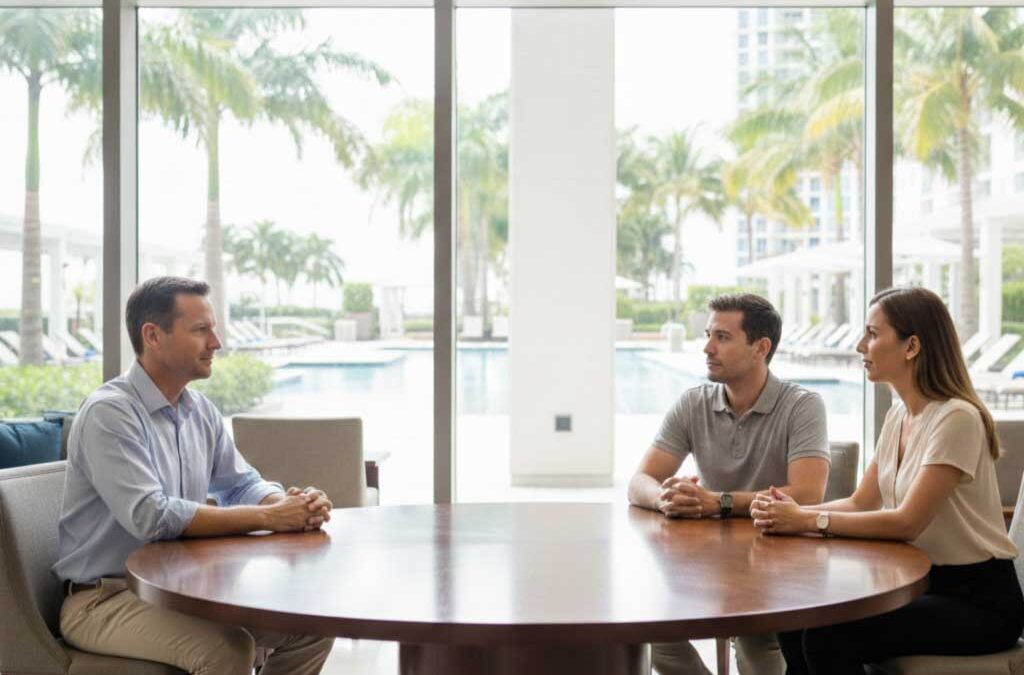
- IDR requires a real meet-and-confer opportunity. Civil Code 5910(f) and Civil Code 5915 require that both sides have the opportunity to explain their positions and confer in good faith in an effort to resolve the dispute. The HOA board must designate at least one director to participate. The meeting may occur in person or by video conference. This is not a one-sided presentation. It is a structured opportunity for both sides to speak and respond.
- When it comes to selecting the location and time for the IDR, both sides must work in good faith. Civil Code 5915(b)(4) requires the parties to select a “mutually convenient time and place” for the IDR. This means that neither side may insist on a time or location that is unreasonable (or unworkable) for the other side.
- You may bring an attorney or representative, and you cannot be charged a fee. Civil Code 5910 and Civil Code 5915 expressly allow both parties to be assisted by an attorney or another person at their own expense. The HOA may not charge a homeowner any fee to participate in IDR, even if the HOA chooses to have its own counsel present.
- IDR does not automatically stop all internal enforcement activity. Civil Code 5910.1 limits when an HOA may file a civil action after a homeowner properly invokes IDR, but the statute does not state that all fines, hearings, or other internal enforcement steps must immediately cease. IDR can affect litigation timing, but it does not create a blanket freeze on every enforcement action.
- An IDR agreement is binding only if specific statutory conditions are met. Civil Code 5910 and Civil Code 5915 provide that a written agreement reached through IDR is judicially enforceable if it is signed by both parties, does not conflict with the law or the governing documents, and is within the authority granted to the board’s designated representative or later ratified by the board. If those conditions are not satisfied, the agreement is not enforceable as a binding IDR resolution.
- If the HOA invokes IDR and you participate, you have a right to appeal if no agreement is reached. Civil Code 5910 provides that when the HOA initiates IDR and the dispute is not resolved by mutual agreement, you have the right to “appeal” the outcome to the full board. The statute does not create the same appeal right when the homeowner invokes IDR. If you request IDR, the HOA participates, and no settlement is reached, there is no statutory right to “appeal” the result to the full board.
- IDR is an informal remedy. IDR is often the first formal step in resolving an HOA conflict, but it does not eliminate other means of dispute resolution. Depending on the nature of the dispute, further steps may include additional statutory dispute resolution procedures or litigation. IDR can create a clear record of the HOA’s position and conduct, which experienced California HOA lawyers evaluate carefully before advising whether to escalate the matter.
- Be strategic in deciding whether IDR is worth your time. IDR forces your HOA to meet and confer, and in some situations it can narrow disputes, clarify positions, or produce a binding written agreement. In other situations, it may be a complete waste of your time. Before invoking or agreeing to IDR, consider what you want to accomplish and whether IDR meaningfully advances your position. If you are unsure how IDR fits into a broader enforcement or litigation strategy, call the expert HOA attorneys at MBK Chapman, and we’ll set your HOA straight.
Civil Code 5900–5915 establish a structured process designed to force communication before disputes escalate into court. IDR does not guarantee resolution, and it does not automatically shut down every enforcement action, but it does impose clear statutory obligations on HOAs. Used properly, it can clarify positions, narrow disputes, and position you for the next step if resolution is not achieved.
FAQs
What is IDR in a California HOA?
IDR stands for Internal Dispute Resolution. It is a formal meet-and-confer process required by the Davis-Stirling Act when a dispute arises between a homeowner and an HOA involving their rights or obligations under the governing documents or the Davis-Stirling Act. When properly invoked in writing by the homeowner, the HOA must participate. The process requires both sides to explain their positions and attempt to resolve the dispute in good faith.
Do I have to participate in IDR if my HOA requests it?
No. If your HOA invokes IDR, you may decline to participate regardless of what your HOA, management company, or governing documents might say. The Davis-Stirling Act makes IDR mandatory for HOAs when a homeowner requests it, but the reverse is not true. No provision in your governing documents can override that statutory structure.
Does requesting IDR stop my HOA from fining me or holding hearings?
No. While Civil Code 5910.1 prohibits an HOA from pursuing a lawsuit while a homeowner’s demand for IDR is pending (assuming the issues are the same), nothing in the Davis-Stirling Act prevents an HOA from engaging in other enforcement activity. Requesting IDR does not create a blanket freeze on fines, hearings, or other enforcement steps. It does, however, require the HOA to participate in the IDR process in good faith.
Is an agreement reached at IDR legally binding?
An agreement reached during IDR is legally binding only if specific statutory requirements are met. Civil Code 5910 and Civil Code 5915 require that the agreement be put in writing, signed by both parties, and not conflict with the law or the governing documents. The agreement must also be within the authority granted to the HOA director who participated in the IDR, or it must later be ratified by the full board. If those conditions are satisfied, the agreement is judicially enforceable (meaning that a court can and will enforce its provisions).
Can I bring an attorney to IDR, and can my HOA charge me for the meeting?
Yes, you may bring an attorney or another person to assist you at your own expense. The Davis-Stirling Act explicitly grants you the right to have an attorney of your choice (at your expense) represent you at an IDR. Your HOA may not charge you a fee to participate in IDR, even if it chooses to have its own attorney present.
What happens if IDR does not resolve the dispute?
If you and your HOA don’t reach an agreement, the dispute remains unresolved and the parties are free to take whatever steps they wish to take. That said, if the HOA invoked IDR and you participated, you have a statutory right to seek review by the full board. The reverse is not true, however.

About Michael Kushner
Michael Kushner is a California attorney with over 30 years of experience representing homeowners in disputes with their HOAs. He is widely regarded as California’s leading homeowner-side HOA attorney, and has built one of the state’s most prominent law practices dedicated to holding HOAs accountable under the Davis-Stirling Act and California law.
In addition to his law firm’s work, Michael is a recognized lecturer, author, and the host of the hit HOA HELL podcast, where he provides homeowners living in HOA-governed communities with clear, practical strategies for dealing with bad HOAs. He’s also the author of the best-selling book, HOA HELL | California Homeowners’ Definitive Guide to Beating Bad HOAs, which has become a go-to resource for both homeowners seeking real-world solutions to their HOA disputes, as well as those good HOA board members who are interested in doing a good job.
About MBK Chapman Fact Sheets
Homeowners searching for answers online will often come across articles that appear authoritative, but are actually written as search-engine marketing content rather than by an experienced HOA lawyer. These pieces tend to prioritize keyword density over clarity, accuracy, or legal context, which often leaves homeowners more confused than informed.
At MBK Chapman, our Fact Sheets are part of our HOA Law Library and are written by Michael Kushner, an HOA lawyer with decades of hands-on experience representing California homeowners. In fact, Michael Kushner is the HOA lawyer who pioneered the systems and strategies used by some of California’s most successful homeowner-side HOA law firms.
Each Fact Sheet is deliberately concise, statute-based, and designed as a quick-reference guide to help homeowners understand key HOA laws and enforcement rules at a glance.
AND DON’T FORGET TO TUNE INTO MY PODCAST, HOA HELL
YOU CAN ALSO ORDER MY GROUNDBREAKING BOOK
HOA HELL | California Homeowners’ Definitive Guide to Beating Bad HOAs
Amazon | Barnes & Noble
