
Overview
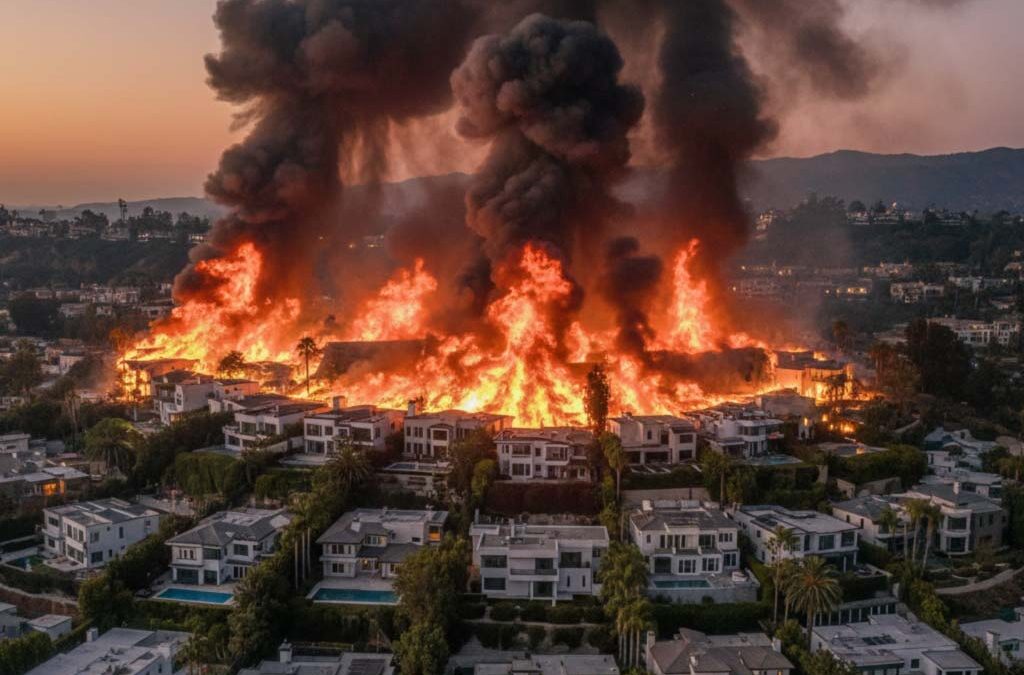
California’s SB 625, which took effect on January 1, 2026, represents a significant shift in the balance of power between Homeowners Associations and homeowners when disaster strikes. For years, some HOA boards used discretionary architectural review standards to delay or block the reconstruction of homes destroyed by wildfire, earthquake, flood, or other declared disasters. In communities devastated by major fire events such as the Palisades fire and other large-scale wildfire disasters across California, homeowners found themselves trapped between insurance timelines and HOA aesthetic objections. The result was prolonged displacement and what many owners experienced as “reconstruction limbo.” SB 625 changes that dynamic.
At its core, the law prioritizes restoration of housing stock over aesthetic preference. It moves post-disaster rebuilding from a discretionary process, where an HOA board could deny plans based on subjective design concerns, to a ministerial process governed by objective standards. If a homeowner proposes a “substantially similar reconstruction” that complies with the statute, the HOA’s ability to interfere narrows dramatically.
Civil Code 4752 renders void and unenforceable any governing document provision that prohibits, or has the effect of prohibiting, a substantially similar reconstruction of a residential structure damaged or destroyed in a declared disaster. Civil Code 4766 then imposes strict timelines and procedural guardrails on HOA architectural review. Once an application is submitted, the HOA has 30 calendar days to determine completeness. Once deemed complete, the HOA must approve the application or issue a comprehensive written request for revisions within 45 calendar days. The review must rely only on objective design standards that were in effect when the original structure was destroyed.
The new statutes also define what qualifies as “substantially similar reconstruction.” A homeowner may rebuild up to 110% of the original interior livable square footage and up to 110% of the original height, or up to 100% of the height allowed by the governing documents of the HOA in effect at the time the proposal was submitted, whichever is greater. The rebuilt structure must either occupy the same location and exterior dimensions as the original home or comply with minimum four-foot side and rear setbacks. Objective design standards may still apply, but only if they do not unreasonably increase cost, effectively prohibit construction, or extinguish the ability to rebuild.
This Fact Sheet explains how SB 625 limits HOA veto power, how the 110% rule works in practice, what objective standards remain enforceable, how the architectural review timelines operate, and what enforcement tools homeowners can use if an HOA unlawfully blocks reconstruction. It also addresses common friction points homeowners can expect from the new law, such as view corridor disputes, setback conflicts, and the interaction between HOA rules and local government permitting.
Key Points
SB 625 reshapes how California HOAs must process disaster rebuilds by amending both the Davis-Stirling Act and the Planning and Zoning Law. The law removes broad discretionary veto power and replaces it with the following four objective, time-bound statutory provisions.
- SB 625 created four new statutory provisions that collectively govern disaster reconstruction. SB 625 added the following four statutes to both the Davis-Stirling Act and the Planning and Zoning Law, respectively:
- Civil Code 4752: The “Right to Rebuild” Law. This law renders void and unenforceable any covenant, restriction, or condition in an HOA’s governing documents that prohibits, or has the effect of prohibiting, a substantially similar reconstruction of a home destroyed or damaged in a disaster. The statute targets both direct prohibitions and conditions that operate indirectly to prevent reconstruction. [The phrase “has the effect of prohibiting” is critical. SB 625 does not only invalidate outright bans. It also invalidates conditions that operate indirectly to prevent reconstruction. Excessive cost burdens, endless revision demands, or procedural delay tactics that make a compliant rebuild practically impossible can qualify as having the “effect of prohibiting” a substantially similar reconstruction.]
- Civil Code 4766: The Fast-Track Architectural Review. This law mandates a ministerial, deadline-driven review process. The HOA must determine whether an application is complete or incomplete and provide written notice of that determination within 30 calendar days after receiving the application. If incomplete, the HOA must specify what is missing. If the HOA fails to act within 30 calendar days, the application is deemed complete by operation of law. Once deemed complete, the HOA must either approve the application or provide a comprehensive written request for revisions within 45 calendar days, and the review must be based only on objective standards that were in effect at the time the application was first submitted. [Once an application is submitted, the HOA cannot move the goalposts. If the HOA determines an application is incomplete, it must identify all incomplete items at that time. Upon resubmission, the HOA may not require the applicant to include items that were not identified as necessary in the governing documents in effect at the time the application was originally submitted.]
- Government Code 65914.201: The Ministerial Local Approval Mandate. This law requires local cities and counties to provide a streamlined, ministerial approval process for disaster rebuild housing developments that meet objective zoning, subdivision, and design review standards. If local officials fail to provide required written documentation within statutory timelines, the development is deemed consistent with objective planning standards.
- Government Code 65914.202: The Temporary Housing Protection. This law mandates that any local government ordinance that precludes the placement and use of a manufactured home, mobilehome, or recreational vehicle on a private lot for disaster repair is unenforceable for three years following the disaster declaration. Because this statute targets local government ordinances rather than HOA governing documents, it does not provide an automatic override of CC&R restrictions on temporary structures. However, an HOA ban might still be challenged under Civil Code 4752 if the ban has the effect of prohibiting the reconstruction.
- The 110% Rule defines the outer limits of a substantially similar reconstruction. Homeowners are entitled to rebuild up to 110% of the original interior livable square footage and up to 110% of the original height, or up to 100% of the height allowed by the governing documents of the HOA in effect at the time the proposal was submitted, whichever is greater. These are measurable, objective ceilings, not discretionary guidelines.
- View corridor disputes are one of the most significant friction points under SB 625, particularly in coastal communities such as Malibu and the Pacific Palisades. If a homeowner rebuilds within the 110% height limit, an HOA cannot deny the application based on a subjective “unreasonable obstruction of view” clause. A provision stating that a structure may not “unreasonably obstruct” another lot’s view requires subjective judgment and therefore does not qualify as an objective design standard. If, however, the governing documents contain a measurable, pre-existing, objective limitation, such as a fixed elevation cap above sea level, a defined view corridor (perhaps defined in degrees), or a defined height plane restriction, that objective standard would still be enforceable. [In high-value coastal areas where ocean views drive property value, this distinction between subjective view protection and objective height limits will likely generate substantial litigation.]
- Real-World Application Example: Sarah’s two-story home burned down. It was 20 feet tall. She wants to rebuild it at 22 feet tall (exactly 110%). Her uphill neighbor, Bill, complains to the HOA that those extra 2 feet will block his “sliver view” of the ocean. The HOA CC&Rs say “No structure shall unreasonably obstruct the view of another lot.”
- Result: This type of conflict is precisely what SB 625 was designed to address in fire-impacted coastal communities. Sarah likely wins because the “unreasonable obstruction” clause is a subjective standard, and Bill’s “sliver view” complaint is exactly the type of aesthetic objection the law now overrides. Under SB 625, this type of rule is unenforceable against a disaster rebuild. Sarah is legally entitled to rebuild up to 110% of her original height. Even if that extra 10% (the 2 feet in the example) blocks the neighbor’s ocean view, the HOA would probably not be able to stop her because they no longer have “discretionary” power over the project. Sarah gets her 22-foot home. If, however, the governing documents instead said something like: “No structure on Lot 5 may exceed an elevation of 42 feet above sea level,” OR “No structure may be built within the North 15 feet of the property line,” then Sarah would probably lose because she’d be violating a pre-existing, measurable, objective limit.
- Location compliance has two statutory pathways. To qualify for the law’s protections, the rebuilt structure must either be constructed in the same location and to the same exterior dimensions as the original structure, or meet setbacks of at least four feet from the side and rear lot lines. [This framework likely reflects a legislative balance between preserving original siting and allowing reasonable flexibility following a disaster.]
- HOAs cannot impose new or more restrictive setback requirements that would prohibit a substantially similar reconstruction. Civil Code 4752(c)(3)(C) allows a homeowner to rebuild either in the same location and to the same exterior dimensions as the original structure, or with side and rear setbacks of at least four feet. If an HOA’s setback requirement is more restrictive (for example, a 10-foot or 15-foot requirement), it may be void to the extent it effectively prohibits the 110% size or square footage allowance authorized by statute. Local fire and safety codes adopted by a city or county still take precedence. If a homeowner elects to rebuild in the same location and to the same exterior dimensions under 4752(c)(3)(C)(i), the HOA cannot require the structure to be relocated to comply with newer setback rules adopted after the original construction. A disaster does not give the HOA an opportunity to eliminate lawful pre-existing placement. [In communities where older homes were built under prior setback standards, this provision prevents boards from using reconstruction as a pretext to force redesigns that shrink buildable space.]
- Real-World Application Example: An HOA requires a 15-foot rear setback. A disaster destroys a home that was originally built with a “grandfathered” 6-foot setback. The HOA tells the owner they must move the new house 9 feet forward to meet current 15-foot rules, which would make the backyard unusable.
- Result: The owner can likely ignore the HOA’s 15-foot rule. Because the owner is rebuilding in the same location and to the same exterior dimensions as the structure that was destroyed, the proposal satisfies the “same location” path under Civil Code 4752(c)(3)(C)(i). Under this path, the HOA cannot impose newer, more restrictive setback rules to force a relocation of the structure.
- Objective design standards remain enforceable, but only within strict limits. HOAs may enforce objective design standards that were in effect at the time the original residential structure was destroyed or damaged in a disaster, provided that the standard does not unreasonably increase the cost to construct, effectively prohibit the construction of, or extinguish the ability to otherwise rebuild a substantially similar residential structure. This means that an HOA may not adopt new design standards after a disaster and then apply those new standards retroactively to a pending rebuild application. Subjective standards such as “in harmony with the community” or “consistent with neighborhood character” do not qualify as an exception.
- Architectural review is no longer discretionary. Under SB 625, the HOA’s role shifts from aesthetic gatekeeper to compliance reviewer. If a proposal meets the statutory thresholds for size, height, location, and objective standards in effect at the time of destruction, the HOA cannot deny the rebuild based on personal judgment or “vibe.”
- Real-World Application Example: Mark’s home in a “Modernist” HOA was destroyed by a wildfire. He submits plans to rebuild his home exactly as it was, but adds a small 5% bump-out for a larger kitchen (totaling 105% of original size). The Architectural Committee denies him, stating the “look and feel” of his house is outdated and they want him to use a different window style to match newer homes in the tract.
- Result: Under SB 625, the HOA’s denial is void. They cannot use subjective “vibe” or “harmony” requirements to block a substantially similar rebuild that is within the 110% size limit. Mark can proceed, and if the HOA sues, it will lose, and it will pay for Mark’s attorneys’ fees and costs.
- Fee-shifting gives these rights real teeth. A court shall award reasonable attorneys’ fees to a prevailing homeowner who enforces Civil Code 4752 or 4766. The fee award is mandatory, not discretionary, and it materially changes the risk calculus for boards that attempt to block reconstruction without a defensible statutory basis.
- Call the expert HOA lawyers at MBK Chapman. If your HOA attempts to block your plans to rebuild after a disaster, such as a fire, flood, or earthquake. Nobody understands SB 625 better than MBK Chapman’s HOA attorney. We’re unmatched in our expertise at forcing rogue HOAs comply with the law.
SB 625 moves disaster rebuilding in California HOAs from a discretionary approval regime to a statute-driven process governed by objective criteria, defined timelines, and enforceable homeowner rights. It strips HOA boards of their ability to rely on subjective aesthetics, “vibe,” or open-ended architectural discretion when a homeowner proposes a substantially similar reconstruction that complies with the statute. In high-conflict communities, particularly those affected by major disasters events such as the Palisades fire, this shift will fundamentally alter how reconstruction disputes are resolved in HOA-governed communities. The statute replaces delay tactics and aesthetic objections with measurable thresholds, mandatory timelines, and fee-shifting consequences. In short, if a homeowner’s proposal satisfies the 110% rule, complies with one of the location options, and adheres to objective standards in effect at the time of destruction, the HOA’s authority narrows to verification, not veto.
In the next Fact Sheet, “Can My California HOA Stop Me from Living in an RV While I Rebuild After a Disaster,” I address a different aspect of SB 625, focusing on Government Code section 65914.202 and the temporary housing period between the disaster and completion of reconstruction.
FAQs
Can my California HOA stop me from rebuilding my home after a disaster (like the Palisades fire)?
Not if your proposed rebuild qualifies as a substantially similar reconstruction under Civil Code 4752. If your plans meet the 110% size and height limits, comply with one of the statutory location options, and adhere to objective standards in effect at the time of destruction, the HOA cannot prohibit the reconstruction.
What does “substantially similar reconstruction” mean?
It means the rebuilt home must comply with the local building code, may not exceed 110% of the original interior livable square footage, and may not exceed 110% of the original height (or 100% of the height allowed under the governing documents at the time of submission, whichever is greater). The structure must either occupy the same location and exterior dimensions as the original home or meet minimum four-foot side and rear setbacks.
Can my HOA deny my rebuild because it blocks a neighbor’s view?
Only if the governing documents contain a measurable, pre-existing, objective view restriction. Subjective standards such as “unreasonable obstruction of view” do not qualify as objective design standards and cannot be used to block a qualifying disaster rebuild.
Can my HOA apply new design standards adopted after the disaster?
No. HOAs may enforce only objective design standards that were in effect at the time the original structure was destroyed or damaged. They may not adopt new standards and apply them retroactively to a pending rebuild application.
How long does my HOA have to review my disaster rebuild application?
The HOA has 30 calendar days to determine whether the application is complete. Once deemed complete, the HOA must approve the application or provide a comprehensive written request for revisions within 45 calendar days. If the HOA fails to act within 30 calendar days on completeness, the application is deemed complete by operation of law.
What happens if my HOA wrongfully blocks my rebuild?
A court shall award reasonable attorneys’ fees to a prevailing homeowner who enforces Civil Code 4752 or 4766. The fee award is mandatory. Boards that attempt to block reconstruction without a defensible statutory basis face real financial consequences.

About Michael Kushner
Michael Kushner is a California attorney with over 30 years of experience representing homeowners in disputes with their HOAs. He is widely regarded as California’s leading homeowner-side HOA attorney, and has built one of the state’s most prominent law practices dedicated to holding HOAs accountable under the Davis-Stirling Act and California law.
In addition to his law firm’s work, Michael is a recognized lecturer, author, and the host of the hit HOA HELL podcast, where he provides homeowners living in HOA-governed communities with clear, practical strategies for dealing with bad HOAs. He’s also the author of the best-selling book, HOA HELL | California Homeowners’ Definitive Guide to Beating Bad HOAs, which has become a go-to resource for both homeowners seeking real-world solutions to their HOA disputes, as well as those good HOA board members who are interested in doing a good job.
About MBK Chapman Fact Sheets
Homeowners searching for answers online will often come across articles that appear authoritative, but are actually written as search-engine marketing content rather than by an experienced HOA lawyer. These pieces tend to prioritize keyword density over clarity, accuracy, or legal context, which often leaves homeowners more confused than informed.
At MBK Chapman, our Fact Sheets are part of our HOA Law Library and are written by Michael Kushner, an HOA lawyer with decades of hands-on experience representing California homeowners. In fact, Michael Kushner is the HOA lawyer who pioneered the systems and strategies used by some of California’s most successful homeowner-side HOA law firms.
Each Fact Sheet is deliberately concise, statute-based, and designed as a quick-reference guide to help homeowners understand key HOA laws and enforcement rules at a glance.
AND DON’T FORGET TO TUNE INTO MY PODCAST, HOA HELL
YOU CAN ALSO ORDER MY GROUNDBREAKING BOOK
HOA HELL | California Homeowners’ Definitive Guide to Beating Bad HOAs
Amazon | Barnes & Noble
