
Overview
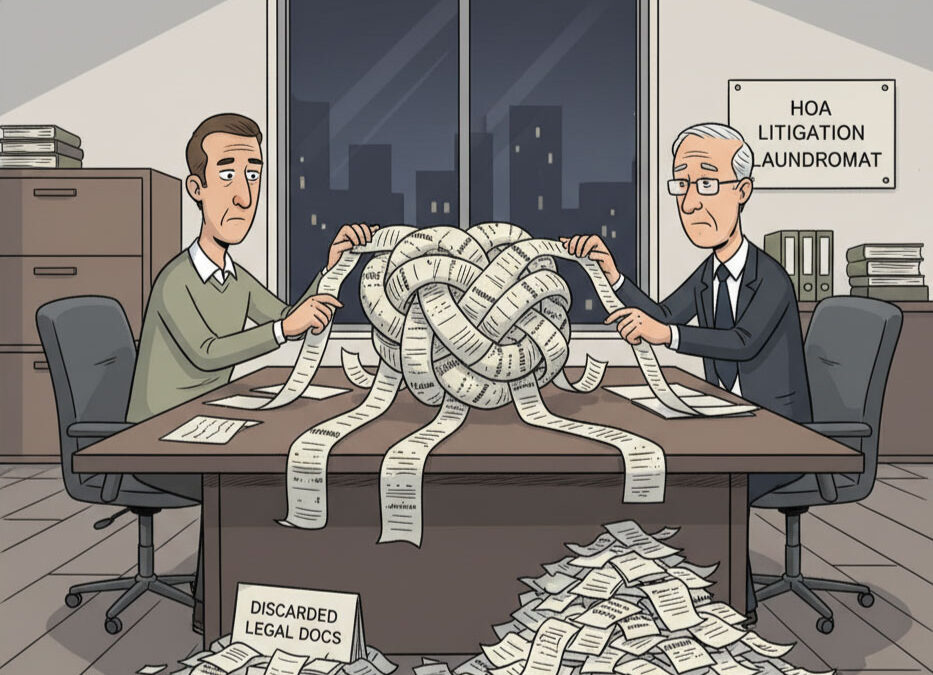
Once litigation begins, the rules for settling a dispute with your HOA change dramatically. At this stage, negotiations take place under the supervision of the court and are governed by procedural rules that don’t apply before a lawsuit is filed. Settlements may occur through attorney-to-attorney negotiation, mediation, or a court-ordered settlement conference.
The Davis-Stirling Act still provides the framework for HOA disputes, but the Code of Civil Procedure dictates how settlements are handled once a case is filed. A settlement must be properly documented and enforceable, and parties must understand their obligations before signing anything.
This Fact Sheet explains how settlements work after a lawsuit has started, what happens during court-directed mediation or settlement conferences, and what homeowners should expect when resolving their HOA case inside the litigation process.
For a quick-guide on the various grounds for which homeowners can sue their HOAs, see my Fact Sheet, “Grounds for Suing Your California HOA: Legal Reasons Homeowners Can Sue.”
Key Points
Here are the essential things California homeowners should know about settling HOA cases after a lawsuit has been filed:
- How post-filing settlement works. Once a complaint is filed, settlement discussions often occur between attorneys representing the homeowner and the HOA. When these negotiations occur differs on a case-by-case basis. They can happen at the relative beginning of a case, or after initial rounds of discover have been completed, on the eve of trial, or even during (or after) trial. In all cases, however, these negotiations are confidential. 95% of civil cases in California settle before trial.
- Court involvement in settlement. Courts frequently encourage parties to settle and may order participation in a mandatory settlement conference. Judges use these conferences to help the parties narrow their disputes and finalize settlement terms before trial. These are typically scheduled in the days leading up to the trial date.
- Mediation during litigation. Some judges will order parties to participate in mediation (although the choice of whether to settle or not is completely voluntary). Mediation is an informal, confidential meeting conducted by a neutral mediator, usually a retired judge or an experienced attorney. There is no testimony, no witnesses, and no rulings. Each side can leave at any time, and any statements made cannot be used later in court.
- Attorney negotiation and representation. Once a lawsuit is filed, settlement negotiations should always be conducted through counsel. Attorneys handle all communications, draft proposed terms, and ensure that any agreement reached is in the best interest of the client (you).
- What must be included in a written settlement agreement. At the very least, a properly drafted settlement must:
- Identify the issues being resolved and how they are resolved.
- Specify timelines for each party’s performance.
- Clarify any issues excluded from settlement.
- Address attorneys’ fees (waived for negotiation; prevailing-party clause for breach).
- Include an integration clause confirming it is the full agreement.
- Include a general release and a Civil Code 1542 waiver.
- Avoid binding arbitration provisions unless the governing documents already require them.
- Court approval and enforcement. When a case is settled, the parties may ask the court to dismiss the lawsuit or retain jurisdiction to enforce the agreement. Under Code of Civil Procedure 664.6, the court can enforce a settlement if it was signed by the parties themselves or stated on the record in court. When multiple parties are involved in the litigation, but only some are settling, sometimes the attorneys will file a motion to have the court approve the “good faith” settlement agreement. [The purpose behind this is beyond this scope of this Fact Sheet.]
- Why qualified attorney guidance is critical. Litigation settlements are complex and legally binding. Homeowners should never act as their own attorneys in litigation, and they should certainly never sign a proposed settlement without a qualified attorney representing them (such as the attorneys at MBK Chapman). Doing so could result in the homeowner erroneously waiving critical rights.
- Benefits of settling after filing. Settlement after litigation has begun can still save substantial legal fees and prevent further discovery and trial preparation. It provides certainty and closure without the unpredictability of a court verdict.
Properly settling a lawsuit requires more than compromise. It requires precision, knowledgeable and experienced legal counsel, and enforceable (and fair) terms.
FAQs
Can I still settle with my HOA after filing a lawsuit?
Yes. You can settle your HOA case at any time before, during, or even after trial. 95% of civil cases in California are resolved through settlement rather than a verdict.
Can a judge require the parties to settle?
No. Judges can order parties to attend a settlement conference or mediation, but they cannot compel an agreement. Settlement is always voluntary.
What happens at a mandatory settlement conference?
Both parties and their attorneys meet with a judge or court-appointed mediator to discuss the case (or perhaps some of the claims), explore settlement options, and try to reach agreement before trial. The discussions are confidential and cannot be used later in court.
Is mediation different once a case is filed?
Yes. Mediation during litigation is typically attorney-driven, often scheduled through providers such as JAMS or ADR Services, and occurs under court supervision. It remains informal, private, and non-binding unless the parties sign a written agreement.
What makes a settlement enforceable in court?
A settlement must be in writing, signed by the parties themselves (not just their attorneys), or stated on the record in court. The court may retain jurisdiction under Code of Civil Procedure 664.6 to enforce compliance.
Should I ever settle without my attorney reviewing the terms?
No. Once you sign, a settlement agreement becomes binding. Your attorney ensures that the terms are in your best interest and fair, enforceable, that your obligations are clear, and that the HOA cannot use vague language to later demand more money or re-litigate the issue.
What are the advantages of settling after a lawsuit is filed?
Even after litigation starts, settlement can save time, reduce costs, and prevent the uncertainty of a trial. It can also protect privacy, avoid public records, and provide a clear path to resolution.

About Michael Kushner
Michael Kushner is a California attorney with over 30 years of experience representing homeowners in disputes with their HOAs. He is widely regarded as California’s leading homeowner-side HOA attorney, and has built one of the state’s most prominent law practices dedicated to holding HOAs accountable under the Davis-Stirling Act and California law.
In addition to his law firm’s work, Michael is a recognized lecturer, author, and the host of the hit HOA HELL podcast, where he provides homeowners living in HOA-governed communities with clear, practical strategies for dealing with bad HOAs. He’s also the author of the best-selling book, HOA HELL | California Homeowners’ Definitive Guide to Beating Bad HOAs, which has become a go-to resource for both homeowners seeking real-world solutions to their HOA disputes, as well as those good HOA board members who are interested in doing a good job.
About MBK Chapman Fact Sheets
Homeowners searching for answers online will often come across articles that appear authoritative, but are actually written as search-engine marketing content rather than by an experienced HOA lawyer. These pieces tend to prioritize keyword density over clarity, accuracy, or legal context, which often leaves homeowners more confused than informed.
At MBK Chapman, our Fact Sheets are part of our HOA Law Library and are written by Michael Kushner, an HOA lawyer with decades of hands-on experience representing California homeowners. In fact, Michael Kushner is the HOA lawyer who pioneered the systems and strategies used by some of California’s most successful homeowner-side HOA law firms.
Each Fact Sheet is deliberately concise, statute-based, and designed as a quick-reference guide to help homeowners understand key HOA laws and enforcement rules at a glance.
AND DON’T FORGET TO TUNE INTO MY PODCAST, HOA HELL
YOU CAN ALSO ORDER MY GROUNDBREAKING BOOK
HOA HELL | California Homeowners’ Definitive Guide to Beating Bad HOAs
Amazon | Barnes & Noble
