
Overview
Tree disputes are among the most common, and costly, sources of conflict between neighbors in California HOAs. Branches hanging over property lines or roots spreading underground often cause messes, increased maintenance, and sometimes extensive property damage.
The law provides homeowners with strong “self-help” rights in some situations, but those rights are not unlimited. While homeowners can engage in self-help remedies, those rights are much broader when it comes to overhanging branches than they are regarding invading roots.
This Fact Sheet explains how to tell who owns a tree in the eyes of the law and what rights you have to cut your neighbor’s branches and roots. Homeowners who understand these rules can better protect their property and avoid costly mistakes.
For a deeper dive into this topic, see my article: “Disputes Involving Your Neighbor’s Trees in California.” You can also listen to related episodes of my podcast, HOA HELL, where I cover tree-related disputes amongst neighbors in California HOAs.
Key Points
Use this checklist to understand your rights and limits when it comes to a neighbor’s trees.
- Tree ownership is based on the location of the trunk. Whoever’s land the trunk sits on owns the tree. If the trunk straddles a property line (where the tree is sometimes referred to a “line tree”), both neighbors are co-owners of the tree.
- Overhanging branches can be cut. Homeowners have an absolute right to cut encroaching branches from their neighbors’ tree back to the property line, even if the tree itself is harmed in the process.
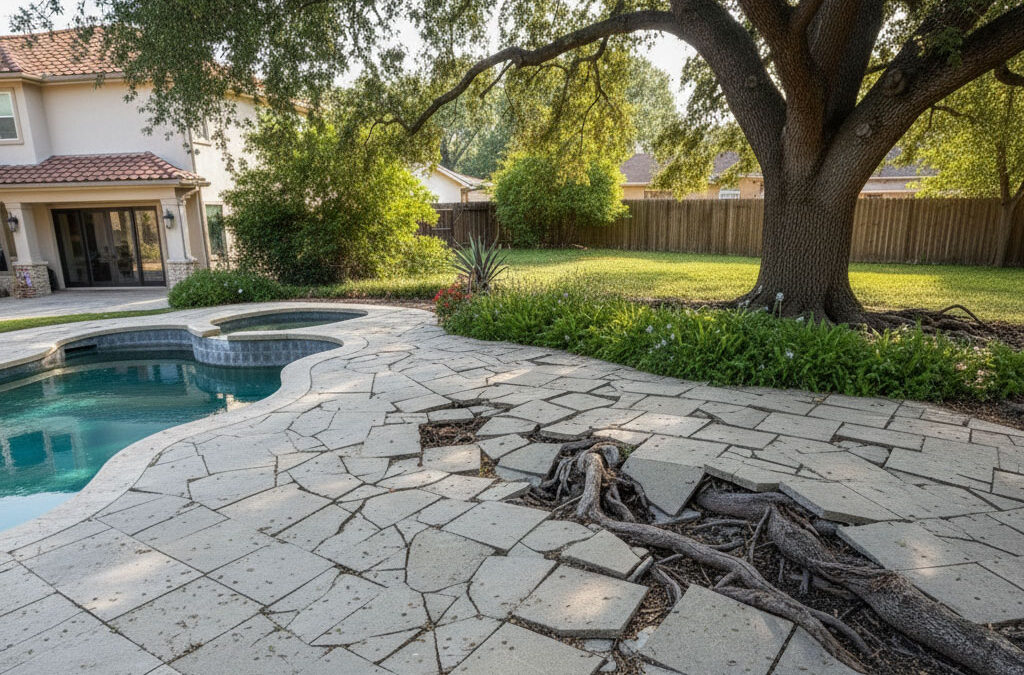
- Encroaching roots are different. A homeowner does have the right to cut roots back to the boundary line, but that right is limited by a reasonableness standard. Some courts in California have suggested that roots may only be cut if they are causing actual damage, such as cracked pavement, broken hardscape, or a damaged pool. Even then, if the cutting harms the tree, the courts apply a balancing test to decide whether the action was reasonable. Judges look at whether less drastic measures, such as installing a root barrier, could have resolved the problem without injuring the tree. In other words, your right to remove roots is weighed against your duty not to destroy your neighbor’s tree.
- Self-help has limits. You cannot enter your neighbor’s property or cut down the tree itself. Doing so can trigger trespass claims and expose you to double or triple damages. Everything you do regarding branches and roots must be done from your property and only to the property line.
- HOA rules may add another layer. If your HOA’s governing documents have a nuisance provision (and most do), then the HOA has a duty to intervene if your neighbor’s branches or roots are causing damage to your property or creating a nuisance for you.
- Document everything. If you’re going to engage in self-help, such as trimming back branches to the property line or cutting invasive roots, then take before, “during,” and after photos and videos. Also, get repair estimates, and put complaints in writing. When it comes to cutting roots, hire a licensed landscape contractor or arborist to help prove that you acted reasonably. This strengthens your position if the dispute escalates.
Tree disputes can spiral quickly. Knowing where your neighbor’s rights end, and yours begin, will help you stay in compliance with the law and with your HOA’s rules.
FAQs
How do I tell who owns a tree?
Can I cut off branches from my neighbor’s tree if they hang into my yard?
Can I cut roots from my neighbor’s tree if they are damaging my property?
What happens if I cut down my neighbor’s tree?
Is my HOA supposed to get involved if my neighbor’s tree is causing a nuisance?
What should I do before trimming my neighbor's branches or roots?
Should I notify my neighbor before taking trimming back branches or cutting roots?

About Michael Kushner
Michael Kushner is a California attorney with over 30 years of experience representing homeowners in disputes with their HOAs. He is widely regarded as California’s leading homeowner-side HOA attorney, and has built one of the state’s most prominent law practices dedicated to holding HOAs accountable under the Davis-Stirling Act and California law.
In addition to his law firm’s work, Michael is a recognized lecturer, author, and the host of the hit HOA HELL podcast, where he provides homeowners living in HOA-governed communities with clear, practical strategies for dealing with bad HOAs. He’s also the author of the best-selling book, HOA HELL | California Homeowners’ Definitive Guide to Beating Bad HOAs, which has become a go-to resource for both homeowners seeking real-world solutions to their HOA disputes, as well as those good HOA board members who are interested in doing a good job.
About MBK Chapman Fact Sheets
Homeowners searching for answers online will often come across articles that appear authoritative, but are actually written as search-engine marketing content rather than by an experienced HOA lawyer. These pieces tend to prioritize keyword density over clarity, accuracy, or legal context, which often leaves homeowners more confused than informed.
At MBK Chapman, our Fact Sheets are part of our HOA Law Library and are written by Michael Kushner, an HOA lawyer with decades of hands-on experience representing California homeowners. In fact, Michael Kushner is the HOA lawyer who pioneered the systems and strategies used by some of California’s most successful homeowner-side HOA law firms.
Each Fact Sheet is deliberately concise, statute-based, and designed as a quick-reference guide to help homeowners understand key HOA laws and enforcement rules at a glance.
AND DON’T FORGET TO TUNE INTO MY PODCAST, HOA HELL
YOU CAN ALSO ORDER MY GROUNDBREAKING BOOK
HOA HELL | California Homeowners’ Definitive Guide to Beating Bad HOAs
Amazon | Barnes & Noble
