
Overview
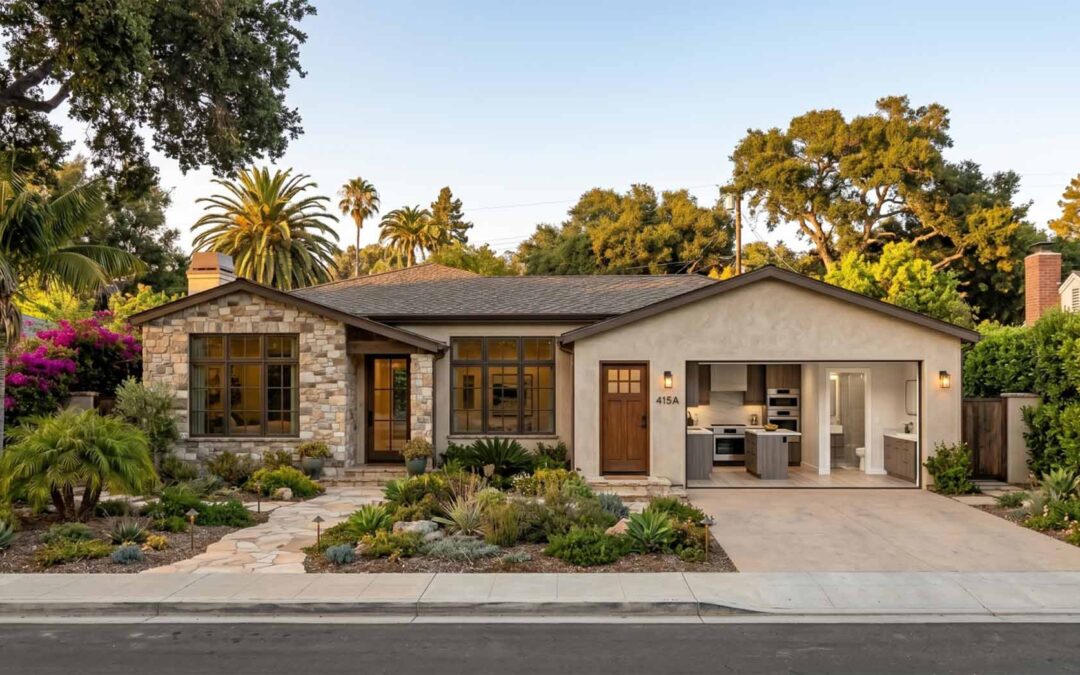
A Junior ADU, or JADU, is not a backyard cottage. It is a small living space, no larger than 500 square feet, carved out of the walls of your existing single-family home, with its own entrance and an efficiency kitchen. Because a JADU lives inside the footprint of the house you already own, it changes almost nothing your HOA can see from the street, and that single fact reshapes the entire question of what your HOA may and may not do about it.
Two different bodies of law decide whether you can build a JADU, and they work in sequence. Government Code 66333 and the sections that follow it govern the relationship between you and your city or county. They tell the local agency what kind of JADU it must approve, that it must approve it ministerially without discretionary review, and what it cannot demand along the way. Civil Code 4751 is the separate statute that governs your HOA, and it does its work by reference to those Government Code sections. Civil Code 4751 voids any HOA restriction that effectively prohibits or unreasonably restricts a JADU that “meets the requirements of” the Government Code. So the practical order of operations begins with whether the JADU in question qualifies under state law. And once it qualifies, your HOA loses the power to prohibit it.
Within that framework, Civil Code 4751 is your shield against the HOA. It voids any covenant, rule, or governing-document provision that effectively prohibits or unreasonably restricts a qualifying JADU, and it defines “reasonable restrictions” narrowly as those that do not unreasonably increase the cost to construct, effectively prohibit construction, or extinguish your ability to build. An HOA may still impose genuinely reasonable conditions, but it cannot use architectural review, aesthetic preferences, or outdated CC&Rs to stop a compliant JADU. [I covered the general version of that protection, and the delay-and-obstruction games HOAs play around full-size ADUs, in my article “Can My California HOA Legally Block an ADU?”]
The JADU-specific rules live in Government Code 66333. That statute caps a JADU at one per lot, requires it to sit within the walls of the existing residence, requires a recorded deed restriction barring its sale separate from the main home, requires an efficiency kitchen and a separate entrance, and requires that any rental run longer than 30 days, which forecloses short-term-rental use. The owner-occupancy rule is the piece that recently changed, and the change matters. The old framework broadly required the owner to live on the property as a condition of having a JADU at all. As amended effective January 1, 2026, however, owner-occupancy is required only when the JADU shares sanitation facilities with the main residence, but it is not required when the JADU has its own bathroom. For a homeowner, that means a JADU with a separate bathroom no longer chains you to living on site, which removes a restriction owners felt for years.
The practical reality is that the very things that define a JADU also defang most HOA objections. There is no new exterior structure, so architectural review, setbacks, height limits, and lot-coverage rules have little to grip onto. Likewise, there is no added building footprint, so density and parking complaints ring hollow, and Government Code 66334 separately bars even the city from requiring extra parking as a condition of a JADU permit. The deed restriction already prevents the unit from being sold off separately, which answers the fear HOAs most often raised. An HOA that tries to block a compliant JADU is usually left objecting to something it cannot actually see or measure, which is exactly the kind of restriction Civil Code 4751 treats as unreasonable within the meaning of Civil Code 4350, which requires HOA rules to be reasonable.
This Fact Sheet explains what a JADU is under Government Code 66333, how Civil Code 4751 limits your HOA’s authority over it, which narrow restrictions an HOA may still impose, how the new owner-occupancy and rental rules work, and what to do when your HOA tries to obstruct a JADU it has no lawful basis to stop. It also flags an open question that matters for condo and townhome owners, because whether these protections reach units outside a true single-family lot is not yet settled. [For the broader ADU protections and the approval-timeline rules, read my Fact Sheet “California HOA ADU Approval Timelines: How Long Your HOA Can Take.” You can also hear me break down the difference between ADUs and JADUs on my podcast, HOA HELL.]
Key Points
A Junior ADU sits in a legal sweet spot that most homeowners and most HOAs don’t fully understand. It’s small, it lives inside the walls of a home you already own, and it’s governed by a state framework that leaves your HOA very little room to interfere. Civil Code 4751 strips your HOA of the power to prohibit or unreasonably restrict a qualifying JADU, and Government Code 66333 defines what qualifies. The points below explain how those two statutes work together, what your HOA can and cannot do, and where the law remains unsettled, so you can tell the difference between a restriction your HOA may lawfully impose and one you can defeat.
- A JADU and a full-size ADU are not the same thing, and the differences define the issue. Under Government Code 66333, a JADU can be no larger than 500 square feet and has to be built within the existing walls of your single-family residence. This includes space like an attached garage (i.e., a garage that already sits inside your home’s footprint). It also requires a separate entrance and an efficiency kitchen with a cooking facility, a food-preparation counter, and storage cabinets sized in reasonable relation to the unit, and it may share a bathroom with the main house or have its own. A full-size ADU, by contrast, is a larger and often freestanding unit. That size and internal-footprint distinction is not academic because it determines how much an HOA can plausibly object to in the first place.
- Two separate statutes control whether you can build a JADU, and they operate in sequence. Government Code 66333 governs the relationship between you and your city or county, telling the local agency what it must approve and how. Civil Code 4751 governs your HOA, and it works only by reference to the Government Code, voiding any HOA restriction on a JADU that “meets the requirements of” those Government Code sections. The order matters in practice. You first need a JADU that qualifies under state law, and once it qualifies, your HOA loses the authority to prohibit it.
- Your HOA’s power does not turn on the city’s permit, but on whether your JADU qualifies under state law. Civil Code 4751 keys its protection to a JADU that meets the Government Code requirements, not to whether the city has stamped the permit yet. So the relevant question in a fight with your HOA is whether your proposed JADU satisfies Government Code 66333, not whether you’ve cleared every municipal step. A board cannot manufacture authority for itself by pointing to an incomplete city process because the statute measures your JADU against the state standard.
- Civil Code 4751 voids any HOA rule that effectively prohibits or unreasonably restricts a qualifying JADU. The Davis-Stirling Act doesn’t require an outright ban to trigger protection. A restriction that operates indirectly to block a JADU is just as void as a flat prohibition. Your HOA cannot use architectural guidelines, design-review committees, aesthetic preferences, or outdated governing documents to stop a JADU that complies with state law because the label the HOA puts on the restriction does not control. What controls is whether the restriction effectively prohibits or unreasonably restricts the JADU.
- “Reasonable restrictions” are defined narrowly, and the burden rests with the HOA. Civil Code 4751 permits only restrictions that do not unreasonably increase the cost to construct, effectively prohibit construction, or extinguish your ability to build a JADU. That definition is the entire ballgame because almost anything an HOA wants to impose either fits inside that narrow lane or falls outside it as unenforceable. [In plain English, a “reasonable restriction” is one your HOA can impose without making the JADU meaningfully harder to build. If, for example, a restriction drives up your construction cost without good reason, makes the project impossible as a practical matter, or takes away your ability to build the JADU at all, it’s not reasonable, and Civil Code 4751 won’t let your HOA enforce it.]
- The features that define a JADU also eliminate most of what an HOA normally complains about. Because a JADU goes inside the existing walls of your home, there is no new exterior structure for the HOA to scrutinize, which leaves architectural review, setback rules, height limits, and lot-coverage restrictions with almost nothing to attack. Because it adds no building footprint, density objections fall flat. Because it is capped at 500 square feet and tied to your existing residence, the HOA cannot credibly claim it transforms the character of the neighborhood (and even if it could, the statute protects their existence, so that wouldn’t matter anyways). An HOA fighting a compliant JADU is usually reduced to objecting to something it cannot see, which is unreasonable on its face.
- Your HOA cannot demand extra parking for a JADU. Government Code 66334 bars a local agency from requiring additional parking as a condition of approving a JADU, and an HOA stands on even weaker ground than the city does. If the state forbids the local government from conditioning a JADU on a new parking space, an HOA has no legitimate basis to impose the very requirement the Legislature took away from the municipality. Parking is one of the most common objections boards raise to any added unit, so recognize it for the unenforceable demand it is when applied to a JADU.
- The owner-occupancy rule changed in 2026, and the change works in your favor. Under the older framework, a JADU ordinance broadly required the owner to live on the property as a condition of having a JADU at all. As amended effective January 1, 2026, however, Government Code 66333 now requires owner-occupancy only when the JADU shares sanitation facilities with the main residence. In other words, the law currently imposes no owner-occupancy requirement when the JADU has its own bathroom. For you, that means a JADU with a separate bathroom no longer forces you to live on site, which frees up options that the prior law prohibited. Better yet, your HOA cannot resurrect the old requirement by writing its own owner-occupancy rule because that would unreasonably restrict a JADU the state framework now allows.
- Your HOA can’t block a JADU by claiming it will become a short-term rental. Government Code 66333 requires that any rental of a JADU run longer than 30 days, which means a JADU cannot lawfully be used as a short-term rental in the first place. That forecloses the HOA’s most common fear, the rotating cast of weekend renters before the HOA ever raises it. If your HOA objects to a JADU on the theory that it will become a transient rental, the statute has already answered the objection, and the HOA’s concern provides no reasonable or lawful basis to block the unit.
- A recorded deed restriction protects the HOA’s real interest without any HOA action. Government Code 66333 requires you to record a deed restriction that runs with the land, prohibits selling the JADU separately from the main residence, and limits the unit’s size and attributes to what the statute allows. That recorded restriction answers the concern that some HOAs raise, which is that a JADU will be carved off and sold as a separate property. Because state law already prohibits that outcome, your HOA gains nothing by imposing its own version, and it cannot use the specter of separate sale as a reason to deny a JADU.
- At this time, whether these protections reach condos and townhomes is genuinely unsettled, and that uncertainty matters. Civil Code 4751 and the JADU statutes protect units on a lot “zoned for single-family residential use,” and that phrase has become the central battleground for owners who do not live in detached single-family homes. The strongest case for protection is a true JADU inside a genuine single-family residence, where the statutory language fits cleanly. The weakest case is a unit in a development zoned for condos, townhomes, or mixed residential use, where the “single-family residential use” language arguably does not reach.
- Condo and townhome owners should get specific advice from a qualified homeowner-side HOA attorney before constructing a JADU against an HOA’s wishes. For owners in attached or multi-use communities, the single-family-use limitation isn’t a technicality because that limitation can decide whether Civil Code 4751 protects them at all. If you own a condo or townhome and your HOA is resisting a JADU, don’t assume the statutes shield you, and document your HOA’s conduct while you get the question evaluated. [A 2025 San Diego Superior Court ruling held that the ADU and JADU protections did not apply to a condominium owner, or to a lot zoned for anything beyond single-family (i.e., detached home) use. That ruling is non-precedential and may be appealed, and a true JADU inside a genuine single-family home stands on much stronger footing than the condo garage conversion at issue there. Even so, the question remains open, so condo and townhome owners should treat it as a real risk rather than a settled point.]
- Here’s how to respond when your HOA tries to obstruct a JADU it has no lawful basis to stop. Start by confirming that your JADU qualifies under Government Code 66333 because that compliance is what triggers Civil Code 4751’s protection in the first place. Put your HOA’s objections in writing by asking the board to identify the specific governing-document provision it relied on and the reasonable interest that provision served. Measure every condition the HOA demands against the narrow statutory definition of a “reasonable restriction,” and if a condition unreasonably increases your cost, effectively prohibits the unit, or extinguishes your ability to build, tell the board in writing that Civil Code 4751 voids it. Keep a dated record of every submission, demand, and response because a clean paper trail showing the HOA could not justify its restriction becomes powerful leverage if the dispute escalates.
- If your HOA is blocking or stalling your Junior ADU, call the HOA attorneys at MBK Chapman. When an HOA uses architectural review, manufactured conditions, or outdated CC&Rs to obstruct your construction of a JADU that state law protects, you do not have to comply. The HOA attorneys at MBK Chapman are widely viewed as the most experienced and knowledgeable homeowner-side HOA attorneys in California, and they have a deep knowledge of how Government Code 66333 and Civil Code 4751 work together, where boards overstep, and how to force an HOA to honor a homeowner’s right to build a compliant JADU. If your HOA is standing in the way of your Junior ADU, contact us and we’ll deal with your association.
Civil Code 4751 leaves your HOA with narrow authority over a Junior ADU, and Government Code 66333 defines the compliant unit your HOA cannot prohibit. The very features that make a JADU what it is, its small size, its place inside your existing walls, its recorded deed restriction, and its 30-day rental floor, also strip away most of what an HOA would normally use to object. The one genuine open question is whether these protections extend to condos and townhomes, and owners in those communities should treat that as unsettled until a higher court resolves it. For everyone in a true single-family home, the message is more direct. Confirm your JADU qualifies under state law, make your HOA justify any restriction against the statute’s narrow standard, and do not mistake an HOA’s preferences for what the law requires.
FAQs
Can my California HOA stop me from building a Junior ADU?
Generally no, not if your JADU qualifies under state law. Civil Code 4751 voids any HOA covenant, rule, or governing-document provision that effectively prohibits or unreasonably restricts a JADU that meets the requirements of Government Code 66333. Your HOA, for example, can’t use architectural review, aesthetic preferences, or outdated CC&Rs to block a compliant JADU because what controls isn’t the label the board puts on its restriction, but whether that restriction effectively prohibits or unreasonably restricts the unit. The one real caveat is that these protections are keyed to a lot zoned for single-family residential use, and whether they reach condos and townhomes is currently unsettled, so owners in attached or multi-use communities should first get specific advice from a qualified homeowner-side HOA attorney.
What's the difference between a JADU and a regular ADU?
Size and location are the big ones. A JADU can be no larger than 500 square feet and has to be built within the existing walls of your single-family home, such as an attached garage that already sits inside the home’s footprint. A JADU also requires a separate entrance and an efficiency kitchen. Also, under the new law, if the JADU has its own bathroom, there is no longer a requirement that the owner live at the property.
A full-size ADU is larger and often a freestanding structure (which is what most people think of when they picture an ADU or granny flat). That distinction matters for HOA disputes because a JADU adds no new exterior structure and no building footprint, which strips away most of what an HOA would normally object to, like setbacks, height, lot coverage, and density.
Does my HOA require me to live on the property if I build a JADU?
That depends on the bathroom under the new law. The old law required owner-occupancy. As amended effective January 1, 2026, however, Government Code 66333 now requires owner-occupancy only when the JADU shares a bathroom with the main residence. This means that if the JADU has its own bathroom, there is no owner-occupancy requirement. So a JADU with a separate bathroom no longer chains you to living on site, and your HOA can’t resurrect the old requirement by writing its own owner-occupancy rule because that would unreasonably restrict a JADU the state framework now allows.
Can my HOA make me add a parking space for my JADU?
No. Government Code 66334 bars even the city or county from requiring additional parking as a condition of approving a JADU, and your HOA stands on weaker ground than the local government does. If the state took that power away from the municipality, an HOA has no legitimate basis to impose the very parking requirement the Legislature eliminated. Parking is one of the most common objections boards raise to any added unit, so when your HOA demands a new space for a JADU, recognize it as the unenforceable demand it is.

About Michael Kushner
Michael Kushner is a California attorney with over 30 years of experience representing homeowners in disputes with their HOAs. He is widely regarded as California’s leading homeowner-side HOA attorney, and has built one of the state’s most prominent law practices dedicated to holding HOAs accountable under the Davis-Stirling Act and California law.
In addition to his law firm’s work, Michael is a recognized lecturer, author, and the host of the hit HOA HELL podcast, where he provides homeowners living in HOA-governed communities with clear, practical strategies for dealing with bad HOAs. He’s also the author of the best-selling book, HOA HELL | California Homeowners’ Definitive Guide to Beating Bad HOAs, which has become a go-to resource for both homeowners seeking real-world solutions to their HOA disputes, as well as those good HOA board members who are interested in doing a good job.
About MBK Chapman Fact Sheets
Homeowners searching for answers online will often come across articles that appear authoritative, but are actually written as search-engine marketing content rather than by an experienced HOA lawyer. These pieces tend to prioritize keyword density over clarity, accuracy, or legal context, which often leaves homeowners more confused than informed.
At MBK Chapman, our Fact Sheets are part of our HOA Law Library and are written by Michael Kushner, an HOA lawyer with decades of hands-on experience representing California homeowners. In fact, Michael Kushner is the HOA lawyer who pioneered the systems and strategies used by some of California’s most successful homeowner-side HOA law firms.
Each Fact Sheet is deliberately concise, statute-based, and designed as a quick-reference guide to help homeowners understand key HOA laws and enforcement rules at a glance.
AND DON’T FORGET TO TUNE INTO MY PODCAST, HOA HELL
YOU CAN ALSO ORDER MY GROUNDBREAKING BOOK
HOA HELL | California Homeowners’ Definitive Guide to Beating Bad HOAs
Amazon | Barnes & Noble
