
Overview
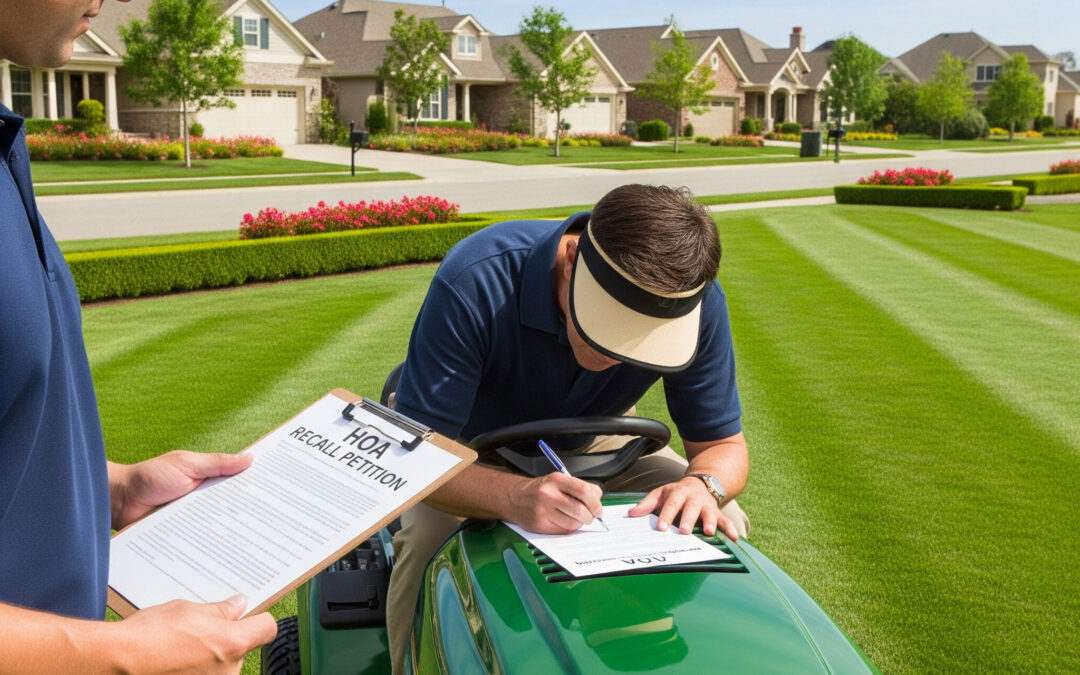
In California, the recall petition is the document that forces an HOA board to schedule a recall election. It is not an informal letter of complaint. Rather, it is a legally binding demand under both the Davis-Stirling Act and the California Corporations Code. To succeed, a recall petition must be drafted and executed with precision. A single procedural misstep can give the board a pretext to reject the petition or derail the recall election.
For a deeper dive into this topic, see my full article: “HOA Recalls in California: The Power to Remove Your HOA Board.” For a quick-reference guide, see my Fact Sheet: “HOA Recalls in California: How Homeowners Can Remove Their HOA Board.”
Key Points
Here are the key signature (i.e., petition) rules and requirements every California homeowner must know before starting a recall effort:
- Signature Threshold. For most HOAs, signatures from 5% of the total membership are required to compel a recall election (Corp. Code 7510(e)). For stock cooperatives, the threshold is 10%.
- Owners of Record Only. Only owners of record may sign a recall petition. Co-owners on the same title count as one signature. The signatures of tenants, non-owner spouses, and other residents not on title will not count. An owner with multiple units may sign once for each unit.
- Pocket Deeds. An unrecorded deed (sometimes called a “pocket deed”) does not establish ownership rights under the Davis-Stirling Act. Consequently, a grantee on an unrecorded deed cannot sign. Boards will challenge these signatures, and they will not count toward the threshold.
- Petition Content. A valid petition must clearly state which director(s) (or the entire board) are subject to recall. It must include printed names, property addresses, and original signatures. Extra language, narratives, or personal attacks create opportunities for the board to argue that the petition is defective.
- Original Signatures Required. Photocopies, scans, and e-signatures do not meet the statutory requirement. Best practice is to collect blue-ink signatures to avoid disputes.
- Delivery of the Petition. Delivery must be made either in person or by certified mail to the board, a director, or the managing agent (Corp. Code 7511(a)-(b)). Certified mail provides a reliable paper trail. In-person delivery should be documented with a signed acknowledgment. You should also always email the completed petition, with a note referring to the other delivery method.
When drafting and circulating a recall petition, precision is critical. Each of these requirements must be met for the petition to be considered valid. Remember, HOA boards from Hell will often look for technical defects as a way to disqualify signatures or reject the petition.
FAQs
What is an HOA recall petition in California?
An HOA recall petition is a written demand signed by the required percentage of owners that forces the board to schedule a recall election. Without a valid petition, a recall cannot move forward.
How many signatures are required on an HOA recall petition in California?
For most HOAs, 5% of members must sign the petition. For stock cooperatives, the threshold is 10% (Corporations Code 7510(e)).
Who is allowed to sign an HOA recall petition in California?
Only owners of record may sign. Co-owners on the same title count as one signature. Tenants, non-owner spouses, and other residents not on title are not eligible.
Can an owner with multiple units sign an HOA recall petition more than once?
Yes. An owner with multiple units may sign once for each unit, and each signature counts separately toward the threshold.
Do signatures on unrecorded deeds count on an HOA recall petition?
No. An unrecorded deed, or a pocket deed, does not establish membership rights for HOA recall purposes. Only owners of record may sign.
How must an HOA recall petition be delivered to the board?
The petition must be delivered either in person or by certified mail to the board, a director, or the managing agent (Corporations Code 7511(a)-(b)). Certified mail is preferred because it creates a verifiable record. Email is also recommended.

About Michael Kushner
Michael Kushner is a California attorney with over 30 years of experience representing homeowners in disputes with their HOAs. He is widely regarded as California’s leading homeowner-side HOA attorney, and has built one of the state’s most prominent law practices dedicated to holding HOAs accountable under the Davis-Stirling Act and California law.
In addition to his law firm’s work, Michael is a recognized lecturer, author, and the host of the hit HOA HELL podcast, where he provides homeowners living in HOA-governed communities with clear, practical strategies for dealing with bad HOAs. He’s also the author of the best-selling book, HOA HELL | California Homeowners’ Definitive Guide to Beating Bad HOAs, which has become a go-to resource for both homeowners seeking real-world solutions to their HOA disputes, as well as those good HOA board members who are interested in doing a good job.
About MBK Chapman Fact Sheets
Homeowners searching for answers online will often come across articles that appear authoritative, but are actually written as search-engine marketing content rather than by an experienced HOA lawyer. These pieces tend to prioritize keyword density over clarity, accuracy, or legal context, which often leaves homeowners more confused than informed.
At MBK Chapman, our Fact Sheets are part of our HOA Law Library and are written by Michael Kushner, an HOA lawyer with decades of hands-on experience representing California homeowners. In fact, Michael Kushner is the HOA lawyer who pioneered the systems and strategies used by some of California’s most successful homeowner-side HOA law firms.
Each Fact Sheet is deliberately concise, statute-based, and designed as a quick-reference guide to help homeowners understand key HOA laws and enforcement rules at a glance.
AND DON’T FORGET TO TUNE INTO MY PODCAST, HOA HELL
YOU CAN ALSO ORDER MY GROUNDBREAKING BOOK
HOA HELL | California Homeowners’ Definitive Guide to Beating Bad HOAs
Amazon | Barnes & Noble
