
Overview
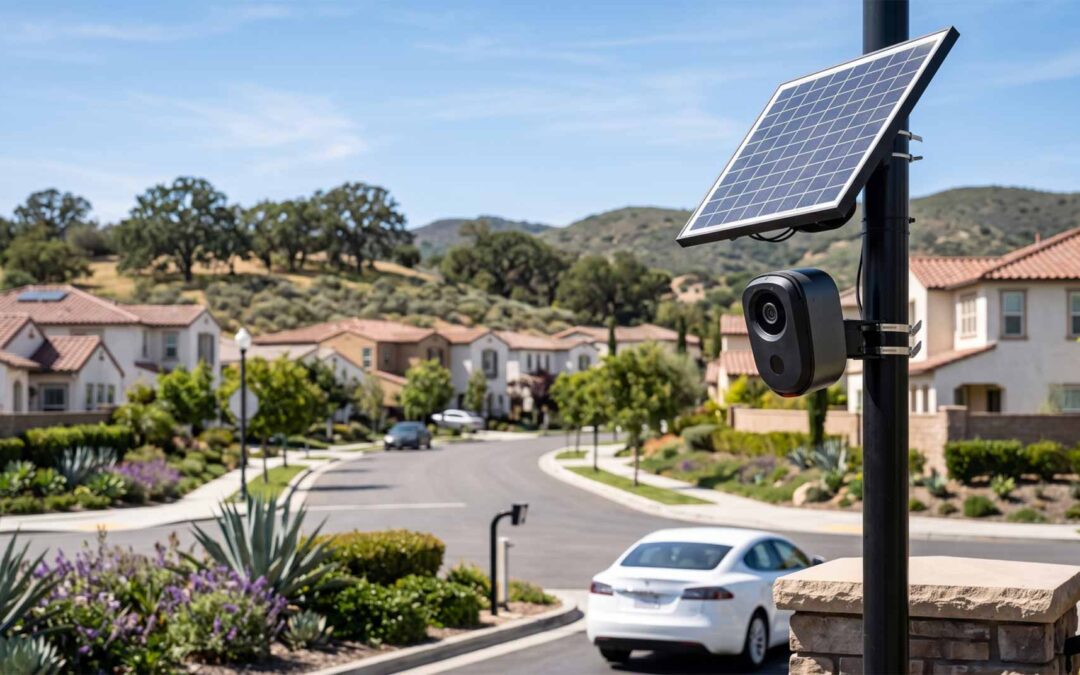
Over the last several years, Flock Safety’s automated license plate reader (“ALPR” or “Flock camera”) cameras have spread from public streets into California HOA communities, and during this time period more and more HOAs across California have installed them at neighborhood entrances and along HOA-owned roads. These cameras photograph every vehicle that passes, capture the plate along with the date, time, and location, and feed that data into a searchable database that holds the information for a set retention period. In short, every homeowner who drives in and out of a neighborhood featuring ALPR cameras leaves a digital record of their movements, which their HOA controls. [Flock Safety is an Atlanta-based company that makes ALPR cameras, and unlike many other surveillance vendors, sells them directly to HOAs and private neighborhoods rather than only to law enforcement. Its cameras run on solar power and connect wirelessly, making it easy for HOAs to mount them at entrances and along private roads without much cost or added infrastructure.]
HOAs that choose to utilize Flock camera technology take on concrete legal duties. In fact, in 2015, the Legislature enacted SB 34, which they codified in Civil Code 1798.90.5 et seq. Those statutes make it clear that in addition to law enforcement, private entities (like HOAs) that use ALPR cameras / Flock cameras need to safeguard the data collected, adopt written usage and privacy policies, disclose how long they keep the data and when they destroy it, and log the identity and purpose of anyone who accesses the database. The same law contains some teeth, as it hands a homeowner harmed by a violation the right to sue and collect no less than $2,500 in damages, along with punitive damages and attorneys’ fees, albeit subject to vast court discretion.
This Fact Sheet explains the requirements contained in SB 34, how California’s constitutional privacy protections apply, when individual directors and homeowners expose themselves to personal liability for misusing the data provided by Flock cameras, and what steps homeowners can take when their HOAs aim a license plate reader at every car entering or exiting the community.
Key Points
Many homeowners in California tend to think of HOA entrance cameras as a straightforward security measure, so a Flock license plate reader might not automatically raise any red flags. The Davis-Stirling Act is silent on an HOA’s use of Flock cameras, but California’s ALPR statutes, Civil Code 1798.90.5 et seq., are not. The problem seems to lie in the fact that, at least in my experience, while California’s ALPR camera laws establish a strict set of legal duties, most HOAs are likely not in compliance with those laws. And because the potential abuse of the data collected from such technology can be significant, it’s more important than ever for homeowners to be aware of their options, including their right to hold HOAs and individual directors liable for their damages.
- HOAs that use Flock cameras are ALPR operators under California law. Civil Code 1798.90.5 defines a covered “person” broadly enough to include unincorporated associations and legal entities, like HOAs (which in most cases are non-profit mutual benefit corporations). HOAs that operate Flock cameras are ALPR operators within the meaning of the law, and every time an HOA searches that database it also acts as an ALPR end-user. Civil Code 1798.90.51 describes the duties of an ALPR operator, while Civil Code 1798.90.53 describes the duties of an end-user, so an HOA that both runs the cameras and queries the data wears both hats at once and owes both sets of obligations.
- HOAs that operate Flock cameras owe strict data-handling duties to homeowners, residents, and guests. Civil Code 1798.90.51 requires HOAs to maintain reasonable operational, administrative, technical, and physical safeguards that protect the plate data from unauthorized access, use, or disclosure. At the same time, the statute also requires HOAs to adopt written usage and privacy policies, make those policies available to the public in writing, and post them conspicuously on their websites if they have one.
- The ALPR law’s data retention and use policies aren’t suggestions. The ALPR law doesn’t offer HOAs that use utilize Flock cameras mere suggestions. On the contrary, HOAs that’ve installed ALPR cameras must state the authorized purposes for the cameras, identify who may access the data and what training they’ve had, set the retention period and the process for destroying old data, describe the accuracy and error-correction measures, and spell out the restrictions on selling, sharing, or transferring the data to anyone else. Civil Code 1798.90.52 adds a requirement of keeping a running access log that captures the date and time of each search, the plate or query used, the identity of the person who ran it, and the purpose. That same statute requires HOAs to limit use of the data to the authorized purposes their own policies identify, which turns a written policy into an enforceable ceiling on what any director or manager can do with the database. Civil Code 1798.90.53 requires HOAs to build periodic system audits into their policies. [Homeowners should be aware that some of the privacy-related requirements in the ALPR law only apply to public agencies, such as law enforcement, and not to private entities like HOAs. Civil Code 1798.90.55, for example, stops public agencies from selling, sharing, or transferring plate data outside of government, and it requires public comment before those agencies switch a system on. But neither limit reaches HOAs. I only raise this because in practical terms, the data collected by an HOA is more exposed than the data a police department might collect with ALPR cameras located in public areas.]
- California’s constitutional right to privacy limits how far an HOA can track residents’ movements. Despite the exposure I referenced in my comment above, homeowners in California are not left without powerful privacy rights. Indeed, Article I, Section 1 of the California Constitution protects the right to privacy, and courts applying it weigh the intrusion against the privacy interest at stake. A single photograph of a car at an entrance gate is a small intrusion. The potential harm grows, however, when the HOA aggregates weeks or months of entries and exits into a timeline that shows when a resident leaves for work, when the house sits empty, when a resident comes home, and who visits and how often. That accumulated record of a person’s comings and goings implicates the constitutional privacy right in a way a lone snapshot doesn’t, and it gives a homeowner a second, independent ground to challenge how an HOA is running its system. In fact, California courts have turned away privacy claims built on plate collection at a single location that a person can simply choose to avoid, such as a parking garage. Homeowners don’t get that choice because driving through the entrance is the only way to reach their own homes, and the absence of any alternative is what separates HOA surveillance from the claims that have failed. [If you’re interested, I cover the constitutional privacy right in more depth in two related Fact Sheets, “Can a California HOA Install Security Cameras in the Common Areas?” and “Can a California HOA Use Biometric Surveillance in Common Areas?” I also briefly addressed the issue in a short from my podcast, HOA HELL.]
- Individual directors, managers, and homeowners face personal liability for misusing the data, not just the HOA. Civil Code 1798.90.5 defines a covered “person” to include natural persons, so a director who logs into the HOA’s Flock camera database to watch a neighbor’s movements, a manager who pulls a resident’s history for a personal reason, or a homeowner with access who tracks an ex-wife isn’t shielded by the Business Judgment Rule’s presumptions or the corporate form. Civil Code 1798.90.54 lets an individual harmed by a violation sue the person who knowingly caused the harm, and that language points straight at whoever ran the improper search. News reports document police officers using these same systems to track former partners, and a volunteer HOA board that hands database access to untrained members invites the identical abuse inside its own community. [You can learn more about the Business Judgment Rule by reading my Fact Sheet, “What Is the Business Judgment Rule in California HOAs?”]
- A homeowner harmed by a violation of the ALPR law can sue, but the statute leaves the remedy to the court’s discretion. Civil Code 1798.90.54 gives a homeowner harmed by a violation of the Flock camera law, including unauthorized access, misuse, or a data breach, the right to sue the person who knowingly caused the harm. Unfortunately, despite the significant harm that abuse of ALPR data can cause to an individual, the remedies contained in this law are discretionary, where the court may impose damages of no less than $2,500, may add punitive damages when an HOA or a director acts with willful or reckless disregard for the law, and may force the abuser to pay the homeowner’s attorneys’ fees. Homeowners do catch one break, and it comes at the front end rather than the back end. A California appellate court held in 2026 that an HOA’s failure to adopt and publish a compliant policy is itself the harm the statute exists to prevent, so homeowners can sue over a missing policy without proving a data breach, a misused search, or a dollar of financial loss. [The “may” instead of “shall” language found in the law is much weaker than homeowners might find in most other litigation involving their HOAs, and that’s something that I think needs to be changed.]
- Civil Code 5200 doesn’t seem to apply to ALPR data gathered by an HOA. The Davis-Stirling Act’s records law probably won’t let a homeowner demand copies of the footage (even footage of the just the homeowner’s vehicles). Raw plate scans and camera footage don’t fit any of those categories contained in Civil Code 5200, so a homeowner shouldn’t count on that statute as the route to the surveillance data itself. The one document the records law does reach is the HOA’s service agreement with the camera vendor, which qualifies as an executed contract a member can inspect, so a homeowner can at least obtain the contract that spells out how the system operates even though the footage stays out of reach. [For a quick primer on the power of Civil Code 5200, read my Fact Sheet “Can I See My California HOA’s Records? A Homeowner’s Guide to Civil Code 5200.”]
- Homeowners can still demand the HOA’s written privacy policy. While Civil Code 5200 won’t put the footage or plate data in a homeowner’s hands, the ALPR law itself does give homeowners a clear right to the HOA’s privacy policy. Civil Code 1798.90.51 requires HOAs that operate Flock cameras to make their usage and privacy policy available to the public in writing, and to post it conspicuously on any HOA-controlled website. Homeowners who suspect misuse should send their HOA boards a written demand for that policy. If an HOA can’t produce such a policy, then the HOA is in violation of the law even before the question of misuse of the data even arises. The access logs Civil Code 1798.90.52 requires, however, are a different story, since no statute clearly forces HOAs to hand those logs to a member on demand, and they don’t fit a Civil Code 5200 category either. So, while homeowners should demand the access logs, they shouldn’t assume that they have a clean right to receive the logs the way they do with the policy. As usual, everything should be done in writing because it’s that paper trail that will build the record the homeowner will need if their HOA and/or a director turns out to have used the plate data for something the law or policy doesn’t authorize.
- If your California HOA is tracking your license plate with Flock cameras, and you believe that it’s violating the law, call the HOA attorneys at MBK Chapman. The HOA attorneys at MBK Chapman are the best in California when it comes to homeowner-side representation. They understand the ins and outs of the Flock camera statute, and they can advise you if you believe that your HOA is illegally deploying such surveillance technology without regard for the privacy limits imposed by the law. In other words, when an HOA runs license plate readers without a compliant policy, hands the data to untrained board members, or lets a director misuse it, the HOA attorneys at MBK Chapman know how to force the HOA into compliance.
Whether they realize it or not, HOAs that install Flock cameras in their communities step into roles that California regulates closely. Civil Code 1798.90.5 et seq., along with California’s constitution, impose real duties on HOAs who choose to implement Flock camera technology. And while the law’s teeth are discretionary in nature, an HOA or director who abuses the data collected by an ALPR camera faces liquidated damages, punitive damages, attorneys’ fees, and significant corporate and personal liability.
FAQs
Does my California HOA have the legal right to track my license plate with Flock cameras?
Yes, HOAs can install license plate readers at entrances and along HOA-owned roads, but the moment they do, Civil Code 1798.90.5 treats them as automated license plate reader (or ALPR) operators and loads them with duties. Those HOAs have to safeguard the data, adopt a written privacy policy, set a retention limit, and log who searches the database and why. The cameras aren’t automatically illegal, but HOAs that run them without meeting those requirements can face significant financial liability.
Does my HOA have to tell me how it uses the license plate data it collects from its use of Flock cameras?
Yes. Civil Code 1798.90.51 requires HOAs that operate Flock cameras (or ALPR cameras) to adopt a written usage and privacy policy, make it available to the public, and post it conspicuously on any HOA-controlled website. That policy has to state the authorized purposes for the cameras, identify who can access the data, set the retention period, and spell out any restrictions on selling or sharing the data. Homeowners who can’t locate that policy can demand it in writing.
Can I sue my HOA or a board member who misuses data collected by its Flock cameras?
Yes. Civil Code 1798.90.54 lets a homeowner harmed by a violation sue the person who knowingly caused the harm, and because the law defines a covered “person” to include individuals, that reaches directors, managers, and other homeowners who misuse the data, not just the HOA itself. If a court awards damages, they can’t fall below $2,500, and the court can add punitive damages for willful or reckless conduct plus reasonable attorneys’ fees. Every part of that remedy stays discretionary, so homeowners shouldn’t treat the $2,500 figure as a guaranteed payout.
Can I demand copies of the footage my HOA’s Flock cameras recorded?
Probably not. Civil Code 5200 lets homeowners inspect specific categories of HOA records like financial statements, executed contracts, meeting minutes, and membership lists, and raw plate scans and camera footage don’t fit any of those categories. The one related document Civil Code 5200 does reach is the HOA’s service contract with the camera vendor, which qualifies as an executed contract a member can inspect. So homeowners can get the agreement that governs how the system runs, but they shouldn’t count on the Davis-Stirling Act to pry loose the footage itself.

About Michael Kushner
Michael Kushner is a California attorney with over 30 years of experience representing homeowners in disputes with their HOAs. He is widely regarded as California’s leading homeowner-side HOA attorney, and has built one of the state’s most prominent law practices dedicated to holding HOAs accountable under the Davis-Stirling Act and California law.
In addition to his law firm’s work, Michael is a recognized lecturer, author, and the host of the hit HOA HELL podcast, where he provides homeowners living in HOA-governed communities with clear, practical strategies for dealing with bad HOAs. He’s also the author of the best-selling book, HOA HELL | California Homeowners’ Definitive Guide to Beating Bad HOAs, which has become a go-to resource for both homeowners seeking real-world solutions to their HOA disputes, as well as those good HOA board members who are interested in doing a good job.
About MBK Chapman Fact Sheets
Homeowners searching for answers online will often come across articles that appear authoritative, but are actually written as search-engine marketing content rather than by an experienced HOA lawyer. These pieces tend to prioritize keyword density over clarity, accuracy, or legal context, which often leaves homeowners more confused than informed.
At MBK Chapman, our Fact Sheets are part of our HOA Law Library and are written by Michael Kushner, an HOA lawyer with decades of hands-on experience representing California homeowners. In fact, Michael Kushner is the HOA lawyer who pioneered the systems and strategies used by some of California’s most successful homeowner-side HOA law firms.
Each Fact Sheet is deliberately concise, statute-based, and designed as a quick-reference guide to help homeowners understand key HOA laws and enforcement rules at a glance.
AND DON’T FORGET TO TUNE INTO MY PODCAST, HOA HELL
YOU CAN ALSO ORDER MY GROUNDBREAKING BOOK
HOA HELL | California Homeowners’ Definitive Guide to Beating Bad HOAs
Amazon | Barnes & Noble
