
Overview
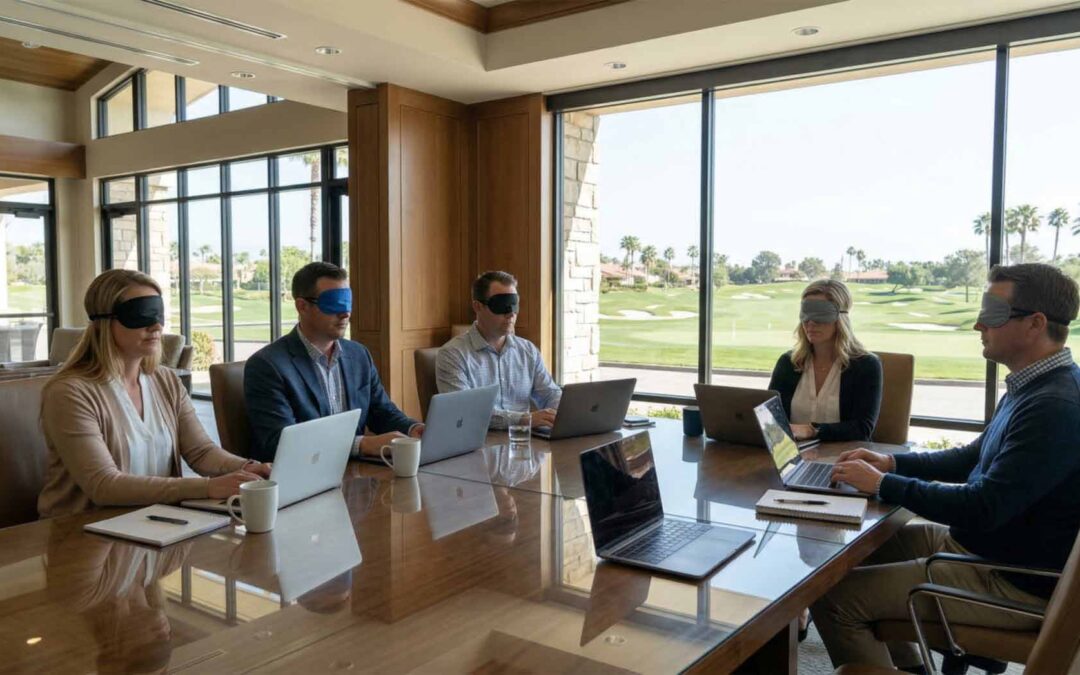
Homeowners often reach a breaking point with their HOA not because of a single bad decision, but because of silence. They report a safety issue. They raise concerns about maintenance. They complain about a neighbor violating the rules. And nothing happens. No response. No action. No explanation.
This issue comes up constantly, including from listeners of my HOA HELL podcast, as well as clients who walk through our doors every day. Homeowners describe the same pattern over and over. They send emails, follow up, and even raise concerns at meetings, only to be met with delay, deflection, or outright non-response. In many cases, the complaints involve serious matters such as financial irregularities, unsafe conditions, or ongoing rule violations that affect daily living. When an HOA refuses to engage, homeowners often assume they have no recourse because no statute explicitly requires the HOA to respond to every complaint.
The Davis-Stirling Act does not contain a single provision that says an HOA must respond to all homeowner complaints. But that does not mean HOAs are free to ignore them. The legality of HOA inaction must be evaluated through several overlapping legal duties that govern how HOA boards are required to operate. Those duties include the obligation to maintain the common areas, the responsibility to enforce governing documents, and the fiduciary duty requiring directors to remain informed and act in the best interests of the HOA. When a board ignores credible complaints that fall within those duties, that HOA exposes itself to potentially serious liability.
This Fact Sheet explains when an HOA’s silence may become legally significant, how California law evaluates situations where boards fail to act, and what homeowners should understand when their complaints are ignored. It also serves as the starting point for a broader series examining specific types of HOA inaction. [I addressed some of these issues in my recent Fact Sheet, “Can a California HOA Limit or Ignore Homeowner Emails to Management?”]
If you want to understand how HOA inaction can create serious risks when hazards go unaddressed, see the next Fact Sheet in this 4-part series, “What If Your California HOA Ignores Safety Issues or Dangerous Conditions?” And if your concern involves repairs the HOA refuses to handle, the third Fact Sheet in the series, “What If Your California HOA Refuses to Make Repairs to the Common Area?,” explains how California law addresses maintenance failures. Finally, if your HOA is ignoring complaints about other homeowners violating the rules, the fourth Fact Sheet in this series, “What If Your California HOA Refuses to Enforce Its Own Rules?,” breaks down how the Davis-Stirling Act addresses that type of board inaction.
Key Points
HOAs do not operate in a vacuum. The Davis-Stirling Act and related California statutes impose affirmative duties on the vast majority of HOA boards to maintain the common areas, enforce the governing documents, and act with reasonable care when issues are brought to their attention. When a homeowner raises a complaint that falls within those duties, the HOA must evaluate the issue and make an informed decision. Silence is not a substitute for action.
- HOA boards are not required to respond to every complaint, but they must act when a complaint implicates their legal duties. HOAs may disregard trivial, repetitive, or abusive communications. That changes when a homeowner raises issues involving maintenance, safety, financial concerns, or rule enforcement. At that point, the HOA’s board must investigate, evaluate, and decide how to respond. Ignoring these types of complaints is a failure to perform required functions.
- Ignoring valid maintenance or repair complaints is illegal. Unless otherwise stated in the CC&Rs, Civil Code 4775 places responsibility on HOAs to maintain, repair, and replace common areas. When a homeowner reports a problem involving common area components, the HOA must investigate and determine what action is required. If the HOA ignores complaints about leaks, structural issues, or deteriorating conditions, the problem can worsen and lead to significant damage. In those situations, the HOA’s failure to act will support a claim for breach of its maintenance obligations.
- Failure to act on reported rule violations can amount to selective enforcement. HOA boards have a duty to enforce their governing documents in a fair and consistent manner. When a homeowner reports violations and the HOA chooses to ignore them, the board risks losing the ability to enforce those same rules against other members. Ignoring violations in one instance while enforcing them in another exposes the HOA to claims of arbitrary or selective enforcement. [If you’d like to read more about selective enforcement, you can check out an article I wrote titled “Selective Enforcement in California HOAs: What It Is and How Homeowners Can Fight Back,” or you can read any number of my Fact Sheets, including “Selective Enforcement in California HOAs: What It Is and Why It’s Illegal” and “Examples of Selective Enforcement in California HOAs: Uneven Rule Enforcement.”]
- HOA directors must make reasonable inquiries when homeowners raise credible concerns. Corporations Code 7231 requires directors to act with the care an ordinarily prudent person would exercise in similar circumstances. That duty includes making reasonable inquiries when a homeowner raises credible issues about finances, safety hazards, maintenance problems, or other HOA operations. Directors cannot satisfy that duty by doing nothing.
- The Business Judgment Rule does not protect HOA boards that fail to act. Courts defer to decisions made by HOA directors when those decisions are informed and made in good faith. That protection depends on the board actually making a decision. When an HOA board ignores a complaint and fails to act where action is required, it forfeits the protections typically afforded to discretionary decisions. [I touch more on this particular issue in my Fact Sheet, “When the Business Judgment Rule Does Not Protect an HOA Board.”]
- Homeowners should create a clear record showing that the HOA had notice of the issue. Homeowners should document complaints in writing, identify the specific issue, and preserve all correspondence. Raising the issue at open meetings and following up in writing helps establish that the HOA knew about the problem and chose not to address it. That record becomes critical if the dispute escalates.
- If your HOA refuses to address legitimate complaints, call MBK Chapman. The HOA attorneys at MBK Chapman are among the most respected homeowner-side HOA lawyers in California. Persistent inaction by an HOA often signals deeper governance problems that require legal intervention. And when such intervention is necessary, you want us on your side.
HOA boards must act when issues fall within their legal responsibilities. When they choose not to, that decision carries consequences.
FAQs
Can a California HOA ignore homeowner complaints?
No. While an HOA is not required to respond to every minor or repetitive complaint, it cannot ignore complaints that involve fulfilling its legal duties. When, for example, a homeowner raises issues involving things like maintenance, safety, finances, or rule enforcement, the HOA must investigate and make a decision.
What happens if my HOA ignores a maintenance or repair issue?
If the issue involves the common area, the HOA has a duty under Civil Code 4775 to maintain, repair, and replace those components unless the CC&Rs state otherwise. Ignoring reported damage or deterioration can expose the HOA to significant liability for resulting harm and repair costs.
Can an HOA ignore complaints about rule violations by other homeowners?
No. HOA boards have a duty to enforce their governing documents in a fair and consistent manner. Ignoring reported violations can lead to claims of selective enforcement and may prevent the HOA from enforcing those same rules later.
Does the Business Judgment Rule protect an HOA that refuses to act?
It depends. A court may defer to an HOA board’s decision not to act if the board made that decision in good faith, after reasonable inquiry, and in a manner the directors believed served the HOA’s best interests. The problem arises when the HOA ignores the issue, fails to investigate it, or has no reasonable basis for doing nothing. In those cases, the Business Judgment Rule will almost certainly not protect the directors from liability.
What should I do if my HOA keeps ignoring my complaints?
Document everything in writing, including the issue you reported and when you reported it. Raise the issue at open meetings, follow up in writing, and preserve all communications. Creating a clear record that the HOA had notice of the issue is critical if further action becomes necessary. If that doesn’t work, or if you want help at any stage of the process, call us at MBK Chapman. There’s a reason why this law firm is highly respected in this area of the law.
Does my HOA have to investigate complaints before deciding not to act?
Yes. HOA boards must make reasonable inquiries before deciding how to respond to a complaint. Directors cannot ignore credible reports of maintenance issues, safety hazards, financial concerns, or rule violations without first understanding the situation. A decision not to act, if it is made after reasonable investigation and in good faith, may be protected. Ignoring the issue without inquiry is not.

About Michael Kushner
Michael Kushner is a California attorney with over 30 years of experience representing homeowners in disputes with their HOAs. He is widely regarded as California’s leading homeowner-side HOA attorney, and has built one of the state’s most prominent law practices dedicated to holding HOAs accountable under the Davis-Stirling Act and California law.
In addition to his law firm’s work, Michael is a recognized lecturer, author, and the host of the hit HOA HELL podcast, where he provides homeowners living in HOA-governed communities with clear, practical strategies for dealing with bad HOAs. He’s also the author of the best-selling book, HOA HELL | California Homeowners’ Definitive Guide to Beating Bad HOAs, which has become a go-to resource for both homeowners seeking real-world solutions to their HOA disputes, as well as those good HOA board members who are interested in doing a good job.
About MBK Chapman Fact Sheets
Homeowners searching for answers online will often come across articles that appear authoritative, but are actually written as search-engine marketing content rather than by an experienced HOA lawyer. These pieces tend to prioritize keyword density over clarity, accuracy, or legal context, which often leaves homeowners more confused than informed.
At MBK Chapman, our Fact Sheets are part of our HOA Law Library and are written by Michael Kushner, an HOA lawyer with decades of hands-on experience representing California homeowners. In fact, Michael Kushner is the HOA lawyer who pioneered the systems and strategies used by some of California’s most successful homeowner-side HOA law firms.
Each Fact Sheet is deliberately concise, statute-based, and designed as a quick-reference guide to help homeowners understand key HOA laws and enforcement rules at a glance.
AND DON’T FORGET TO TUNE INTO MY PODCAST, HOA HELL
YOU CAN ALSO ORDER MY GROUNDBREAKING BOOK
HOA HELL | California Homeowners’ Definitive Guide to Beating Bad HOAs
Amazon | Barnes & Noble
