
Overview
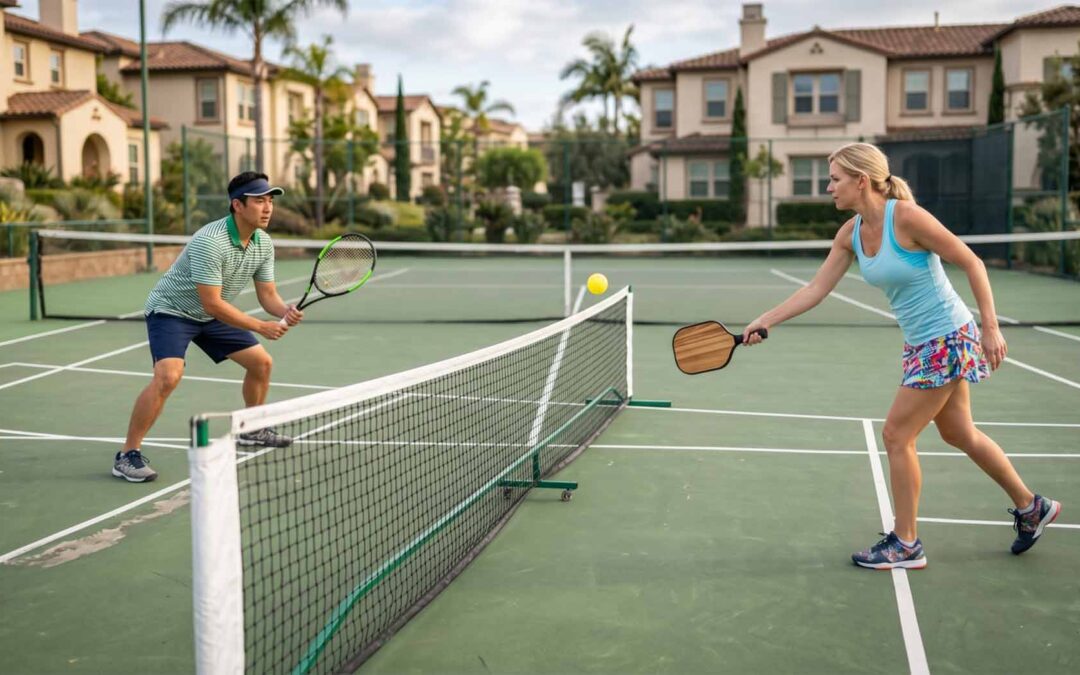
Across California, HOA boards are rapidly converting tennis courts into pickleball courts in response to exploding demand for the sport. In many communities, those conversions have triggered immediate conflict between homeowners who support the change and homeowners who suddenly find themselves living next to dramatically louder and more heavily used recreational facilities. Noise complaints, increased foot traffic, extended play hours, lighting disputes, and loss of traditional tennis amenities have all become recurring flashpoints in California HOAs. In some communities, homeowners have also questioned whether HOA boards even possess the authority to repurpose tennis courts into pickleball courts without first obtaining homeowner approval.
In many California HOAs, the HOA likely does possess broad authority to make unilateral operational decisions involving the common areas, including decisions involving material alterations to their uses. HOA boards frequently rely on that authority, together with protections provided by the Business Judgment Rule, when approving conversions of existing tennis courts into pickleball courts. The scope of an HOA board’s authority, however, depends on the language of the CC&Rs themselves. Some CC&Rs, for example, restrict a board’s ability to materially alter, eliminate, or repurpose common area amenities without a membership vote.
The issue also extends far beyond the conversion itself. Pickleball creates a very different noise profile than tennis. Homeowners throughout California have increasingly complained about the repetitive (and much louder) “popping” sound generated by pickleball paddles and balls, especially where courts sit close to homes, patios, balconies, or bedroom windows. In some HOA communities, homeowners have alleged that the resulting noise substantially interferes with their use and enjoyment of their property. Those complaints raise separate nuisance-related issues that exist independently of whether the HOA properly approved the conversion itself.
This Fact Sheet explains whether California HOA boards have authority to convert tennis courts into pickleball courts without prior approval from the members, how the Business Judgment Rule affects these disputes, and why noise, nuisance, safety, and common area use restrictions can affect such conversions.
You can also watch an episode of our HOA HELL podcast, where Sam and I discussed this pickleball issue:
Key Points
Disputes over tennis court to pickleball court conversions in California HOAs usually center around questions that homeowners type into search engines every day: “Does the board have the authority to repurpose our courts?”; “Does the noise create a legal nuisance?”; and “Do we have a right to a membership vote before the tennis courts disappear?” While many HOA boards possess broad authority to manage recreational amenities and common areas, that authority is far from unlimited. The governing documents still control, nuisance law still applies, and the Business Judgment Rule does not immunize HOA boards from decisions that exceed their authority or unreasonably interfere with homeowners’ rights to quiet enjoyment of their properties.
- In many California HOAs, the board likely has broad authority to convert tennis courts into pickleball courts without a membership vote. Most California HOA governing documents grant HOA boards broad authority to manage, maintain, and operate the common areas without obtaining membership consent as to such decisions. In such cases, the confines of the Business Judgment Rule limit that authority. Additionally, that authority would inherently include the power of an HOA board to alter the purpose or scope of common area amenities. In other words, because recreational court usage decisions often fall within ordinary common area management authority granted to HOA boards under the Davis-Stirling Act and most HOAs’ CC&Rs, many HOA boards possess the inherent authority to convert some or all tennis courts into pickleball courts without first obtaining membership approval. [If you’d like to learn all about the Business Judgment Rule, watch this episode of the HOA HELL podcast, “California HOAs: The Business Judgment Rule,” where Sam and I explained the nature and limits of the Business Judgment Rule. Or if you prefer, you might like to read one or more Fact Sheets that I wrote on the topic, including “How California HOAs Abuse the Business Judgment Rule,” or “What Is the Business Judgment Rule in California HOAs?”]
- Some CC&Rs, however, explicitly restrict an HOA’s ability to materially alter or repurpose common area amenities without homeowner approval. Not all CC&Rs are silent on the issue of converting common area components. Some CC&Rs, for example, require membership approval before the HOA materially alters, removes, eliminates, or repurposes major common area amenities. For example, some HOA-governed communities with robust tennis facilities (like those found near vacation destinations like Palm Springs) have provisions in their CC&Rs that require a vote of the membership before tennis courts can be converted to another use. Likewise, you’ll see similar provisions in horse-friendly communities regarding HOA-owned stables and riding facilities (e.g., some HOAs located in Palos Verdes).
- Homeowners should review their CC&Rs before assuming the HOA board exceeded its authority. Many homeowners incorrectly assume that every significant common area change automatically requires a membership vote. You now know, however, that is often not the case. The starting point in every pickleball conversion dispute is the language of the CC&Rs themselves. Homeowners should carefully review provisions addressing common area alterations, recreational amenities, board authority, nuisance restrictions, architectural modifications, and membership voting requirements before concluding that the HOA board acted unlawfully.
- Even where an HOA board possesses the authority to convert tennis courts into pickleball courts, that does not necessarily make the conversion lawful under all circumstances. In many HOA communities, the real conflict begins after the conversion occurs. Homeowners frequently complain about increased noise levels, parking congestion, longer operating hours, overcrowding, safety concerns, nighttime lighting, and the loss of traditional tennis amenities that they specifically expected when they purchased into the community. In other cases, homeowners objected because the HOA converted all tennis courts rather than merely modifying a portion of the recreational facilities. Those issues can create separate nuisance-related disputes and governing document disputes independent of whether the HOA board initially possessed authority to approve the conversion itself.
- Pickleball noise complaints can create separate nuisance-related disputes independent of the propriety of the conversion itself. Pickleball creates a much sharper, louder, and more repetitive sound profile than tennis, particularly where multiple courts operate simultaneously for extended periods. Homeowners throughout California have increasingly complained about the constant and distinctively loud “popping” sound generated by pickleball paddles and balls, especially where courts sit close to homes, patios, balconies, or bedroom windows. Likewise, while rare on tennis courts, players often accompany pickleball with loud music, which substantially increases the game’s noise profile. In some HOA-governed communities that have already undergone the tennis-to-pickleball conversion, homeowners have complained about early-morning play, late-night games, tournament-style activity, and amplified social gatherings which did not appear nearly as intrusive as they had been before the conversion. Those disputes often become highly fact-specific and frequently depend on issues such as court proximity to residences, hours of operation, duration and frequency of play, existing sound mitigation measures, and the severity of the interference with homeowners’ use and enjoyment of their property. Once those complaints arise, HOA boards cannot simply ignore them. Instead, HOA boards must investigate the complaints reasonably and respond appropriately under the circumstances, which may include limiting hours of operation, restricting organized league play, installing sound mitigation measures, limiting the number of active courts, or prohibiting nighttime play. [If you’re interested in learning a little more on how good HOAs are supposed to handle noise complaints, read my Fact Sheet, “California HOAs and Noise Complaints.”]
- Converting all tennis courts into pickleball courts presents a different legal issue than converting only some courts. Courts are more likely to view partial conversions as ordinary operational decisions falling within the HOA board’s authority. But where an HOA eliminates all tennis facilities within the development, the dispute becomes more complicated. In those situations, homeowners could legitimately argue that the HOA eliminated, rather than merely modified, a longstanding common area amenity. That distinction becomes even more important where the HOA marketed tennis facilities as a major community feature or where homeowners specifically purchased within the development because tennis courts existed.
- HOA boards should not assume that pickleball’s growing popularity automatically authorizes every court conversion. While pickleball has exploded in popularity throughout California, HOA boards still must comply with the governing documents and respond reasonably to foreseeable impacts on surrounding homeowners. In some communities, HOA boards rushed into conversions based solely on current demand trends without adequately evaluating noise impacts, court placement, safety issues, parking concerns, lighting spillover, or the long-term effect on nearby homeowners. Those failures often create avoidable disputes that have led to expensive litigation.
- If your HOA board converted your community’s tennis courts into pickleball courts, and if you think that decision violated the governing documents or your rights, call the expert HOA attorneys at MBK Chapman. Pickleball conversion disputes often involve overlapping issues concerning governing document interpretation, nuisance-related claims, common area authority, and the limits of HOA board discretion under the Business Judgment Rule. The HOA attorneys at MBK Chapman have decades of combined experience representing California homeowners in complex HOA disputes involving all of those very issues. If your HOA board converted tennis courts into pickleball courts and the conversion has triggered serious disputes within your community, contact MBK Chapman today.
Pickleball court disputes in California HOAs rarely involve just one issue. While many HOA boards likely possess broad authority to repurpose recreational facilities, that authority still depends on the governing documents themselves and does not eliminate an HOA’s obligation to respond reasonably when serious noise, safety, or nuisance-related complaints arise after the conversion occurs.
FAQs
Can a California HOA convert tennis courts into pickleball courts without a membership vote?
Often, yes. In many California HOAs, the governing documents grant HOA boards broad authority to manage and operate the common areas, including recreational amenities. That authority frequently allows HOA boards to convert some tennis courts into pickleball courts without first obtaining homeowner approval. But the answer ultimately depends on the language of the CC&Rs. Some governing documents require a membership vote before the HOA may materially alter, eliminate, or repurpose common area amenities.
Can homeowners challenge an HOA pickleball court conversion because of noise?
Yes. Even if the HOA board properly approved the conversion itself, homeowners may still raise nuisance-related complaints based on excessive noise or interference with their use and enjoyment of their property. Pickleball creates a much louder and more repetitive sound profile than tennis, particularly where courts sit close to homes, patios, balconies, or bedroom windows. Whether a homeowner possesses a viable claim often depends on factors such as court proximity, hours of operation, frequency of play, existing sound mitigation measures, and the severity of the interference.
Does converting all tennis courts into pickleball courts create a different legal issue?
Yes. Courts are more likely to view a partial conversion as an ordinary operational decision within the HOA board’s authority. But where the HOA eliminates all tennis courts within the community, homeowners may argue that the HOA effectively removed a longstanding common area amenity rather than merely modifying it. That issue becomes even more significant where the community marketed tennis facilities as a major feature of the development or where the CC&Rs restrict material alterations to recreational amenities without homeowner approval.
Can an HOA ignore homeowner complaints after converting tennis courts into pickleball courts?
No. HOA boards cannot simply disregard substantial nuisance-related complaints once they arise. If homeowners begin reporting excessive noise, parking overflow, safety concerns, lighting spillover, overcrowding, loud music, or interference with quiet enjoyment, the HOA must investigate the complaints reasonably and respond appropriately under the circumstances. Depending on the situation, reasonable responses may include limiting hours of operation, restricting organized league play, installing sound mitigation measures, reducing the number of active courts, or prohibiting nighttime play.

About Michael Kushner
Michael Kushner is a California attorney with over 30 years of experience representing homeowners in disputes with their HOAs. He is widely regarded as California’s leading homeowner-side HOA attorney, and has built one of the state’s most prominent law practices dedicated to holding HOAs accountable under the Davis-Stirling Act and California law.
In addition to his law firm’s work, Michael is a recognized lecturer, author, and the host of the hit HOA HELL podcast, where he provides homeowners living in HOA-governed communities with clear, practical strategies for dealing with bad HOAs. He’s also the author of the best-selling book, HOA HELL | California Homeowners’ Definitive Guide to Beating Bad HOAs, which has become a go-to resource for both homeowners seeking real-world solutions to their HOA disputes, as well as those good HOA board members who are interested in doing a good job.
About MBK Chapman Fact Sheets
Homeowners searching for answers online will often come across articles that appear authoritative, but are actually written as search-engine marketing content rather than by an experienced HOA lawyer. These pieces tend to prioritize keyword density over clarity, accuracy, or legal context, which often leaves homeowners more confused than informed.
At MBK Chapman, our Fact Sheets are part of our HOA Law Library and are written by Michael Kushner, an HOA lawyer with decades of hands-on experience representing California homeowners. In fact, Michael Kushner is the HOA lawyer who pioneered the systems and strategies used by some of California’s most successful homeowner-side HOA law firms.
Each Fact Sheet is deliberately concise, statute-based, and designed as a quick-reference guide to help homeowners understand key HOA laws and enforcement rules at a glance.
AND DON’T FORGET TO TUNE INTO MY PODCAST, HOA HELL
YOU CAN ALSO ORDER MY GROUNDBREAKING BOOK
HOA HELL | California Homeowners’ Definitive Guide to Beating Bad HOAs
Amazon | Barnes & Noble
