
IS YOUR HOA
MAKING YOUR LIFE A LIVING HELL?
CALIFORNIA’S #1 DAVIS-STIRLING ACT ATTORNEYS | HOMEOWNER REPRESENTATION
SILICON VALLEY
TELL US ABOUT YOUR HOA DISPUTE
MBK Chapman can help
THE DAVIS-STIRLING ACT
The Davis-Stirling Act is a set of laws that govern all common interest developments located in California. (Civ. Code, §§ 4000-6150.). Since its passage in 1985, and through its most recent amendment, which went into effect on January 1, 2014, the Davis-Stirling Act acts as the primary rulebook that all common interest developments must follow.
Common interest developments in California take several forms, including (i) planned unit developments; (ii) community apartment projects; (iii) condominium projects; and (iv) stock co-ops.
Within the confines of those four types of developments, you’ll find all sorts of housing arrangements that you’re more familiar with, from detached homes (sometimes referred to as single-family houses), to condominiums, townhomes, and apartments located in tall buildings. But no matter what type of common interest development you might live in, it is governed by a board of directors known as an HOA (i.e., a homeowners association), and that HOA must operate within the confines of the Davis-Stirling Act.
You’re probably already keenly aware of how important a role your HOA plays in maintaining the value of your property and helping you enjoy your home. A good HOA can help keep your property value high; a bad HOA can force your property value to drop and otherwise turn your life upside down. A good HOA is invaluable; a bad HOA is typically a nightmare for its members.
MBK Chapman’s attorneys are experts in representing clients in cases involving the Davis-Stirling Act, representing homeowners throughout the State of California in all manner of disputes involving their HOAs (and neighbors), including:
FAILURE TO REPAIR / FAILURE TO MAINTAIN
In almost all cases, California HOAs are required by their CC&Rs to maintain, repair, and replace the association’s common area components. (Civ. Code, § 4775; see also Civ. Code, § 5550.) Those are, in fact, among an HOA’s most fundamental duties.
If an HOA neglects those duties by, say, refusing to make necessary repairs to a shared condominium roof, then that HOA is in violation of the Davis-Stirling Act, and thus not only can a member of the HOA force the association to make the repairs, but that same member can hold the HOA liable for any damages the owner suffers as a result of the HOA’s unreasonable delay or refusal to make the necessary repairs.
In short, your HOA might be liable to you for violating the Davis-Stirling Act if it:
- refuses to fix (or delayed in fixing) a known leak on your condominium’s roof that later results in water damage to your property;
- ignores structural damage to a common area building that threatens to cause even greater damage down the road;
- neglects to make repairs to your community’s pool and spa, thus robbing you and the other members of its use during the hot summer months; or
- fails to slurry your association’s roads, resulting in potholes that damage your car.
If you'd like to know more, you might be interested in reading the following Articles & Fact Sheets:
- Why California HOAs Are Legally Required to Maintain Common Areas and What Happens When They Don’t
- When Your HOA Won’t Repair or Maintain: Legal Tools to Force Action
Contact Us to Discuss Your HOA Dispute By Calling: (949) 767-3910
In this episode of HOA HELL, California's #1 homeowner-side HOA lawyer, Michael Kushner, tackles one of the most frustrating and costly HOA disputes homeowners face: when the HOA refuses to repair or maintain common areas. From leaking roofs and cracked patios, to slope failures and hidden pipe damage, these common area nightmares cause real harm and often leave homeowners stuck with the bill.
VIOLATIONS OF THE CC&Rs AND OTHER GOVERNING DOCUMENTS
Your HOA’s governing documents are made up of not only the CC&Rs, but also your association’s bylaws, rules, and architectural guidelines. (Civ. Code, § 4150.) The CC&Rs, however, are the most important. An HOA’s CC&Rs are recorded with the county recorder’s office and they constitute the rulebook for you and your HOA, spelling out the rights and obligations that its members owe to the association, and vice versa. Your CC&Rs are, therefore, treated by law as a binding contract that addresses many very important issues, including: (i) the power and authority of the board of directors; (ii) what homeowners may do and not do with their properties; (iii) the association’s and homeowners’ mutual maintenance obligations; (iv) regular and special assessments; (v) lien rights and limitations; and (vi) the day-to-day management of the HOA.
Even though your HOA’s board of directors enjoys many of the same powers and responsibilities as any corporation’s board, your HOA’s board is made up of volunteers who often have no experience running a business, and certainly no experience with the Davis-Stirling Act. Problems arise when board members either fail to do their jobs, or they act arbitrarily, dishonestly, or capriciously. Typical CC&R violations by HOAs include things like:
- failing to preserve, maintain, or repair the association’s common areas;
- failing to address another owner’s nuisance behavior;
- failing to enforce the HOA’s governing documents, especially when such failure is negatively affecting the rights of another HOA member;
- failing to properly manage or account for the HOA’s finances;
- failing to follow the election requirements contained in the Davis-Stirling Act; and
- harassing certain members or treating some HOA members differently than others.
If you'd like to know more, you might be interested in reading the following Articles & Fact Sheets:
- Mandatory Annual Disclosures that CA HOAs Must Make to Members
- The Top 10 Reasons You Should Read Your HOA’s CC&Rs
- Misappropriation of HOA Funds
- Can California Homeowners Disband Their HOAs?
Contact Us to Discuss Your HOA Dispute By Calling:(949) 767-3910
In this episode of HOA HELL, California HOA lawyer and pioneer in homeowner-side law, Michael Kushner, walks HOA members through their CC&Rs, explaining which provisions they can safely skip and which ones they must read and understand. Instead of slogging through a hundred pages of legalese, this guide helps you focus only on the sections that directly impact your daily life and your rights as a homeowner.
DISCRIMINATION AND HARASSMENT
HOAs must abide by the same antidiscrimination and antiharassment laws/regulations that all businesses and associations do. This means that HOAs are not permitted to violate the Fair Employment and Housing Act, the Americans with Disability Act (but only as to the common areas), the Fair Housing Act, the Unruh Civil Rights Act, and most importantly, the Davis-Stirling Act. These laws, and others, of course, not only prohibit discrimination and harassment on the basis of race, gender, sexual orientation, religion, disability, etc., but they also require HOAs to make reasonable accommodations to people with disabilities.
Many older HOAs had overtly discriminatory racial quotas in their CC&Rs. And while most of those CC&Rs have since been updated to remove such language, that does not mean that HOAs don’t regularly violate antidiscrimination laws. Many HOAs still engage in conduct that violate rights of its members and residents by, for example:
- refusing to permit a disabled resident from building a ramp (violates reasonable accommodation regulations; see Civ. Code, § 4760);
- prohibiting a resident from displaying a political banner on the resident’s property (violates Civ. Code, § 4710);
- refusing outright to permit a resident from having a service or comfort animal (violates reasonable accommodation requirements; might also violate other statutes, such as Civ. Code, § 4715);
- barring a resident from operating a daycare center in their home (Health & Safety Code § 1597.40);
- barring domestic partners from enjoying membership rights; and
- controlling occupancy by redefining the term “family” from its legal definition.
View related Articles & Fact Sheets:
- HOA Discrimination, Retaliation, and Harassment in California: Homeowners’ Rights Under Federal and State Law;
- California HOAs and Mental Health: Accommodations and Homeowner Rights; and
- How HOAs Weaponize “Harassment” to Silence Homeowners Who Push Back.
Contact Us to Discuss Your HOA Dispute By Calling: (949) 767-3910
In this episode of HOA Hell, California HOA lawyer and pioneer in homeowner-side HOA law, Michael Kushner, tackles real-life mental health scenarios in California HOAs and explains how disability protections intersect with nuisance rules. You’ll hear how FHA and FEHA apply, where boards cross the line with harassment, public shaming, or refusing reasonable accommodations, and what practical accommodations and processes actually look like.
DISPUTES BETWEEN NEIGHBORS
For the vast majority of people who live in communities governed by an HOA, they live in close proximity to other people. In short, most people have neighbors. “Neighbor disputes” do, therefore, form the basis of many disputes between homeowners and their HOAs (and neighbors). Some of the more common claims that give rise to liability against a neighbor, and in many cases the HOA as well, occur when your neighbor or HOA is guilty of:
- trespassing onto your property—either directly by walking onto your property, or indirectly, such as by allowing water to spread onto, or under, your property;
- participating in illegal activities (e.g., drug dealing, non-permitted activities, etc.) (Civ. Code, § 3479); or
- causing excessive noise, or for that matter, engaging in any other activities that interfere with your reasonable use and quiet enjoyment of your property.
- If you'd like to know more, you might be interested in reading the following Articles & Fact Sheets:
- Disputes Involving Your Neighbor's Trees in California
- California Neighbor Tree Disputes: Damages, Attorney’s Fees, and HOA Involvement
- California Neighbor Tree Disputes: Your Rights on Encroaching Branches and Roots
- When a Neighbor Pepper Sprays Your Dog Without Legal Justification
- A California Homeowner’s Essential Guide to Neighbor Disputes
Contact Us to Discuss Your HOA Dispute by Calling: (949) 767-3910
In this first episode of HOA HELL's 6-part Neighbor Dispute Series, California #1 HOA lawyer and pioneer, Michael Kushner, breaks down one of the most common (and misunderstood) legal tools in California neighbor law: the private nuisance. Whether it’s relentless noise, recurring foul odors, or something harder to pin down like light pollution, Kushner explains when everyday annoyances cross the legal threshold and become actionable. Drawing from Civil Code § 3479 and local ordinances, this episode walks you through the elements of a nuisance claim, how to distinguish between permanent and continuing nuisances, and what kind of relief you can get (e.g., injunctions, money damages, etc.). You'll also get practical tips on how to document incidents, avoid common mistakes, and strengthen your case before calling a lawyer.
Click here for Part 2 of this 6-part Neighbor Dispute series from the HOA HELL podcast.
Part 3 is here | Part 4 is here | Part 5 is here | Part 6 is here.
COMMON AREA DISPUTES
Simply put, your HOA’s common areas refer to areas that are owned by the HOA (rather than by any particular member(s) of the HOA). (Civ. Code, § 4095.)
While many HOAs have in common certain typical kinds of common areas, such as greenbelts/landscaping, sidewalks/walkways, swimming pools, and tennis courts, the other types of common areas you’re likely to see in an HOA have more to do with the type of association you joined. For example, in typical multi-unit communities (e.g., condominiums and townhomes), where the HOAs typically own everything but the air space in the individual units, the common areas you tend to find include things like roofs, hallways and staircases, parking lots/carports, HVAC systems, buildings, and plumbing/electrical.
Regardless, because an association’s common areas are considered amenities by the members, and because they are often very expensive to construct and maintain, frequent common area-related disputes between condominium owners and their HOAs arise regarding things like an HOAs:
- failing to make necessary repairs to the common areas;
- failing to reasonably maintain the common areas;
- neglecting a condo owner’s damage to or destruction of the common areas;
- neglecting to take action against a condo owner who has taken exclusive control over a portion of a common area;
- facilitating the transfer of some portion of the common area to a condominium owner without membership approval; or
- allowing the destruction of a portion of the common area.
If you'd like to know more, you might be interested in reading the following Articles & Fact Sheets:
- Everything You Wanted to Know About Reserve Studies
- Who Pays for California HOA Common Area Repairs? Understanding Civil Code 4775
- Why California HOAs Are Legally Required to Maintain Common Areas and What Happens When They Don’t
Contact Us to Discuss Your HOA Dispute By Calling: (949) 767-3910
Some HOAs are failing to perform the most basic duty they owe to their members—maintaining, repairing, and replacing common area elements. In this episode of HOA HELL, leading pioneer in homeowner-side HOA law in California, Michael Kushner, breaks down why so many California HOAs fall short, how that failure puts YOU at legal and financial risk, and what red flags you should be watching for if your board is dragging its feet. From cracked stairways and leaking roofs to ignored inspection reports and deferred slope repairs, Kushner walks listeners through the most common scenarios where HOA neglect creates real danger. He also outlines exactly what steps you can take to force action before your property value, and your safety, are put at risk.
SELECTIVE ENFORCEMENT / PREFERENTIAL TREATMENT
Your HOA has a duty to enforce the CC&Rs in a manner that is not arbitrary or capricious, as well as by “procedures which are uniformly applied.” Unfortunately, human nature being what it is, condo owners frequently find that the board members of their condominium association’s “serve” because they enjoy the power that being on the board gives them, or they like to tell people what to do. These people are the ones who treat their HOAs like their own personal fiefdoms, often granting themselves and their friends privileges that they deny to other members. Such selective enforcement is illegal.
You may have a claim against your HOA for selective enforcement if your HOA:
- allows a board member to enjoy a perk or privilege denied to other similarly situated condominium owners;
- denies your application for an improvement to your condo after having already approved applications from other similarly situated condominium owners;
- strictly enforces certain rules against you while ignoring similar violations of other members; or
- arbitrarily enforces certain rules while ignoring others.
If you'd like to learn more about selective enforcement in California HOAs, read the following Articles & Fact Sheets:
- How to Prove Selective Enforcement in California HOAs
- HOA Selective Enforcement in California: What It Is and How Homeowners Can Fight Back.
- Examples of Selective Enforcement in California HOAs: Uneven Rule Enforcement
- Selective Enforcement in California HOAs: What It Is and Why It’s Illegal
Contact Us to Discuss Your HOA Dispute By Calling: (949) 691-3317
In this episode of HOA HELL, California HOA attorney and pioneer in homeowner-side HOA law, Michael Kushner, breaks down one of the most common (and most destructive) forms of HOA abuse in California: selective enforcement. Through real case examples, including a dramatic greenhouse dispute in an upscale San Diego community, Michael exposes how bad HOAs apply rules unevenly to reward friends and punish critics. This episode explains how homeowners can recognize selective enforcement, prove it, and demand equal treatment under the Davis-Stirling Act.
NEGLIGENCE BY YOUR HOA / NEIGHBOR
In simple terms, negligence is the failure to act reasonably in a given situation. If your HOA and/or neighbor cause damage to you or your property as a result of unreasonable conduct on their part(s), you may file a claim for negligence.
For example, you may have a strong negligence claim against your HOA/neighbor in any of the following types of situations:
- while watering their balcony, an upstairs neighbor allows an unreasonably excessive amount of water to flow onto your balcony, causing damage to your property;
- your HOA fails to reasonably maintain the common areas, resulting in expensive replacements and repairs; or
- you report a roof leak in your condominium building that the HOA either ignores or delays before taking action, causing damage to your property.
Contact Us to Discuss Your HOA Dispute By Calling: (949) 767-3910
When water leaks into your home, most homeowners are told one of two things: the HOA has to pay for everything, or go through your own insurance. Both answers are often wrong. In Part 1 of this two-part HOA HELL episode, California HOA lawyer and pioneer in homeowner-side HOA law in California, Michael Kushner, breaks down why water intrusion disputes are so common in California HOAs, and why bad boards and managers give oversimplified answers that can cost homeowners thousands of dollars.
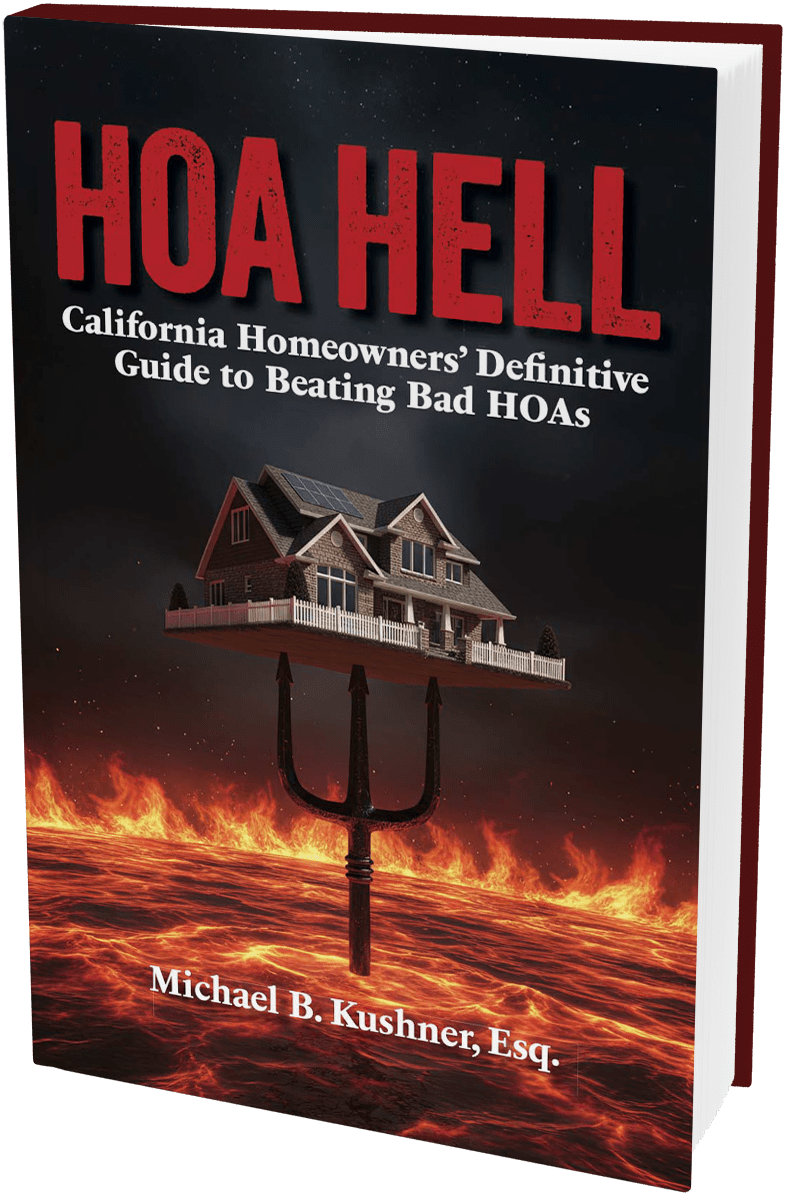
WE LITERALLY WROTE THE BOOK ON BEATING BAD HOAs
HOA HELL™
California Homeowners‘ Definitive Guide to Beating Bad HOAs



WOULD YOU LIKE A FREE ESSENTIAL GUIDE TO HOMEOWNER ASSOCIATIONS?

THIS ESSENTIAL GUIDE CONTAINS VALUABLE INFORMATION ABOUT:
- What an HOA is
- Your Rights as a Homeowner and HOA Member
- Detailed Answers to Frequently Asked Questions
TESTIMONIALS
SOCIAL MEDIA





COMBINED YEARS OF EXPERIENCE
CASES LITIGATED
CONSULTATIONS
PRIORITY: YOU
OUR TEAM
MBK Chapman is led by highly experienced HOA, business, and real estate litigation attorneys with decades of real-world courtroom and transactional experience. The firm is staffed by seasoned lawyers who handle complex, high-stakes matters across homeowner-side HOA law, business litigation, real estate disputes, and corporate representation. Clients who retain MBK Chapman quickly understand why the firm has earned a strong reputation for disciplined advocacy, strategic judgment, and consistent results in difficult cases.
MBK Chapman is also widely recognized as California’s most experienced and leading homeowner-side HOA law firm. Michael Kushner, the firm’s managing partner, pioneered the systems and strategies currently used by the largest homeowner-side HOA law firms in California. Backed by those strategies and systems, Kushner and his team have spent decades representing homeowners in disputes involving issues including abusive boards, selective enforcement, illegal fines, architectural denials, records violations, and other forms of misconduct perpetrated by bad HOAs and management companies. His work in this area has helped shape how homeowner-side HOA cases are handled statewide.
Whether negotiating and resolving complex business and real estate disputes, drafting sophisticated corporate and real estate agreements, or litigating matters through trial, the attorneys at MBK Chapman bring a battle-tested approach grounded in experience, preparation, and accountability. The firm’s lawyers are known for their ability to assess risk realistically, apply pressure effectively, and pursue outcomes that protect their clients’ long-term interests.
Together with a deep bench of experienced attorneys and professional staff, MBK Chapman delivers focused, results-driven legal representation across its practice areas, combining trial experience, transactional insight, and strategic enforcement to meet the demands of complex legal disputes.

Michael B. Kushner
Managing Partner|California

William D. Chapman
Shareholder Emeritus|California

Sean Mills
Senior Partner|Florida

Jason Boss
Senior Partner|California

Jessica Grazul
Partner|California

Sara Etemadi
Partner|California

Sam Khil
Senior Associate|California

Torri Patel
Associate|California

Xu Shirly Sun
Associate|California

Denetta E.J. Scott
Senior Associate|California

Craig Koelling
Associate|Florida
Jess Rodriguez
Senior Associate | California
Education
- J.D., University of California at Los Angeles School of Law, Los Angeles, California
- B.A., University of California at Berkeley, Berkeley, California
- Honors: Phi Beta Kappa
- Honors: With High Distinction
Bar Admissions
- California, 1998
Michael B. Kushner, Managing Partner
Mr. Kushner was born and raised in Long Beach, California. He obtained his undergraduate degree from the University of California at Berkeley, where he was inducted into Phi Beta Kappa in his third year and graduated with High Distinction and honors the following year. Mr. Kushner then attended law school at the University of California at Los Angeles. After moving to Orange County, Mr. Kushner honed his skills at two of Orange County’s most respected law firms before striking out on his own in 2005. From there, he quickly earned a reputation as a formidable and skilled trial and transactional lawyer in the areas of business and real estate law, as well as an engaging and informative lecturer on emerging legal issues.
Although Mr. Kushner had represented homeowners in HOA disputes since the early years of his practice, it was not until 2010 that he identified and deliberately created what would become the first full-scale homeowner-side niche in California HOA law. As HOA-related disputes began arriving in greater volume and with increasing severity, he recognized that the problem extended far beyond isolated misconduct by a handful of boards. Mr. Kushner identified a systemic imbalance of power embedded throughout HOA governance and, at the same time, could not identify a single California law firm that had made it its mission to represent homeowners exclusively in HOA disputes.
Against this backdrop, Mr. Kushner began delivering a series of lectures focused on the Davis-Stirling Act, California’s HOA law. Through those lectures, he reached two critical conclusions. First, homeowners living in HOA-governed communities faced a profound structural disadvantage when dealing with abusive or out-of-control HOAs (i.e., what he frequently calls "bad HOAs" or "HOAs from HELL"). Second, many real estate attorneys who purported to represent homeowners lacked a working command of the Davis-Stirling Act and its enforcement mechanisms.
Mr. Kushner decided to act. He developed proprietary processes, systems, and legal materials designed specifically to enforce the Davis-Stirling Act on the homeowner side. These methods transformed how his firm handled HOA matters, ensured that its attorneys mastered the statute in practice rather than theory, and delivered consistent, high-level representation to homeowners. Through this work, Mr. Kushner pioneered a new homeowner-side model for HOA representation, grew his firm into California’s most respected and well-known homeowner-side HOA law powerhouse, and materially raised the quality of representation available to homeowners statewide. In the process, he hired, trained, and mentored his attorneys, some of whom later went on to lead their own successful homeowner-side HOA law firms in California.
As part of his broader effort to educate and empower homeowners directly, Mr. Kushner has authored hundreds of articles, fact sheets, Guides, and legal analyses focused exclusively on California HOA law from the homeowner’s perspective. His writing emphasizes statutory enforcement, leverage, and real-world outcomes, and homeowners across the state regularly rely on his work for clear, actionable guidance under the Davis-Stirling Act.
Mr. Kushner also created and hosts the hit podcast HOA HELL, a California-focused podcast dedicated to exposing abusive HOA practices and equipping homeowners with practical, enforceable legal strategies. Through detailed episodes, legal analysis, and real-world guidance, homeowners throughout California now look to HOA HELL as a trusted resource for understanding their rights and holding their associations accountable.
Soon after launching the HOA HELL podcast, Mr. Kushner authored his book, HOA HELL | California Homeowners’ Definitive Guide to Beating Bad HOAs. The book quickly became a number one best seller on Amazon and translates nearly three decades of courtroom-tested tactics and homeowner-side strategies into a clear, step-by-step playbook designed specifically for California homeowners confronting HOA abuse, overreach, and mismanagement. HOA HELL is also available online at barnesandnoble.com.
In addition to his unmatched expertise in California HOA law, Mr. Kushner’s practice areas also include business transactions, franchise law, corporate governance, labor and employment, real estate transactions, and entertainment law. In the business and corporate arena, he brings substantial experience structuring and negotiating complex commercial transactions and drafting a wide range of business-related agreements. His corporate transactional practice includes the representation of large, established companies, as well as start-ups and family-owned businesses.
Mr. Kushner has also been repeatedly recognized as a Super Lawyer, an honor awarded to fewer than 5% of attorneys in California, reflecting peer recognition for professional achievement and legal excellence.
Mr. Kushner’s deep expertise in California homeowner-side HOA law, combined with his decades-long commitment to protecting homeowner rights, has made him a leading authority and indispensable advocate for homeowners facing abusive and out-of-control associations throughout California.
Education
- J.D., Pepperdine Law School, Malibu, California
- Honors: Dean’s List
- Philip C. Jessop International Law Moot Court Competition
- B.S., Brigham Young University, Provo, Utah
Bar Admissions
- California, 1981
William D. Chapman, Retired
Mr. Chapman was born and raised in Southern California. Mr. Chapman received his BS in business management/finance from Brigham Young University and his JD from Pepperdine University School of Law. After graduating from law school, Mr. Chapman eventually became a named partner at two of Orange County’s most respected law firms before deciding to form MBK Chapman with his partner, Michael Kushner.
Mr. Chapman has tried cases before judges and juries in state and federal courts throughout the United States at both the trial court and appellate court levels, where he has won multiple $10,000,000+ jury verdicts. Mr. Chapman’s reputation as one of California’s most distinguished trial lawyers led not only to his having been selected to the California Super Lawyers® List every year since 2009, but also to his being designated a “Fellow” of the Litigation Counsel of America, an invitation-only honorary society for trial lawyers composed of less than .5% of American lawyers.
Mr. Chapman’s clients have included Fortune 500 companies, for whom he’s litigated cases involving real estate, business finance, nutraceuticals, computer software, sales, the automotive and boating industries, and insurance bad faith.
Education
- J.D., Florida Coastal School of Law, Jacksonville, Florida
- B.A., University of Florida, Gainesville, Florida
Bar Admissions
- Florida, 2008
- New York, 2012
Sean Mills, Senior Partner (Florida)
Born in Hackensack, New Jersey, Mr. Mills has called Orlando, Florida his home for over three decades. Mr. Mills obtained his undergraduate degree from the University of Florida. After graduating from college, Mr. Mills earned his Juris Doctorate from Florida Coastal School of Law, where he served on Law Review and was a founding member of the Sports Law Society.
After briefly practicing business litigation in Jacksonville, Florida, Mr. Mills returned home to Orlando, and for over 15 years, he focused his practice on real estate law, where he represented a wide range of clients including national and local banks and private real estate investors.
Throughout his legal career, Mr. Mills has amassed extensive experience as a managing attorney for industry leading law firms, and in early 2024, Mr. Mills joined MBK Chapman PC as the senior partner in charge of the firm’s Florida office.
Mr. Mills is admitted to practice in all State, Federal, Bankruptcy, and Appellate Courts throughout the States of Florida and New York.
Education
- J.D., Whittier Law School, Costa Mesa, California
- B.A., University of California at Los Angeles, Los Angeles, California
Bar Admissions
- California, 2016
Sara Etemadi, Partner
Sara Etemadi was born and raised in Southern Orange County, California. She attended the University of California, Los Angeles, where she earned her Bachelor of Arts degree in political science. Ms. Etemadi then attended Whittier Law School, where she received the Dean’s Merit Scholarship and contributed her talents to both the Iranian Student Bar Association and the Public Interest Law Foundation, reflecting an early commitment to advocacy, leadership, and public-facing legal work.
After earning her law degree, Ms. Etemadi began her legal career at a boutique plaintiffs’ litigation firm, where she successfully prosecuted cases involving premises liability, common carrier liability, and real estate litigation. That experience provided her with a strong foundation in fact-driven litigation, client advocacy, and the practical realities of prosecuting complex claims.
Ms. Etemadi also honed her legal skills performing legal work for various non-profit organizations and governmental agencies, gaining valuable perspective on regulatory compliance, public accountability, and the intersection between legal process and institutional responsibility.
In 2017, Ms. Etemadi began working for Michael Kushner at the law firm he founded and managed. In that role, she gained extensive experience across corporate compliance and real estate law, while developing a primary focus on representing homeowners in HOA disputes. Working closely with Mr. Kushner, she became deeply immersed in homeowner-side HOA law, including enforcement strategy, statutory compliance under the Davis-Stirling Act, and the pre-litigation processes critical to holding associations accountable.
When Mr. Kushner formed MBK Chapman, Ms. Etemadi joined him at the new firm as a senior associate. In that capacity, she assumed a leadership role within the firm, heading MBK Chapman’s dedicated pre-litigation HOA disputes team. In this role, she oversees Internal Dispute Resolution and Alternative Dispute Resolution strategies, document demands, statutory enforcement efforts, and early-stage dispute frameworks designed to protect homeowners while positioning matters for successful resolution or litigation when necessary.
In addition to her HOA practice, Ms. Etemadi also leads one of the firm’s transactional law teams, with a focus on corporate compliance and critical business protection documents. Her ability to bridge litigation strategy with transactional precision allows her to deliver comprehensive, forward-looking solutions for both individual and business clients.
In recognition of her leadership, her depth of experience in homeowner-side HOA law, and her central role in the firm’s growth and operations, Ms. Etemadi was promoted to Partner in January 2026. As a partner at MBK Chapman, she continues to play a key role in shaping the firm’s HOA enforcement strategy, mentoring attorneys, and advancing the firm’s mission of disciplined, strategic advocacy on behalf of California homeowners.
Education
- J.D., Southwestern University School of Law, Los Angeles, California
- B.A., Calvin College, Grand Rapids, Michigan
Bar Admissions
- California, 2003
Jason Boss, Senior Partner
Jason Boss was born and raised in San Diego, California. He obtained his undergraduate degree from Calvin College in Grand Rapids, Michigan. After graduating from college, Mr. Boss attended Southwestern University School of Law in Los Angeles, where he was selected as a member of the Honors Trial Advocacy Team, reflecting an early and sustained commitment to courtroom advocacy.
After earning his law degree in 2003, Mr. Boss began his legal career as a prosecutor in the Los Angeles County District Attorney’s Office. In that role, he gained extensive courtroom experience, developed sharp trial instincts, and learned to evaluate cases quickly and decisively. He later transitioned into private practice, working at a civil litigation firm representing business, real estate, and employer and employee clients in complex disputes.
Mr. Boss further honed his litigation and trial skills as a senior litigator at a national law firm representing nationwide business ventures. That experience strengthened his ability to manage high-stakes cases, navigate sophisticated legal issues, and deliver results in demanding litigation environments.
In early 2021, Mr. Boss joined MBK Chapman’s litigation team as a senior associate. From the outset, he distinguished himself through his exceptional work ethic, command of litigation strategy, attentiveness to client needs, and strong courtroom presence. On January 1, 2023, the senior partners of the firm promoted Mr. Boss to Partner in recognition of his performance and leadership.
Since joining MBK Chapman, Mr. Boss has played a central role in the firm’s homeowner-side HOA litigation practice, representing homeowners in disputes governed by California’s Davis-Stirling Act. His approach combines aggressive advocacy with disciplined strategy, allowing him to apply pressure effectively while tailoring each case to the client’s objectives and circumstances. Clients and colleagues alike recognize him as a fierce and highly effective advocate, both in negotiations and in the courtroom.
In January 2026, the firm promoted Mr. Boss to Senior Partner. In that role, he manages MBK Chapman’s entire litigation team, overseeing case strategy, attorney development, and litigation execution across the firm. In addition to his litigation leadership, Mr. Boss plays an active role in the firm’s administrative and operational functions, contributing to internal systems, workflow management, and the continued growth and efficiency of the firm’s practice.
Mr. Boss has consistently earned selection as a Super Lawyer, an honor limited to fewer than 5% of attorneys in California. He is admitted to practice in all State, Federal, Bankruptcy, and Appellate Courts throughout California, as well as the United States Court of Appeals for the Ninth Circuit.
Education
- L.L.M., University of Southern California Gould School of Law, Los Angeles, California
- L.L.B., Universidade Federal de Juiz de Fora, Juiz de Fora, Brazil
Bar Admissions
- California, 2019
- Brazil, 2017
Jessica Grazul, Partner
Jessica Grazul was born and raised in Brazil, where she earned her bachelor’s degree in law before relocating to the United States to continue her legal education. She attended the USC Gould School of Law, where she received the Dean’s Merit Scholarship and earned her Master of Laws degree. While at USC, Ms. Grazul also obtained certification in Alternative Dispute Resolution, reflecting an early focus on resolving complex disputes through strategic, outcome-driven advocacy.
During her studies at USC Gould, Ms. Grazul clerked for the Major Crimes Division of the Los Angeles County District Attorney’s Office. There, she gained firsthand experience working on legally and factually intensive matters, developing strong analytical skills and a disciplined approach to evidence, procedure, and case strategy that continues to inform her litigation practice.
After completing her graduate legal education, Ms. Grazul honed her litigation skills at a civil litigation firm representing clients in personal injury cases, contract disputes, and a broad range of tort actions. In that role, she handled all phases of litigation, including motion practice, discovery, and case evaluation, and developed a strong foundation in adversarial advocacy and dispute resolution.
Ms. Grazul joined MBK Chapman in 2022 as an associate in the firm’s litigation department, where she quickly became a key member of the firm’s homeowner-side HOA practice. Since joining the firm, she has focused extensively on representing homeowners in disputes governed by California’s Davis-Stirling Act, including matters involving enforcement abuse, governance failures, statutory noncompliance, and HOA overreach. Her work in this area reflects a deep understanding of HOA law, procedural strategy, and the practical realities homeowners face when challenging their associations.
Through her HOA practice, Ms. Grazul has developed substantial experience navigating Internal Dispute Resolution and Alternative Dispute Resolution processes, managing discovery and motion practice in HOA litigation, and advancing strategies designed to hold associations accountable while protecting homeowner rights. She is known for her attention to detail, strong command of the record, and ability to translate complex statutory requirements into effective litigation positions.
In recognition of her contributions to the firm, her leadership within the litigation department, and her growing role in the firm’s HOA practice, Ms. Grazul was promoted to Partner in January 2026. As a partner at MBK Chapman, she plays an integral role in guiding homeowner-side HOA litigation, mentoring junior attorneys, and advancing the firm’s mission of delivering disciplined, strategic, and results-driven representation to California homeowners.
Education
- J.D., Suffolk University Law School, Boston, Massachusetts
- B.A., University of California at Irvine, Irvine, California
Bar Admissions
- California, 2019
Sam Khil, Senior Associate
Mr. Khil was raised in the Bay Area and has lived in Orange County since 2001. He received his undergraduate education at the University of California, Irvine, where he graduated magna cum laude with his Bachelor of Arts degrees in International Studies and Sociology. He received his Juris Doctor from Suffolk University Law School with an emphasis in business law and financial services.
Prior to joining MBK Chapman as a senior associate, Mr. Khil worked as general and litigation counsel at multiple Southern California law firms where he gained significant experience handling a wide range of real estate matters including lender rights, title actions, foreclosures, receiverships, eminent domain, forfeiture actions, municipality disputes, probate, HOA law, and general real estate issues.
He also represented HOAs throughout California, serving as general and litigation counsel. He has significant experience advising boards regarding corporate compliance, enforcing declarations, amending governing documents, board governance, the limits of their actions, vendor contracts, easements, member disputes, DFEH issues, general compliance with the Davis-Stirling Act, and a wide range of other matters affecting associations and their members. It is this background that provides Mr. Khil a unique perspective regarding HOAs and their members’ rights.
Education
- J.D., University of California, Davis School of Law, Davis, California
- B.A., Princeton University, Princeton, New Jersey
Bar Admissions
- California, 2018
Torri Patel, Associate
Ms. Patel was raised in Southern California and has lived in Orange County since 2023. She earned her undergraduate degree in Ecology and Evolutionary Biology from Princeton University, where she was also a member of the NCAA Division I Varsity Women’s Volleyball Team. She obtained her Juris Doctor from the University of California, Davis School of Law, where she completed a certificate in Intellectual Property Law and was awarded the Witkin Award for Academic Excellence in Chinese Intellectual Property Law.
Prior to joining MBK Chapman as an associate attorney, Ms. Patel spent eight years in the fashion and business sectors, where she served as an e-commerce and brand manager and later founded and led her own fashion line, BELLE + DAY. In this role, she spearheaded brand development and operations, serving as the legal liaison for both her company and other high-end contemporary and designer fashion brands and boutiques. Her work included overseeing e-commerce strategy, social media marketing, brand management, intellectual property compliance, and contract negotiation.
Ms. Patel further honed her legal skills through clerkships at firms specializing in intellectual property and maritime law and later worked as an associate attorney representing California’s top physicians in high-stakes medical malpractice litigation.
Outside of her legal practice, Ms. Patel is also a represented author with a forthcoming published book series and remains active in athletics as a competitive beach volleyball player.
Education
- L.L.M., Northwestern University Pritzker School of Law, Chicago, Illinois
- L.L.B., Shanghai International Studies University, Shanghai, China
Bar Admissions
- New York, 2021
- California, 2023
Xu Shirly Sun, Associate
Born and raised in Shanghai, China’s financial hub, Ms. Sun earned her bachelor’s degree in law from Shanghai International Studies University. After graduating from university, Ms. Sun attended Northwestern University Pritzker School of Law, where she obtained her masters degree in law.
Her professional journey post-graduation led her to work in both the Orange County and Chicago offices of a national general practice law firm, where she adeptly managed a wide array of legal matters and honed a diverse set of legal skills. Her clientele varied extensively, ranging from individual clients seeking assistance with their everyday legal concerns to international trading companies grappling with cross-border litigation and contractual disputes.
Ms. Sun joined MBK Chapman in January 2024 as an associate, focusing on the representation of homeowners in HOA disputes. She is dedicated to providing the firm’s clients with exceptional legal services and serving their best interests with an empathetic and efficient approach.
Ms. Sun is fluent in Mandarin.
Education
- J.D., Whittier Law School, Costa Mesa, California
- B.A., Pepperdine University, Malibu California
Bar Admissions
- California, 2005
- District of Columbia, 2006
Denetta E.J. Scott, Senior Associate
Born in South Carolina and raised in Southern California, Ms. Scott obtained her undergraduate degree from Pepperdine University. After graduating from college, Ms. Scott attended Whittier Law School, where she was a member of the Trial Advocacy Team and the Black Law Association.
After obtaining her law degree, Ms. Scott worked at civil litigation firms, where she successfully represented clients in a variety of cases involving automobile accidents, business, premises liability, real estate, and employment.
In early 2024, Ms. Scott joined the team at MBK Chapman as a senior associate in the firm’s litigation department. She is admitted to practice in all state, federal, and bankruptcy courts throughout California and the District of Columbia.
Ms. Scott serves on the board of the Thurgood Marshall Association and is a member of the Orange County Women Lawyer’s Association and the Orange County Bar Association.
Education
- J.D., Washington and Lee University School of Law, Lexington, Virginia
- B.A., University of Central Florida, Orlando, Florida
Bar Admissions
- Florida, 2018
Craig Koelling, Associate (Florida)
Born in Arnold, Missouri, Mr. Koelling has called Florida his home for over two decades. Mr. Koelling earned his undergraduate degree from the University of Central Florida in 2014. After graduating, Mr. Koelling attended Washington and Lee University School of Law.
Mr. Koelling started his law career as an assistant public defender, during which time he gained valuable experience in the courtroom. In 2021, Mr. Koelling left the public defender’s office and went into civil practice, where he focused on property insurance disputes and litigated numerous cases on behalf of insurance carriers throughout the State of Florida.
Mr. Koelling joined MBK Chapman in 2024 as an associate, where he represents the firm’s clients in all manner of business and real estate disputes, with a focus on representing homeowners in disputes with their HOAs.
Education
- J.D., Columbia University School of Law, New York
- B.A., University of California at Los Angeles, California
Bar Admissions
- California, 2005
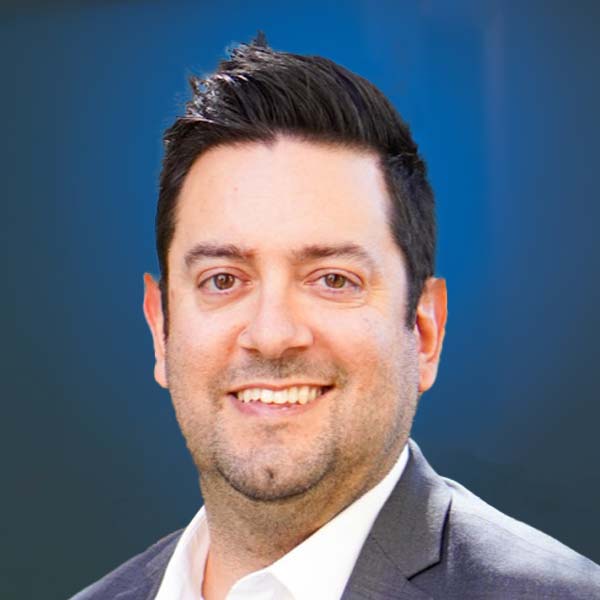
Jess Rodriguez, Senior Associate
Born and raised in Orange County, Mr. Rodriguez attended UCLA, where he earned his Bachelor of Arts in Political Science. He received his Juris Doctor from Columbia University School of Law and contributed to the Science and Technology Law Review during his time there.
After earning his law degree, Mr. Rodriguez began his legal career as a prosecutor with the Orange County District Attorney’s Office, where he spent the next two decades. He conducted numerous jury trials and gained extensive litigation experience across a wide range of cases. His success in handling serious and high-profile trials led to a promotion to management, where he supervised and evaluated other prosecutors. He also frequently presented at the office’s New Deputy Training program, focusing on ethics and discovery.
In 2025, Mr. Rodriguez joined MBK Chapman, bringing his significant courtroom knowledge to the firm’s litigation department.
Outside his legal practice, Mr. Rodriguez serves as an adjunct professor at the University of California, Irvine, where he teaches students in the Master of Legal and Forensic Psychology program about the legal system.
CONTACT US
MBK Chapman PC can help
OFFICE
120 VANTIS DRIVE, SUITE 500
ALISO VIEJO, CA 92656