
Overview
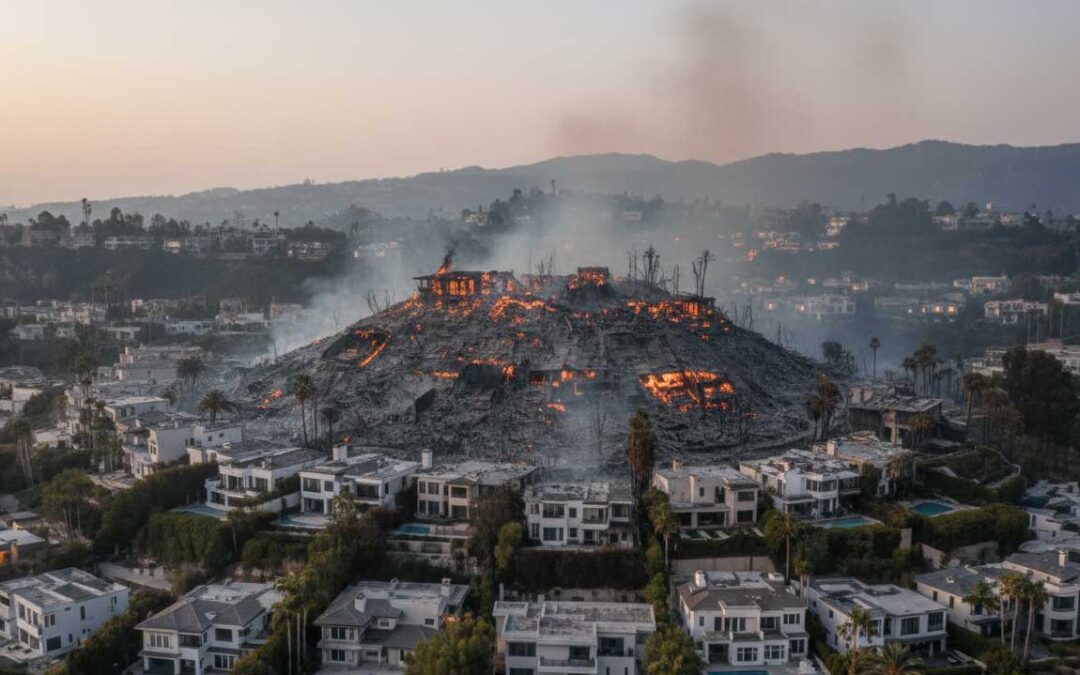
After a declared disaster, Government Code 65914.202 provides powerful protection against local government interference with temporary housing during reconstruction. The statute renders unenforceable any local ordinance that precludes the placement and use of a manufactured home, mobilehome, or recreational vehicle on a private lot for up to three years following a disaster declaration. For homeowners rebuilding in cities affected by events such as the Palisades fire and other major wildfire disasters, that protection can be the difference between remaining on-site and being displaced for years.
But the statute draws a critical distinction. It targets local government ordinances. It does not expressly invalidate private covenants contained in an HOA’s governing documents. That means a city may be barred from enforcing an ordinance that prohibits RV occupancy during reconstruction, while an HOA may still attempt to enforce its CC&Rs prohibiting “temporary structures” or “trailers.” The law clearly preempts municipal restrictions. It does not automatically preempt HOA enforcement.
That tension is where the real legal debate begins. Civil Code 4752 renders void any covenant or condition that prohibits, or has the effect of prohibiting, a substantially similar reconstruction of a home destroyed in a disaster. In some situations, prohibiting a homeowner from living on-site in an RV during reconstruction may materially interfere with or make reconstruction impractical. In high-cost housing markets where rental inventory is scarce following a disaster, forcing a homeowner to rent elsewhere while also financing reconstruction can dramatically increase costs and delay completion. If the HOA’s enforcement materially burdens the ability to rebuild, a homeowner may argue that the prohibition has the effect of prohibiting reconstruction under Civil Code 4752.
In my prior Fact Sheet, “Can My California HOA Block Me from Rebuilding After the Palisades Fire or Other Disasters?,” I explained how SB 625 limits an HOA’s ability to block or delay reconstruction through subjective architectural review, view objections, setback manipulation, and other discretionary tactics. This Fact Sheet turns to the interim period between destruction and completion of rebuilding. It analyzes how Government Code 65914.202 protects homeowners from municipal prohibitions on temporary housing, how HOA enforcement of CC&R restrictions creates a separate layer of conflict, and when an RV ban may rise to the level of interfering with a homeowner’s statutory right to reconstruct under Civil Code 4752.
Key Points
Government Code 65914.202, one of the four new statutes created by SB 625, clearly strips cities and counties of the power to stop a homeowner from living in an RV during disaster reconstruction. But it says nothing about HOA CC&Rs. That silence creates the central conflict addressed in this Fact Sheet: municipal protection on one side, private HOA enforcement on the other.
- Government Code 65914.202 removes local government authority to prohibit temporary RV occupancy during reconstruction. The statute makes it illegal for any city or county to pass laws that prohibit a homeowner from living in a manufactured home, mobilehome, or recreational vehicle on a private lot for up to three years following a disaster declaration. If the property is located within the impacted disaster area, neither the city nor the county can cite the homeowner, shut down utilities, or force removal of the RV during that reconstruction period.
- The statute does not automatically override HOA CC&R restrictions. The law targets local government ordinances. It does not invalidate private covenants (like HOA CC&Rs) restricting temporary structures, trailers, or RV occupancy. A homeowner may be protected against local government enforcement while still facing prohibitions from their HOA.
- This creates a structural tension within SB 625. The Legislature clearly prioritized rapid disaster recovery and displacement prevention, yet it stopped short of expressly preempting HOA temporary structure restrictions. Whether intentional or accidental, that drafting choice means homeowners may win against the city/county and still face fines from their HOA.
- Civil Code 4752 may provide the pathway to challenge HOA enforcement. Civil Code 4752 is the statute that may close that gap. It voids any covenant or condition that prohibits, or has the effect of prohibiting, a substantially similar reconstruction of a residential structure destroyed in a disaster. If enforcing an RV restriction makes reconstruction financially or practically unworkable, the homeowner can argue that the restriction has the effect of prohibiting the rebuild.
- Material interference is the key legal threshold in such an argument. Consider a homeowner whose insurance proceeds barely cover reconstruction and whose lender requires active oversight of the build. Post-disaster rental housing in coastal markets such as Malibu or the Pacific Palisades may be scarce and prohibitively expensive. If the HOA prohibits RV occupancy and simultaneously fines the homeowner daily, those additional housing and penalty costs can consume funds allocated for reconstruction. At that point, the restriction is no longer a mere rule violation. It begins to undermine the homeowner’s ability to complete the rebuild.
- On-site occupancy can directly facilitate reconstruction. Living on the property allows supervision of contractors, protection of building materials, compliance with lender or insurance conditions, and immediate response to construction issues. In those circumstances, an RV ban does more than regulate aesthetics. It interferes with the mechanics of rebuilding, thus violating Civil Code 4752.
- Not every RV restriction will meet that threshold. If the homeowner cannot show that on-site occupancy materially supports or is reasonably necessary for reconstruction, the “effect of prohibiting” argument weakens. This analysis turns on concrete evidence of interference with the rebuild itself, not merely on inconvenience.
- If the HOA loses, it pays. If a homeowner prevails in establishing that HOA enforcement violates Civil Code 4752, the court will award reasonable attorneys’ fees to the homeowner. The risk of mandatory fee-shifting can materially affect a board’s decision to pursue aggressive enforcement.
- Call MBK Chapman’s expert HOA attorneys. If your HOA attempts to prevent you from living in an RV on your property during reconstruction following an applicable disaster, you call us. Nobody understands SB 625 better than we do.
SB 625 eliminates municipal barriers to temporary disaster housing but leaves unresolved the question of HOA enforcement. Whether an HOA can stop a homeowner from living in an RV during reconstruction depends on whether that enforcement crosses the line from rule enforcement into interference with the statutory right to rebuild under Civil Code 4752. That is where the next wave of post-disaster HOA litigation will likely occur.
FAQs
Does SB 625 allow me to live in an RV on my property after a disaster?
Government Code 65914.202 prevents cities and counties from enforcing ordinances that prohibit placement and use of a manufactured home, mobilehome, or RV on a private lot for up to three years following a disaster declaration. If your property is within the impacted disaster area, the city cannot stop you from living in an RV during reconstruction. That law does not, however, directly apply to HOAs.
Does SB 625 automatically override my HOA’s CC&Rs?
No. Government Code 65914.202 targets local government ordinances. It does not expressly invalidate HOA governing document restrictions on temporary structures, trailers, or RV occupancy. HOA enforcement remains a separate legal question.
Can my HOA still fine me for living in an RV during reconstruction?
Maybe. The new law does not apply to HOAs, and so an HOA may attempt to enforce its CC&Rs. Whether that enforcement is lawful, however, depends on whether it merely regulates temporary structures or whether it has the effect of prohibiting reconstruction under Civil Code 4752.
When would an HOA RV ban violate Civil Code 4752?
If enforcing the ban materially interferes with reconstruction, such as by increasing costs to the point that rebuilding becomes impractical or by disrupting necessary on-site supervision, a homeowner may argue that the restriction has the effect of prohibiting a substantially similar reconstruction.
Does the three-year protection apply everywhere in California?
No. The municipal protection in Government Code 65914.202 applies to properties located within an area impacted by a declared disaster and lasts for three years following that disaster declaration.
What happens if I prevail in challenging HOA enforcement?
If a homeowner prevails in establishing that HOA enforcement violates Civil Code 4752, the court shall award reasonable attorneys’ fees. The fee award is mandatory and materially increases the risk to boards that pursue aggressive enforcement without a defensible statutory basis.
About MBK Chapman Fact Sheets
Homeowners searching for answers online will often come across articles that appear authoritative, but are actually written as search-engine marketing content rather than by an experienced HOA lawyer. These pieces tend to prioritize keyword density over clarity, accuracy, or legal context, which often leaves homeowners more confused than informed.
At MBK Chapman, our Fact Sheets are part of our HOA Law Library and are written by Michael Kushner, an HOA lawyer with decades of hands-on experience representing California homeowners. In fact, Michael Kushner is the HOA lawyer who pioneered the systems and strategies used by some of California’s most successful homeowner-side HOA law firms.
Each Fact Sheet is deliberately concise, statute-based, and designed as a quick-reference guide to help homeowners understand key HOA laws and enforcement rules at a glance.
AND DON’T FORGET TO TUNE INTO MY PODCAST, HOA HELL
YOU CAN ALSO ORDER MY GROUNDBREAKING BOOK
HOA HELL | California Homeowners’ Definitive Guide to Beating Bad HOAs
Amazon | Barnes & Noble
