
Overview
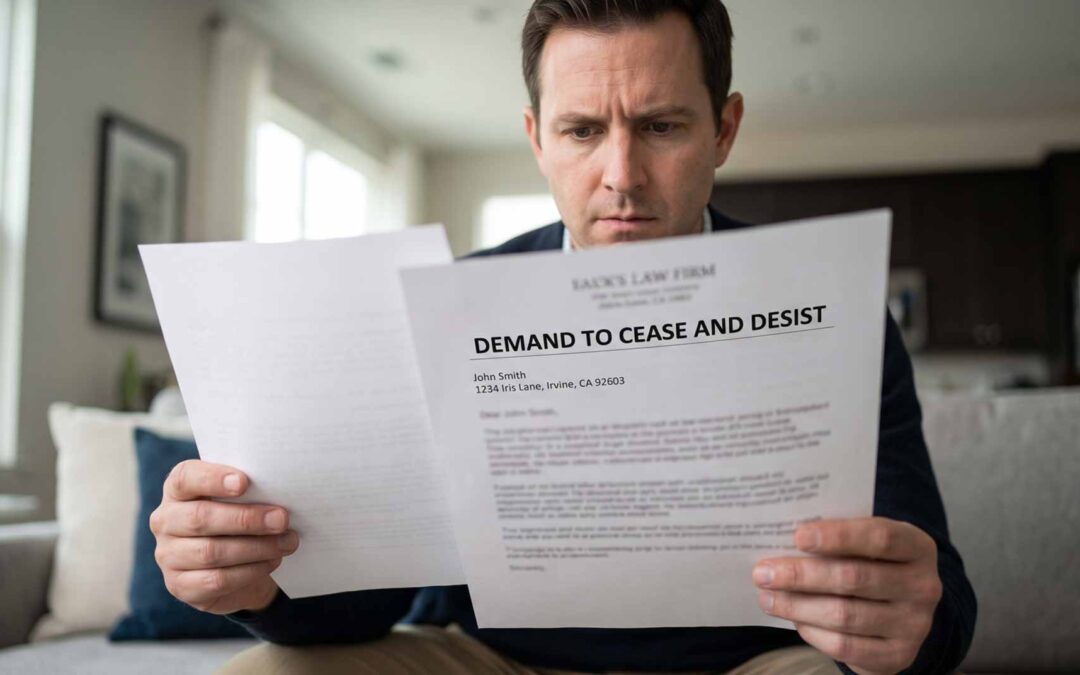
For years, HOA-side law firms in California have accused homeowners of “harassment” to silence those who push back against their HOA boards, and the tactic is becoming more common. It usually starts when a homeowner films vendors violating the CC&Rs, asks workers why they’re on that homeowner’s property, sends a few emails to management, or criticizes the HOA board during open forum. Instead of addressing the homeowner’s concerns, the HOA board turns the matter over to its attorney. The attorney then sends a cease and desist letter accusing the homeowner of harassment and threatening a restraining order or a lawsuit. Some of these letters go further and accuse homeowners of assault or of creating a hostile workplace for the HOA’s vendors.
These HOA-side attorneys don’t use the word “harassment” casually. They use it as a legal term, often by citing California’s civil harassment statute by name. But that statute sets a high bar. It requires violence, a credible threat of violence, or a pattern of conduct that serves no legitimate purpose and causes substantial emotional distress. Filming a CC&Rs violation, questioning a vendor, and criticizing the HOA board at a meeting or on social media all serve a legitimate purpose, and none of them comes close to meeting that definition. That’s why these HOA-side cease and desist letters that cite the statute rarely quote from the statute. The workplace harassment accusations fare no better because homeowners don’t employ HOA vendors and have no contract with them.
HOAs get their attorneys involved (at substantial expense to the homeowners, by the way) for two reasons only. To silence and intimidate homeowners. HOA boards know that letters on their law firm’s letterhead containing legal jargon and threats will frighten most homeowners into silence much more than letters from the management company. And those same HOAs count on the rest of the community noticing what happens to people who challenge the board. Once enough homeowners go quiet, no one is left to object when the HOA ignores the same governing documents it requires everyone else to follow.
This Fact Sheet explains what qualifies as harassment under California law, why filming, questioning vendors, complaining, and criticizing the HOA board don’t qualify, and when the HOA-side attorneys cross the line with their unethical cease and desist letters. It also shows homeowners how to respond in writing when an HOA-side attorney accuses them of harassment.
You can also watch an episode of our HOA HELL podcast on this subject.
Key Points
More and more often, HOAs are unleashing their attorneys on homeowners by accusing them of “harassment” even though the conduct their letters describe doesn’t come close to meeting California’s legal definition of harassment. These so-called cease and desist letters serve two purposes: to intimidate and silence homeowners. The Key Points below explain what the law requires before anyone can accurately label a homeowner’s conduct as harassment and what conduct the law protects. They also explain why the accusations in these letters frequently fail under the very statute HOA-side law firms often cite, and what homeowners should do, and avoid doing, when one of those letters arrives.
- California’s civil harassment statute sets a much higher bar than HOA-side attorneys want homeowners to believe. Code of Civil Procedure 527.6 lets a person who has suffered harassment ask a court for a restraining order. That statute recognizes only three kinds of harassment: (i) unlawful violence, which the statute limits to assault, battery, or stalking; (ii) a credible threat of violence; and (iii) a knowing and willful course of conduct aimed at a specific person that seriously alarms, annoys, or harasses that person, serves no legitimate purpose, and causes substantial emotional distress. If the conduct that a homeowner is being accused of engaging in doesn’t fit into one of those three categories, then as a matter of law, it’s NOT harassment. And yet, the cease and desist letters that so many HOA-side attorneys send homeowners these days accusing them of harassment cite Code of Civil Procedure 527.6 without actually quoting from the statute or mentioning those three categories. Of course, the reason that these HOA-side law firms don’t quote from the statute is because they know that the alleged conduct doesn’t actually qualify as harassment under the law.
- A single incident can count as harassment only when it involves violence or a credible threat of violence. Code of Civil Procedure 527.6 treats unlawful violence and credible threats of violence differently from everything else. One act of assault, battery, or stalking can support a restraining order on its own. So can one credible threat of violence, which the statute describes as a knowing and willful statement or course of conduct that would make a reasonable person fear for that person’s safety or the safety of that person’s immediate family, and that serves no legitimate purpose. Every other kind of harassment requires a course of conduct, which the statute defines as a pattern made up of a series of acts that shows a continuity of purpose. One heated exchange with a vendor, with no violence and no threat, isn’t a course of conduct, and it isn’t harassment no matter what the HOA’s attorneys are telling you. The statute does say the series of acts can occur over a period of time “however short,” so a pattern doesn’t have to stretch over weeks or months. It still has to be a pattern, though, and it still has to meet every other element of the definition. [By the way, homeowners should know that an HOA can’t obtain a civil harassment restraining order for itself because the statute protects only individual human beings. Only the individual vendor, manager, or HOA board member who personally suffered the harassment can ask a court for that order.]
- Conduct that serves a legitimate purpose isn’t harassment, and constitutionally protected activity can’t be used to build a harassment claim. Code of Civil Procedure 527.6 requires that both a credible threat of violence and a course of conduct serve no legitimate purpose. Homeowners documenting a CC&Rs violation, asking vendors why they’re working in an exclusive use common area, or objecting, even loudly or harshly, to what the HOA is doing, are protecting their rights as members. That’s a legitimate purpose, and it defeats a harassment claim even if the vendor, manager, or HOA board member on the receiving end finds the experience unpleasant, annoying, or inconvenient. The statute also expressly excludes constitutionally protected activity from the definition of a course of conduct. Criticizing the HOA’s directors, complaining to management, and speaking out during open forum are forms of speech and petitioning. A petitioner can’t stitch those activities together and call the result a pattern of harassment. [If you’re interested in knowing more about harassment between neighbors, read my Fact Sheet, “Toxic Neighbors in California HOAs: Harassment, Threats, and Nuisance Conduct.”]
- While every restraining order requires clear and convincing evidence to support it, when a harassment claim rests on a course of conduct, the petitioner must also prove substantial emotional distress measured by how a reasonable person would react. For harassment based on a course of conduct, Code of Civil Procedure 527.6 requires conduct that would cause a reasonable person to suffer substantial emotional distress and that does cause the petitioner substantial emotional distress. The petitioner has to satisfy both requirements. Feeling annoyed, embarrassed, or inconvenienced doesn’t qualify as substantial emotional distress. The reasonable person standard also shuts out claims built on an unusually sensitive reaction. A landscaper who falls apart because a homeowner yelled at them about a tree can’t rely on that landscaper’s own fragility to meet a standard that measures how an ordinary person would respond. Whatever kind of harassment a petitioner alleges, a court can issue the restraining order only if it finds clear and convincing evidence that unlawful harassment exists, which is a higher burden of proof than most civil cases require. [To learn more about why emotional distress claims are difficult to win in HOA disputes, read my Fact Sheet, “Emotional Distress Claims in California HOAs: Why They Frequently Fail.”]
- Filming vendors, questioning them, emailing management, and criticizing the HOA aren’t harassment even though they’re exactly the kinds of conduct HOA-side cease and desist letters frequently target. Each of these activities serves the legitimate purpose of making sure the HOA, and the vendors it hires, follow the governing documents that every homeowner has to follow. Civil Code 4515, which is part of the Davis-Stirling Act, protects much of this conduct directly. It bars HOAs from adopting governing documents that stop homeowners from communicating with one another about issues of concern, from circulating information about those issues without prior permission, and from using social media to discuss them, even when the content criticizes the HOA or the way the HOA board runs it. Civil Code 4515 also prohibits HOAs from retaliating against homeowners who exercise any of those rights (which is exactly what a lot of these bogus cease and desist letters amount to).
- Taking photos or video of vendors, managers, or HOA board members in places where you have a right to be isn’t harassment. Homeowners can photograph and film anything they can see from their own property, their exclusive use common area, the common area, or a public street or sidewalk. Vendors who work in the common area, and HOA board members who walk through it, have no reasonable expectation that no one will photograph or film them there. The limit is filming into someone’s private space, such as recording through a window or an open door into another person’s home, or even into their fenced yard. Homeowners who film vendors parking where the CC&Rs forbid it, however, or who record workers who show up unannounced in their exclusive use common area, are creating evidence of a violation of the governing documents. The fact that a vendor or HOA board member dislikes being filmed doesn’t strip that purpose of its legitimacy, nor does it serve to abrogate the homeowner’s right to document things from a place where the homeowner has a right to be.
- Asking vendors who they are and what they’re doing, or telling them they’re violating the CC&Rs, isn’t harassment. Homeowners have every right to ask workers who show up in their exclusive use common area why they’re there, who sent them, and why no one gave notice. Homeowners can also point out to vendors working in the common area that they’re violating the CC&Rs (they can’t, however, order them to stop working). The HOA and the vendors it hires, who act as the HOA’s agents, have to follow the CC&Rs just like every homeowner does. When an HOA responds to these complaints by claiming it gave its vendors “permission” to do what the CC&Rs prohibit, that permission means nothing. If the HOA wants its vendors to do something the governing documents prohibit, the HOA has to amend those governing documents in the proper manner. [In one of MBK Chapman’s prior cases, the CC&Rs of a high-end condominium community limited an indoor parking garage to residents and their registered guests. The HOA’s vendors parked there anyway. Our client told them that they were violating the CC&Rs, and when they ignored her, she photographed and filmed their trucks in the garage and sent the footage to the HOA. Instead of telling its vendors to use the separate parking set aside for them (which was uncovered and outside), the HOA claimed it had given them permission. Its law firm then sent our client a six-page cease and desist letter accusing her of harassment and nuisance, cited the civil harassment statute, and then cited a workplace sexual harassment case that had nothing to do with HOAs, vendors, or any relevant facts of the dispute. The letter threatened to sue our client for labor violations and business torts, yet it didn’t describe a single act of violence, a single threat, or anything else that came close to meeting the legal definition of harassment. Our client had a legitimate purpose for everything she did because she was enforcing the CC&Rs that the HOA had chosen to ignore. In the end, we forced the HOA and its counsel to concede that fact by dropping all of their attempts to discipline our client. The HOA also wrote our client a check for her attorneys’ fees.] [If you’d like to learn more about agency liability between HOAs and their vendors, check out my Fact Sheet, “Is My California HOA Responsible When Its Contractor Damages My Home?”]
- Sending emails to the HOA board or management isn’t harassment unless the volume and content cross into abuse. Code of Civil Procedure 527.6 does list harassing correspondence, including email, as one way someone can engage in a course of conduct that might lead to a valid harassment claim. So email isn’t automatically off-limits as a basis for a harassment claim. But the bar is high, much higher than the HOA law firms who send out the bogus cease and desist letters would like you to think. A homeowner who sends seven or eight emails over the course of a week about an unresolved problem is communicating, not harassing. Sure, the homeowner might even be annoying. But that’s a far cry from constituting harassment. A homeowner who sends dozens of emails an hour, or floods a manager’s inbox and phone 50 or 100 times a day, is a different story. An HOA board or manager who would rather not hear from a particular homeowner can’t turn that preference into a harassment claim. Homeowners who live in the community and pay assessments have every right to raise their concerns with the HOA board and management, both of whom owe them fiduciary duties.
- Criticizing your HOA’s directors during open forum or on social media isn’t harassment even when the criticism is harsh. Civil Code 4925 gives every homeowner the right to speak at any HOA open board meeting, subject to a reasonable time limits and decorum policies. Generally, two to three minutes per speaker qualifies as a reasonable limit. Within that time, homeowners can accuse the HOA board of mismanagement, self-dealing, or even embezzlement, and none of it amounts to harassment. Civil Code 4515 extends the same protection online by barring HOAs from stopping homeowners from using social media to discuss HOA issues, even when the content harshly criticizes the HOA or individual directors. Homeowners who blow past their time and refuse to give up the podium, or who engage in abusive or offensive conduct, are a different matter. But criticism alone, no matter how pointed, never qualifies as harassment. [To learn more about your right to speak during open forum, read my Fact Sheet, “Can a California HOA Stop You from Speaking at a Board Meeting?” If you want to know more about your right to criticize your HOA on social media, read my Fact Sheet, “Can My California HOA Fine Me for Criticizing It on Social Media?”]
- The assault and hostile workplace accusations in these letters fail just as badly as the harassment accusations. HOA-side law firms often stack several legal labels into a single cease and desist letter to make the threat look bigger than it is. Alongside their bogus harassment claims, for example, the letters frequently accuse homeowners of assault, nuisance, interfering with vendor contracts, or creating a hostile workplace for the HOA’s vendors. Each of those labels has its own legal elements, and the letters almost never come close to describing facts that satisfy any of them. An attorney’s decision to call a homeowner’s conduct assault, or to call a vendor’s job site a hostile workplace, doesn’t make either accusation true. Indeed, more often than not, the conduct in question is perfectly legal.
- Yelling at a vendor, or even cursing at one, isn’t assault. Civil assault requires an intentional act that causes another person to fear an imminent harmful or offensive contact. In practical terms, the person accused of assault has to do something that threatens a battery, such as raising a fist, lunging at someone, or moving toward someone in a menacing way. Photographing vendors from a distance, demanding to know who sent them, or raising one’s voice in frustration (or even swearing at them) doesn’t necessarily threaten any physical contact at all. [In one of MBK Chapman’s other cases, HOA vendors showed up without notice to work in our client’s exclusive use common area. When our client asked who they were and who had sent them, they refused to answer. She followed them to their truck, photographed them, raised her voice, and even cursed at them. We told her she shouldn’t have yelled or cursed because the vendors were only doing what the HOA had hired them to do. Even so, the HOA’s law firm sent her a letter accusing her of harassment, assault, and creating a hostile workplace, and threatening to obtain a restraining order against her. The letter didn’t mention a police report, a threat, or any physical act, and even taking its version of events at face value, nothing it described came close to assault or harassment. Needless to say, we pointed out how absurd the cease and desist letter was, especially the laughable hostile workplace claim (our client could never be deemed an employer of these vendors), and we successfully forced the HOA to back off.]
- Homeowners can’t create a hostile workplace for HOA vendors because homeowners don’t employ them. Workplace harassment laws impose duties on employers and protect the people who work for them. The vendors that HOAs hire are independent contractors, not HOA employees, and their contracts run with the HOA as a corporation, not with individual homeowners. Homeowners are neither the vendors’ employers nor in privity of contract with them, which means no direct agreement binds a homeowner and a vendor to each other. In almost every situation, that means no labor law obligations flow between them. The workplace sexual harassment case that one HOA-side law firm cited involved an employee whom coworkers repeatedly harassed. It had nothing to do with a homeowner objecting to how an HOA vendor did its job. [An HOA could, on the right facts, sue a homeowner for interfering with a vendor contract if the homeowner’s conduct drove a vendor to abandon its work. That’s a business tort with its own elements, though, has nothing to do with dressing such conduct up as harassment or a labor claims.]
- It is unethical for California attorneys to knowingly misstate the law to homeowners to gain an advantage for their HOA clients. California’s Rules of Professional Conduct bar attorneys from knowingly making a false statement of material fact or law to anyone they deal with on a client’s behalf. That includes the homeowners who receive cease and desist letters from HOA-side law firms. The rule turns on what the attorney knows. The attorneys who write these bogus intimidation letters for their HOA clients have a problem whether they know they’re misstating the law or not. If the HOA’s attorney knows that he or she is misstating the law, then that attorney can be disciplined for violating applicable ethical rules. If, on the other hand, the HOA-side attorney is ignorant of the elements, and is just writing what his or her client wanted, then the HOA is paying an attorney who doesn’t know the law well enough to justify relying on that attorney’s legal advice.
- Homeowners who receive one of these cease and desist letters should respond in writing, calmly and point by point. These letters count on homeowners either going silent or firing back an angry reply that makes them look like the unreasonable party. A measured written response puts the burden back on the HOA-side attorney to support each accusation with facts and law. It also creates a record that homeowners can use later if the HOA escalates the dispute. Before writing anything, homeowners should take the time to calm down and gather their photos, videos, and emails. They should also pull the provisions of the governing documents that support their position and read the statute the letter cites. And, of course, homeowners should call a qualified homeowner-side HOA attorney, like the ones at my firm, MBK Chapman.
- Pro Tip: If you’re going to handle a response on your own, use the “interlineation method” to answer every accusation in the letter. Interlineation means quoting each portion of the HOA-side attorney’s letter that deserves a response and writing your response directly beneath it, sometimes in a different color. It’s the best way to make sure you don’t miss anything. If the letter states something as a fact and it isn’t true, say so and describe the true facts. If the letter reaches a legal conclusion that isn’t supported by the facts, challenge both the premise and the conclusion. When the dispute involves a governing document violation, cite the specific provision the HOA or its vendors ignored, and point out that the HOA can’t give anyone permission to violate it. When the letter cites a statute (like Code of Civil Procedure 527.6), list the elements of harassment and ask the attorney to identify the facts that satisfy each one.
- Keep every communication professional, and direct your complaints to the HOA instead of its vendors. In every exchange, especially one in writing or on video, you want to come across as the reasonable party. Raising your voice or cursing at a vendor might not make the conduct harassment, but it hands the HOA-side attorney a story to tell, and it distracts from the HOA’s own violation of the governing documents. Remember, that for the most part, the vendor at the center of the dispute is just doing what they were told to do by the HOA who hired them. Don’t shoot the messenger. Once a cease and desist letter arrives, however, keep documenting violations from places where you have a right to be. Send your complaints to the HOA board and management in writing, and don’t engage the vendors in heated confrontations that the HOA can use against you.
- Remind the HOA-side attorney that a lawsuit over protected speech carries its own financial risk for the HOA. Code of Civil Procedure 425.16, California’s anti-SLAPP statute, lets defendants ask a court to strike a lawsuit that targets their exercise of free speech or the right to petition in connection with a public issue. When a defendant wins that motion, the statute requires the court to award that defendant’s attorneys’ fees and costs. The statute doesn’t apply until someone files a lawsuit, so it can’t stop a cease and desist letter. Still, referencing it in your response tells the HOA-side attorney that you know your rights. If the threatened lawsuit would target comments you made at a board meeting or complaints you sent to the HOA, it also warns the attorney that the HOA could end up paying your legal bills. The same kind of risk exists with a restraining order. Code of Civil Procedure 527.6 allows a court to award attorneys’ fees to the prevailing party, so a vendor or manager who files a baseless petition can end up paying the homeowner’s fees. [To learn more about California’s anti-SLAPP statute, read my Fact Sheet, “Can I Sue My California HOA for Defamation? The Anti-SLAPP Trap for Homeowners.”]
- If an HOA-side law firm has accused you of harassment for filming, questioning vendors, or criticizing your HOA, call the HOA attorneys at MBK Chapman. The HOA attorneys at MBK Chapman represent homeowners exclusively, and they know how to dismantle the baseless and frequently bogus harassment, assault, and hostile workplace accusations that HOA-side law firms use to intimidate and silence homeowners. Don’t let a letter on law firm letterhead scare you into silence. Call MBK Chapman, and we’ll set your HOA straight.
If everything is harassment, then nothing is harassment. Stretching the word to cover a photo of a vendor’s truck or a few pointed comments at open forum cheapens it for the people who suffer real violence and real threats. It also lets HOAs ignore their own governing documents while the homeowners who would object stay quiet. Just because an HOA-side attorney tells you that what you did was harassment doesn’t mean that what you did was harassment. The elements of Code of Civil Procedure 527.6 answer that question, not the attorney who signs the letter.
FAQs
Can my California HOA accuse me of harassment for filming vendors or complaining?
An HOA-side attorney can make the accusation, but filming vendors, questioning them, and complaining about violations of the governing documents don’t come close to qualifying as harassment under California law. Code of Civil Procedure 527.6 recognizes only three kinds of harassment: (i) unlawful violence; (ii) a credible threat of violence; and (iii) a knowing and willful course of conduct that serves no legitimate purpose and causes substantial emotional distress. Homeowners who photograph or film vendors from places where they have a right to be, or who document violations of the CC&Rs, have a legitimate purpose. That legitimate purpose defeats a harassment claim even if the vendor or HOA board member dislikes being filmed or questioned.
Can my HOA get a restraining order against me for harassment?
No. An HOA can’t obtain a civil harassment restraining order for itself because Code of Civil Procedure 527.6 protects only individual human beings. Only the individual vendor, manager, or HOA board member who personally suffered the harassment can ask a court for that order. Even then, the court can issue the order only if it finds clear and convincing evidence of harassment. When the claim rests on a course of conduct, the petitioner must also prove substantial emotional distress measured by how a reasonable person would react.
Is it harassment to send emails to my HOA or criticize the board at a meeting?
No. Sending several emails to the HOA board or management about an unresolved problem isn’t harassment, even if the HOA finds them annoying. Email becomes a problem only when the volume and content cross into abuse, such as dozens of emails an hour. Civil Code 4925 gives homeowners the right to speak at open board meetings, subject to a reasonable time limit, and two to three minutes per speaker generally qualifies as reasonable. Within that time, homeowners can accuse the HOA board of mismanagement or even embezzlement. Civil Code 4515 protects criticism of the HOA on social media, and it also bars HOAs from retaliating against homeowners who exercise those rights.
What should I do if my HOA’s lawyer sends me a cease and desist letter accusing me of harassment?
Don’t panic, and don’t fire back an angry reply. Gather your photos, videos, emails, and the governing document provisions that support your position. If you choose to handle the matter on your own, then remember that a strong response consists of your answering the demand letter in writing, calmly, and point by point. You should correct every false fact, challenge every unsupported conclusion, and ask the HOA-side attorney to identify the facts that satisfy each element of the harassment statute. Keep every communication professional, send your complaints to the HOA board and management instead of the vendors, and keep documenting violations from places where you have a right to be. Or you can call the HOA attorneys at MBK Chapman and let us handle it for you.

About Michael Kushner
Michael Kushner is a California attorney with over 30 years of experience representing homeowners in disputes with their HOAs. He is widely regarded as California’s leading homeowner-side HOA attorney, and has built one of the state’s most prominent law practices dedicated to holding HOAs accountable under the Davis-Stirling Act and California law.
In addition to his law firm’s work, Michael is a recognized lecturer, author, and the host of the hit HOA HELL podcast, where he provides homeowners living in HOA-governed communities with clear, practical strategies for dealing with bad HOAs. He’s also the author of the best-selling book, HOA HELL | California Homeowners’ Definitive Guide to Beating Bad HOAs, which has become a go-to resource for both homeowners seeking real-world solutions to their HOA disputes, as well as those good HOA board members who are interested in doing a good job.
About MBK Chapman Fact Sheets
Homeowners searching for answers online will often come across articles that appear authoritative, but are actually written as search-engine marketing content rather than by an experienced HOA lawyer. These pieces tend to prioritize keyword density over clarity, accuracy, or legal context, which often leaves homeowners more confused than informed.
At MBK Chapman, our Fact Sheets are part of our HOA Law Library and are written by Michael Kushner, an HOA lawyer with decades of hands-on experience representing California homeowners. In fact, Michael Kushner is the HOA lawyer who pioneered the systems and strategies used by some of California’s most successful homeowner-side HOA law firms.
Each Fact Sheet is deliberately concise, statute-based, and designed as a quick-reference guide to help homeowners understand key HOA laws and enforcement rules at a glance.
AND DON’T FORGET TO TUNE INTO MY PODCAST, HOA HELL
YOU CAN ALSO ORDER MY GROUNDBREAKING BOOK
HOA HELL | California Homeowners’ Definitive Guide to Beating Bad HOAs
Amazon | Barnes & Noble
