
Overview
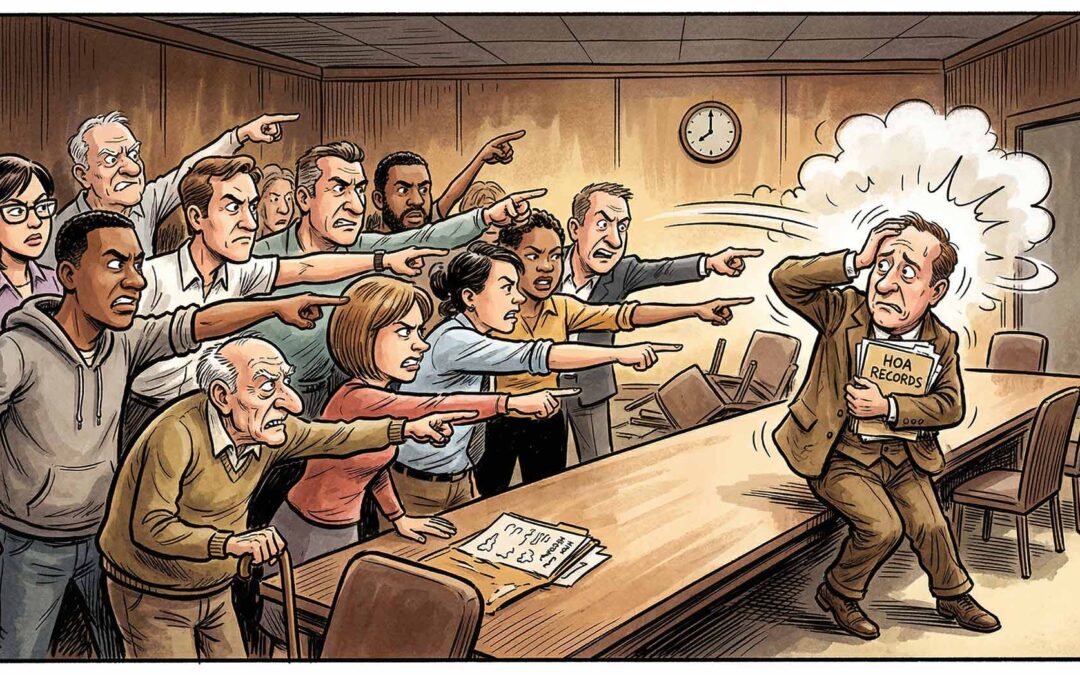
Most California homeowners assume they can simply sue the individual directors responsible if their HOA causes harm. In reality, however, that’s not so easy to do. California law strongly protects volunteer HOA board members from personal liability, and in most disputes, the HOA itself, not the individual directors, is the proper defendant.
Those protections, however, are not unlimited. California statutes and doctrines like the Business Judgment Rule shield board members from personal liability, but only when they act in good faith, stay within the scope of their authority, and make reasonably informed decisions. When directors step outside those boundaries through misconduct, intentional wrongdoing, or an unreasonable failure to properly carry out their duties, the legal protections that normally apply no longer protect them.
This distinction matters because many homeowners misunderstand how these protections work. They either assume board members can never be sued personally, which is incorrect, or they assume that they always can, which is also incorrect. The reality sits in between, and understanding where that line is drawn determines whether a claim against an individual director is viable.
This Fact Sheet explains when California law allows homeowners to sue HOA board members personally, what legal protections normally apply, and the specific types of conduct that expose directors to individual liability. [If you’d like to take a deeper dive into this subject, you may want to read my article “Can You Sue HOA Board Members in California? What Homeowners Need to Know.” You might also enjoy a 90-second video from my HOA HELL podcast, “Can You Sue an HOA Board Member Personally? Here’s When the Answer Is ‘Yes.’”]
Key Points
To determine whether you can sue HOA board members personally in California, you need to understand both the legal protections that normally shield them and the specific types of conduct that remove those protections. The following points explain how that framework works in practice and when individual liability becomes a viable path.
- The Davis-Stirling Act protects HOA board members from personal liability. Civil Code 5800 provides immunity to volunteer HOA directors who act within the course and scope of their duties, in good faith, and without willful or wanton misconduct. That same protection can be found in Corporations Code 7231, which applies to directors of all California corporations, a category that most California HOAs fall into. As a result, in most disputes involving budgets, maintenance decisions, or rule enforcement, homeowners must name the HOA itself as the proper defendant, not the individual board members.
- The Business Judgment Rule protects board members only when they act within their legal authority and in good faith. Corporations Code 7231 applies to HOA directors if they operate within the authority granted by the governing documents and California law. When a board member acts outside that authority, courts will not defer to their decisions, and the Business Judgment Rule will not apply. [I’ve covered the Business Judgment Rule extensively in several Fact Sheets and podcast episodes. If you’d like to take a deeper dive into that topic, check out any of the following: “What Is the Business Judgment Rule in California HOAs?,” “California HOAs: The Business Judgment Rule,” “How California HOAs Abuse the Business Judgment Rule,” and “When the Business Judgment Rule Does Not Protect an HOA Board.”]
- Homeowners may pursue personal liability when HOA directors engage in conduct that falls outside protected decision-making. Civil Code 5800 and Corporations Code 7231 protect decisions, not bad behavior. When a board member engages in wrongful conduct that is intentional, reckless, grossly negligent, or outside the scope of their duties, courts may hold them personally liable for the damage they cause other homeowners (or the HOA itself).
- Fraud, oppression, and malice remove statutory protections. Civil Code 5800 does not protect directors who intentionally harm homeowners or act with improper motives. Conduct designed to injure, mislead, or target specific homeowners can support claims against the individual board members involved.
- Direct participation in wrongful acts exposes HOA board members to personal liability. Directors cannot rely on the HOA as a shield when they personally engage in misconduct. If an HOA director participates directly in harassment, retaliation, or interference with property rights, the law treats that conduct as personal behavior rather than protected board action and may give rise to individual liability.
- Financial exposure can extend beyond liability for damages. Even when a director initially receives a legal defense through the HOA’s insurance, the insurer often provides that defense subject to a reservation of rights. If a court later determines that the director’s conduct falls outside Civil Code 5800 or Corporations Code 7231, the insurer or HOA may seek reimbursement of defense costs.
- Homeowners must build a clear factual record to pursue individual claims. Overcoming the protections of Civil Code 5800 and Corporations Code 7231 requires specific, documented facts showing that a director acted outside the scope of their duties or engaged in misconduct sufficient to take them out of the protective presumptions of the Business Judgment Rule. Emails, videos, meeting minutes, written notices, and other records that identify individual conduct are critical to establishing a viable claim against an abusive HOA director.
- If members of your HOA’s board have engaged in conduct that should result in personal liability, call the top-rated HOA attorneys at MBK Chapman. Determining whether a director’s conduct has in fact crossed the line sufficient to hold the director personally liable requires the expertise of an HOA lawyer with deep experience with the Davis-Stirling Act. The HOA attorneys at MBK Chapman have that deep experience.
California law draws a clear distinction between protected board conduct and conduct that exposes individual directors to personal liability. Most board decisions remain protected, but when directors engage in misconduct, act outside their authority, or abandon their responsibilities, the law allows homeowners to pursue claims against them individually and seek damages and other remedies available under the law.
FAQs
Can I sue my HOA board members personally in California, or do I have to sue the HOA?
In most cases, you must sue the HOA, not the individual board members. California law, including Civil Code 5800 and Corporations Code 7231, protects volunteer directors when they act in good faith, within their authority, and with reasonable inquiry. However, you may sue board members personally if their conduct falls outside those protections.
What kind of conduct allows me to sue HOA board members individually?
You may pursue individual claims when board members engage in conduct such as fraud, intentional wrongdoing, abuse of authority, or direct participation in misconduct like harassment or retaliation. These types of actions fall outside the protections of Civil Code 5800 and the Business Judgment Rule.
Does the Business Judgment Rule always protect HOA board members from being sued personally?
No. The Business Judgment Rule, as reflected in Corporations Code 7231, protects decisions made in good faith and within the board’s authority after reasonable inquiry. It does not protect actions taken outside that authority or decisions made without a reasonable basis.
If I sue an HOA board member personally, who pays for their legal defense?
The HOA or its D&O insurance will often provide an initial defense, but that protection is not guaranteed to remain in place. If a court later determines that the board member acted outside the protections of Civil Code 5800 or Corporations Code 7231, the insurer or HOA may seek reimbursement of defense costs from the individual director.
About MBK Chapman Fact Sheets
Homeowners searching for answers online will often come across articles that appear authoritative, but are actually written as search-engine marketing content rather than by an experienced HOA lawyer. These pieces tend to prioritize keyword density over clarity, accuracy, or legal context, which often leaves homeowners more confused than informed.
At MBK Chapman, our Fact Sheets are part of our HOA Law Library and are written by Michael Kushner, an HOA lawyer with decades of hands-on experience representing California homeowners. In fact, Michael Kushner is the HOA lawyer who pioneered the systems and strategies used by some of California’s most successful homeowner-side HOA law firms.
Each Fact Sheet is deliberately concise, statute-based, and designed as a quick-reference guide to help homeowners understand key HOA laws and enforcement rules at a glance.
AND DON’T FORGET TO TUNE INTO MY PODCAST, HOA HELL
YOU CAN ALSO ORDER MY GROUNDBREAKING BOOK
HOA HELL | California Homeowners’ Definitive Guide to Beating Bad HOAs
Amazon | Barnes & Noble
