
Overview
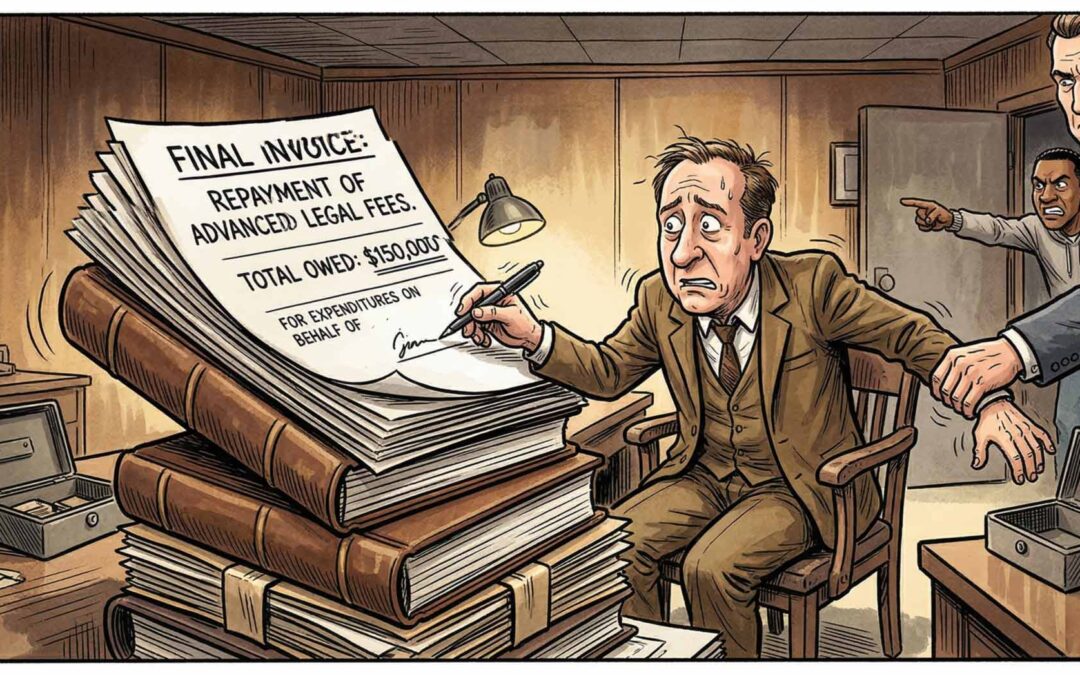
Many California homeowners assume that if their HOA’s insurance or the association itself pays to defend a board member in a lawsuit, that is the end of the story. In many cases, however, that’s not true. Under the right circumstances, the law may require an HOA director who initially receives a legal defense from the HOA to repay those legal fees out of their own pocket. The analysis begins by understanding the difference between an HOA’s duty to defend and a director’s right to indemnity.
This issue arises because the legal protections that apply to HOA directors, including Civil Code 5800 and Corporations Code 7231, do not automatically guarantee permanent coverage for defense costs. Those protections apply only when the director acts in good faith, within the scope of their authority, and without certain types of misconduct. When a lawsuit alleges facts that fall outside those protections, the HOA or its insurer will often provide a defense subject to a “reservation of rights,” which preserves the insurer’s ability to later deny coverage and seek reimbursement from directors personally named in the lawsuit. [If you’d like to read an article or Fact Sheet regarding the conditions under which a homeowner can sue a member of their HOA board, read “Can You Sue HOA Board Members in California? What Homeowners Need to Know” or “Can I Sue My HOA Board Members Personally in California?”]
The practical consequence is significant. An HOA director may believe they’re fully protected while the case is ongoing, only to face personal financial exposure if a lawsuit naming that director ultimately proves that the board member’s conduct falls outside the statutory protections of Civil Code 5800 or the Business Judgment Rule presumption established in Corporations Code 7231. This can include situations involving intentional wrongdoing, abuse of authority, or a variety of other intentional torts that strip the director of their right to indemnity.
This Fact Sheet explains when HOA board members in California must repay legal fees, how reservation of rights letters operate in HOA disputes, and why this issue creates real financial risk for bad HOA directors who assume that their HOAs will always indemnify them no matter the nature of their personal conduct.
Key Points
To understand when HOA board members in California must be forced to repay legal fees, you need to separate two different concepts: the duty to defend and the right to indemnity. The following points explain how those concepts operate, when they diverge, and how that divergence creates real financial exposure for individual directors.
- An initial legal defense does not guarantee protection at the end of a case. In the vast majority of cases filed against individual HOA board members, HOAs and their insurers provide a defense when a lawsuit begins because the unproven allegations fall within potential coverage. That initial defense reflects the duty to defend, however, and not a final determination of coverage. As the case develops, facts may emerge showing that the director acted outside the scope of protected conduct, or otherwise engaged in conduct that precludes coverage. This discovery can eliminate the right to continued coverage or trigger the director’s obligation to repay the insurance company (or HOA) for the defense the insurer provided to that point.
- An insurer’s reservation of rights letter preserves its ability to deny coverage and demand reimbursement later. When an HOA or its insurer agrees to defend a director subject to a reservation of rights, the insurer expressly states that it may later withdraw coverage and seek reimbursement. These letters typically identify specific allegations, such as gross negligence, intentional misconduct, or actions taken outside the director’s authority, all of which may remove the insurer’s obligation to indemnify the board member under Civil Code 5800. Homeowners rarely see these letters, but they represent a critical turning point in determining whether defense costs will ultimately remain covered.
- An HOA Director’s indemnity rights are conditional. Civil Code 5800, a provision of the Davis-Stirling Act, only obligates an HOA to indemnify its board members if those directors acted in good faith and within the proper scope of their duties. If a lawsuit establishes that a director engaged in intentional wrongdoing or acted outside their authority, the HOA no longer carries the obligation to indemnify that board member.
- The Business Judgment Rule offers only conditional protection. Corporations Code 7231 ties the Business Judgment Rule’s presumptions to informed, good-faith decision-making. In other words, HOA directors receive the benefits of the Business Judgment Rule only when they act in the best interest of the HOA and after reasonable inquiry. If a director ignores available information, disregards professional advice, or acts for improper purposes, the law will no longer apply the Business Judgment Rule’s pro-director presumptions. [To learn more about the Business Judgment Rule and how it works in California HOAs, read “What Is the Business Judgment Rule in California HOAs?” and “When the Business Judgment Rule Does Not Protect an HOA Board.”]
- Directors may have to repay defense costs that the HOA or insurer already advanced. When an insurer provides a defense under a reservation of rights, the HOA or insurer may later seek reimbursement if a court or the policy terms determine that the director’s conduct does not qualify for coverage. This can occur after the parties settle, after a court rules on liability, or even after the discovery process develops facts that clearly place the conduct outside statutory or policy protections. In those situations, the HOA or insurer may demand that the director repay tens or hundreds of thousands of dollars in legal fees.
- Common forms of misconduct create real-world exposure. For example, if a board member engages in fraud, targets a homeowner with selective enforcement, manipulates records to justify a decision, or engages in any other intentional wrongful conduct, the director will lose the right to receive indemnity from the HOA.
- If you believe that the conduct of one of your HOA’s board members should prevent the HOA from indemnifying them, contact the HOA attorneys at MBK Chapman. Whether or not a director is entitled to indemnity and a defense is a complicated and involved legal issue that requires the expertise of a lawyer highly experienced in California’s HOA laws. The HOA attorneys at MBK Chapman are among the most highly trained in California, and they have deep experience representing homeowners seeking justice against their bad HOAs.
When a director’s conduct stays within Civil Code 5800 and Corporations Code 7231, the HOA or its insurer will bear the cost of defense and indemnify the board member from claims of misconduct. When it does not, that financial burden can shift back to the individual director, including the repayment of legal fees that the insurer already advanced.
FAQs
Can an HOA board member really be forced to repay legal fees after a lawsuit?
Yes. If an HOA or its insurer provides a defense under a reservation of rights, the law allows them to later demand reimbursement if the director’s conduct does not qualify for coverage. This typically happens when facts show that the director acted outside the protections of Civil Code 5800 or Corporations Code 7231, such as through intentional misconduct or actions beyond their legal authority.
What is a “reservation of rights,” and why does it matter to homeowners?
A reservation of rights means the HOA or insurer defends the director while reserving the ability to later deny coverage and seek repayment. It matters because it creates a situation where a director appears protected during the case but faces personal financial exposure once the parties establish the facts.
Does HOA insurance always cover board members’ legal fees?
No. HOA insurance, including D&O policies, almost always provides an initial defense, but continuing coverage depends on the director’s conduct, as the evidence proves while the case progresses. If the conduct involves fraud, intentional wrongdoing, or actions outside the scope of authority, the insurer may cease providing a defense, deny indemnity, and seek reimbursement of fees the insurer already paid.
What types of conduct can lead to a director having to repay legal fees?
Conduct such as fraud, selective enforcement, manipulation of records, retaliation, or other intentional wrongful acts can eliminate a director’s right to indemnity. When a lawsuit establishes that type of conduct, the HOA or insurer may require the director to repay defense costs that the insurer previously advanced.
About MBK Chapman Fact Sheets
Homeowners searching for answers online will often come across articles that appear authoritative, but are actually written as search-engine marketing content rather than by an experienced HOA lawyer. These pieces tend to prioritize keyword density over clarity, accuracy, or legal context, which often leaves homeowners more confused than informed.
At MBK Chapman, our Fact Sheets are part of our HOA Law Library and are written by Michael Kushner, an HOA lawyer with decades of hands-on experience representing California homeowners. In fact, Michael Kushner is the HOA lawyer who pioneered the systems and strategies used by some of California’s most successful homeowner-side HOA law firms.
Each Fact Sheet is deliberately concise, statute-based, and designed as a quick-reference guide to help homeowners understand key HOA laws and enforcement rules at a glance.
AND DON’T FORGET TO TUNE INTO MY PODCAST, HOA HELL
YOU CAN ALSO ORDER MY GROUNDBREAKING BOOK
HOA HELL | California Homeowners’ Definitive Guide to Beating Bad HOAs
Amazon | Barnes & Noble
