
Overview
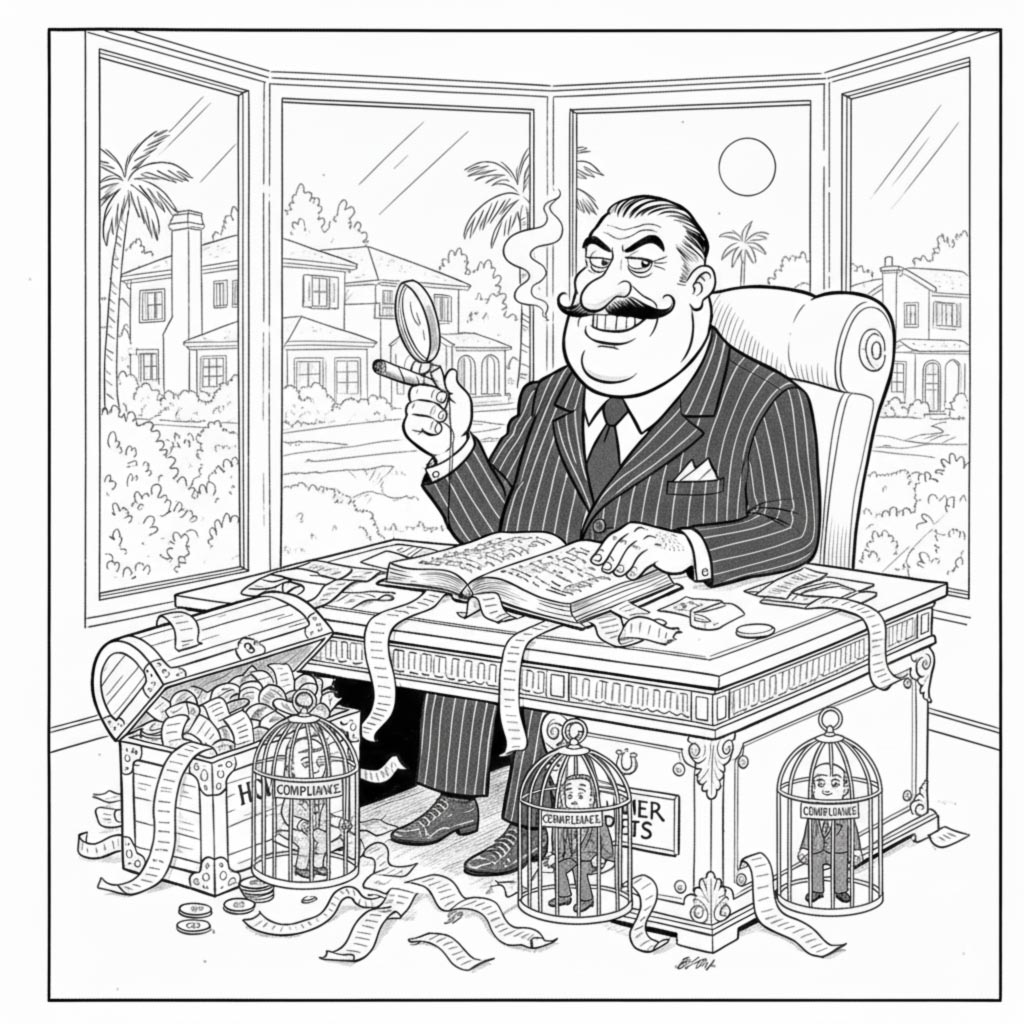
In many California HOAs, the most serious problems homeowners face do not come from hostile neighbors or rogue boards. They come from HOA managers who quietly, but perniciously, overstep their role inside weak or disengaged HOAs. When weak HOA boards fail to exercise oversight, managers often begin controlling process, information, and enforcement decisions in ways they are not legally permitted to do.
HOA manager misconduct rarely appears as a single dramatic act. It develops through repeatable patterns such as delaying responses to homeowners, controlling what information reaches the board, inventing “policies” that do not exist in the governing documents, obstructing document requests, steering enforcement decisions, and intimidating homeowners who push back. Over time, the manager becomes the de facto decision-maker, while the board functions as little more than a rubber stamp.
This Fact Sheet explains what HOA manager misconduct looks like in real practice, why it flourishes in weak HOAs, how it shows up in records, meetings, enforcement, and finances, and what California homeowners can do to shut it down and force board-level accountability.
For a deeper dive into a related topic, bad HOA management companies, see my article, “How to Deal with a Bad HOA Management Company in California: Your Legal Rights and Options.”
You can also watch an episode of my podcast, HOA HELL, titled “How HOA Management Companies Work and What to Do When Yours Fails.”
Key Points
HOA manager misconduct usually does not appear as a single outrageous act. It develops through repeatable patterns that flourish in weak or disengaged HOAs, where unwitting (or sometimes complicit) boards delegate judgment instead of oversight and allow managers to control process, information, and enforcement. The following key points explain how manager misconduct typically manifests in California HOAs, why weak boards allow it, and what homeowners can do about it if it’s happening in their communities.
- HOA managers do not have independent decision-making authority. Managers perform administrative and operational functions. When a manager makes substantive decisions, directs enforcement, issues binding positions, or communicates as if speaking for the HOA without a board vote, the manager is acting without legal authority.
- Manager misconduct thrives in weak or disengaged HOA boards. Board members are not expected to read the Davis-Stirling Act cover to cover. They are, however, expected to review their own governing documents, along with the materials typically provided to new directors that summarize the law, explain the limits on delegation, and clarify that directors, not managers, retain responsibility for judgment, enforcement decisions, and oversight. When boards ignore those materials or treat management as the decision-maker, they are breaching their fiduciary duty and breaking the law.
- Process manipulation and delay are common forms of manager misconduct. Abusive HOA managers will often delay responses to homeowners, let statutory deadlines lapse, or claim issues are “still under review” to exhaust homeowners, avoid board scrutiny, or prevent matters from reaching open session.
- Bad HOA managers often manufacture authority through invented policies. References to “office policy,” “management procedure,” or “standard practices” have no legal force unless properly adopted as operating rules under the Davis-Stirling Act (e.g., Civil Code 4350). Weak boards frequently fail to challenge these invented sources of authority, and homeowners don’t know what they don’t know.
- Information control crosses into misconduct when managers distort or withhold material facts. HOA managers routinely summarize and route communications. Misconduct occurs when managers frame issues to minimize risk, omit material facts, or present homeowner concerns in a way that discourages board engagement or action.
- Agenda, meeting, and minutes abuse are powerful tools of concealment. Bad HOA managers keep substantive issues off agendas, funnel them into executive session in violation of Civil Code 4935, or draft minutes that omit disputes, sanitize discussion, or erase notice and follow-up.
- Obstructing document requests exposes manager misconduct. Civil Code 5200 removes discretion from management. Partial production, irrelevant documents, improper redaction, slow-walking, or claims that records “do not exist” (when you know that they do) almost always signal deliberate obstruction rather than administrative error.
- Managers frequently act as enforcement gatekeepers without legal authority. When managers decide which violations receive notices, when hearings occur, or which homeowners get targeted, or when they substantively participate in disciplinary hearings, they violate the discipline and due process requirements contained in Civil Code 5850 and 5855.
- Financial misconduct often appears as unresolved inconsistencies in the records. Unexplained fees, opaque vendor relationships, shifting balances, and circular explanations protect incompetence and can conceal embezzlement when managers control records and boards fail to demand answers. [If you’re interested in the subject of HOA embezzlement, watch my two-part episode of HOA HELL, “HOA Embezzlement: Real HOA Theft Cases in California (Part 1)” and “HOA Embezzlement: Real HOA Theft Cases in California (Part 2).”]
- Homeowners can force manager misconduct into the open and shut it down. By forcing communications into writing, using targeted document demands, insisting on board-level discussion in open session, and building a clean chronology, homeowners strip managers of narrative control and restore accountability where it belongs.
- Call MBK Chapman when homeowner efforts fail or the problem proves systemic. Homeowners can often build leverage by documenting issues, demanding records, and forcing open-session discussion. When those efforts do not stop the misconduct, or when the behavior reflects a pattern rather than an isolated issue, homeowners should stop trying to fix it alone and call us at MBK CHAPMAN to intervene.
Manager misconduct persists only when HOA boards abdicate oversight and homeowners allow process abuse to remain undocumented. Once homeowners force transparency and board-level decision-making, managers lose the leverage that allows misconduct to flourish.
FAQs
What is HOA manager misconduct?
HOA manager misconduct occurs when a manager controls decisions, process, information, enforcement, or records that the HOA’s board is tasked with handling. It most often appears as systemic overreach, not isolated mistakes.
Can an HOA manager make decisions for the board?
No. Never. HOA managers carry out administrative tasks and implement board decisions. When a manager directs enforcement, blocks board review, issues binding positions, or acts as the decision-maker without a board vote, the manager acts without legal authority, and the directors are each violating their fiduciary duty by allowing it to happen.
Why does manager misconduct usually happen in weak HOAs?
Manager misconduct flourishes when HOA boards fail to understand or exercise their duties. When directors delegate judgment instead of oversight or default to management recommendations, managers begin controlling outcomes the board should decide.
How do managers misuse meetings, agendas, and minutes?
Managers misuse process by keeping substantive issues off agendas, pushing matters into executive session that aren’t supposed to be handled there (in violation of Civil Code 4935), or drafting minutes that omit disputes, decisions, or follow-up. These tactics erase notice and make later accountability virtually impossible.
What records help prove HOA manager misconduct?
Emails, board minutes, agendas, enforcement notices, financial records, and document-production histories obtained under Civil Code 5200 often reveal delay, selective enforcement, information distortion, and obstruction.
When should homeowners call MBK Chapman about manager misconduct?
Homeowners should call MBK CHAPMAN when documenting issues, demanding records, and forcing board-level discussion does not stop the misconduct, or when the behavior reflects a pattern rather than an isolated problem.
About MBK Chapman Fact Sheets
Homeowners searching for answers online will often come across articles that appear authoritative, but are actually written as search-engine marketing content rather than by an experienced HOA lawyer. These pieces tend to prioritize keyword density over clarity, accuracy, or legal context, which often leaves homeowners more confused than informed.
At MBK Chapman, our Fact Sheets are part of our HOA Law Library and are written by Michael Kushner, an HOA lawyer with decades of hands-on experience representing California homeowners. In fact, Michael Kushner is the HOA lawyer who pioneered the systems and strategies used by some of California’s most successful homeowner-side HOA law firms.
Each Fact Sheet is deliberately concise, statute-based, and designed as a quick-reference guide to help homeowners understand key HOA laws and enforcement rules at a glance.
AND DON’T FORGET TO TUNE INTO MY PODCAST, HOA HELL
YOU CAN ALSO ORDER MY GROUNDBREAKING BOOK
HOA HELL | California Homeowners’ Definitive Guide to Beating Bad HOAs
Amazon | Barnes & Noble
