
Overview
One of the most common frustrations inside California HOA communities occurs when homeowners repeatedly report serious nuisance-related conduct to the HOA, only to receive silence, delay, excuses, or an outright refusal to act. Homeowners often assume that once they submit complaints involving conduct materially interfering with their quiet enjoyment, safety, or use of property, the HOA automatically becomes obligated to step in and resolve the problem. HOA boards, meanwhile, frequently respond by claiming that the dispute is merely a “private neighbor issue” outside the HOA’s responsibility. The truth lies somewhere in between those two extremes.
California HOAs do not serve as mandatory referees for every disagreement between neighbors. Personality conflicts, isolated arguments, rude behavior, petty disputes, and ordinary interpersonal hostility do not automatically trigger a duty requiring the HOA to launch formal investigations or disciplinary proceedings. HOA boards retain discretion when evaluating complaints, and the Business Judgment Rule protects the board’s good-faith discretionary decisions. But that protection is not unlimited. Once credible evidence establishes conduct materially interfering with another homeowner’s quiet enjoyment, safety, or use of property (particularly where the conduct implicates existing nuisance provisions or other restrictions found in the governing documents), the HOA’s obligations materially change.
This distinction becomes critically important because many bad HOAs attempt to hide behind the Business Judgment Rule after refusing to investigate serious complaints altogether. The Davis-Stirling Act, however, does not protect HOA boards that blindly ignore credible evidence of nuisance conduct, conduct sham investigations, selectively enforce nuisance restrictions, or refuse to enforce governing documents they are duty-bound to uphold. [I touched on these and other related issues in my HOA HELL podcast episode, “HOAs & Neighbor Disputes: When the Association Becomes the Problem (Series: Part 4 of 6).”]
This Fact Sheet examines when California HOA boards have a duty to investigate nuisance complaints, what constitutes a reasonable HOA investigation, when the Business Judgment Rule stops protecting HOA boards, and how selective enforcement and refusal to investigate may expose HOAs to concurrent liability. It also explains why homeowners who properly document nuisance-related conduct, preserve evidence, and provide clear notice to the HOA place themselves in a substantially stronger position once disputes escalate.
This is the sixth and final installment in a six-part series examining nuisance disputes inside California HOAs. You can read the first five Fact Sheets in this nuisance series by clicking on the following links:
- “California HOA Nuisance Laws: The Complete Homeowner Guide.”
- “California HOA Noise Complaints: When Noise Becomes a Nuisance.”
- “California HOA Nuisances: Ugly Properties, Bright Lights, and Visual Blight.”
- “California HOA Odor Complaints: Smoke, Trash, and Other Nuisances.”
- “Toxic Neighbors in California HOAs: Harassment, Threats, and Nuisance Conduct.”
Key Points
California HOA boards walk a difficult line when nuisance complaints arise inside the community. On one hand, HOAs do not serve as mandatory referees for every argument, personality conflict, rude interaction, or unpleasant relationship between neighbors. On the other hand, HOA boards cannot simply ignore objectively serious conduct once credible evidence establishes behavior materially interfering with another homeowner’s quiet enjoyment, safety, or use of property. Most California HOA governing documents already prohibit nuisance-related conduct, which means many disputes involving noise, harassment, intimidation, smoke intrusion, vandalism, or other serious interference ultimately become governing-document enforcement issues rather than merely “private neighbor disputes.”
- HOA boards do not have to investigate every nuisance complaint. California HOAs do not serve as mandatory referees for every argument, personality conflict, petty dispute, or unpleasant interaction occurring within the community. Homeowners living in close proximity to one another will inevitably experience friction, disagreements, rude behavior, gossip, and interpersonal hostility from time to time. Standing alone, those types of disputes do not automatically trigger formal HOA investigative obligations. HOA boards retain discretion to distinguish between ordinary interpersonal conflict and conduct materially implicating nuisance provisions or other governing-document restrictions. [I wrote a Fact Sheet explaining an HOA’s obligations when it comes to addressing valid homeowner complaints, “Can a California HOA Ignore Homeowner Complaints?”]
- Ordinary personality conflicts do not trigger HOA enforcement obligations. As long as homeowners do not violate California law or any enforceable restrictions found in the governing documents, they have the right to dislike their fellow residents, complain (sometimes loudly) about HOA politics, criticize board members or other residents, glare at neighbors, or create tension within the community. In short, people have a legal right to be jerks.
- Objective interference remains the controlling standard. HOA boards evaluating nuisance complaints must focus on whether the conduct materially interferes with another homeowner’s quiet enjoyment, safety, or use of property under an objective standard rather than a purely subjective one. The fact that one homeowner feels personally offended, uncomfortable, annoyed, or emotionally distressed does not automatically transform the conduct into a governing-document violation or actionable nuisance. The courts interpret Civil Code 3479 using an objective, reasonable person standard.
- Repeated conduct frequently separates actionable nuisance behavior from isolated interpersonal conflict. A single rude confrontation, isolated argument, or one-time disturbance often doesn’t justify HOA intervention. But repeated conduct occurring over weeks or months may well paint a different picture because patterns like that often reveal escalation, targeting, retaliation, intimidation, and the real-world effect the conduct has on neighboring homeowners over time. In short, a homeowner repeatedly confronting neighbors after complaints, creating recurring disturbances late at night, or repeatedly engaging in hostile common-area encounters presents a materially different situation than a single isolated disagreement.
- HOAs have a duty to act once credible evidence comes to light. Once credible evidence establishes objectively serious conduct materially interfering with another homeowner’s quiet enjoyment, safety, or use of property, HOA boards cannot simply refuse involvement by labeling the situation a “private neighbor dispute.” Indeed, the CC&Rs for most California HOAs already prohibit nuisance-related conduct, and in such cases, HOA boards possess both the authority and the obligation to investigate and enforce those restrictions once credible evidence exists. In short, most governing documents already prohibit nuisance-related conduct in the form of regular nuisance provisions as well as provisions involving quiet enjoyment, common-area conduct, architectural restrictions, harassment, parking, and use limitations. All of these violations frequently overlap in serious nuisance disputes, and thus the vast majority of California HOAs already possess all the enforcement authority necessary to address objectively serious misconduct occurring within the association. For example, a homeowner repeatedly screaming at a neighbor from a balcony late at night while directing surveillance cameras toward neighboring patios may simultaneously implicate nuisance restrictions, common-area misconduct provisions, privacy concerns, and architectural restrictions governing camera placement. Each gives the HOA ammunition to act. Together, they create an obligation.
- Repeated police action places HOA boards on notice of potentially serious nuisances. HOA boards cannot reasonably continue characterizing a dispute as ordinary neighbor friction once repeated police actions (as opposed to merely being called). If such actions are accompanied by subsequent restraining order proceedings or documented criminal filings, the seriousness increases accordingly. HOAs that refuse to act in the face of such activity subject themselves and the homeowners to potentially serious financial liability. [You can learn more about your HOA’s duties to prevent crime in the community by reading my Fact Sheet, “California HOA Crime and Security Duties: What HOAs Are Required to Do.”]
- Selective enforcement creates additional exposure for HOA boards. HOA boards that aggressively pursue nuisance complaints against one homeowner while ignoring substantially similar conduct by another homeowner create serious legal and practical problems for themselves. This issue frequently arises where directors personally know one of the parties involved, attempt to minimize objectively serious conduct, or selectively enforce restrictions based on favoritism, politics, or personal relationships within the community. [I wrote an article explaining everything you needed to know about selective enforcement in California HOAs called “Selective Enforcement in California HOAs: What It Is and How Homeowners Can Fight Back.” I also wrote numerous Fact Sheets on the subject, including “Examples of Selective Enforcement in California HOAs: Uneven Rule Enforcement.”]
- The Business Judgment Rule does not protect HOA inaction. HOA boards frequently invoke the Business Judgment Rule as though it grants blanket immunity for any decision not to investigate or enforce nuisance-related complaints. That is not, however, how California law works. The Business Judgment Rule protects many discretionary decisions the board makes in good faith, but it does not shield bad HOA boards that blindly ignore credible evidence of actionable nuisances, refuse to investigate serious complaints altogether, or selectively refuse to enforce governing-document restrictions. [If you’d like to learn more about the Business Judgment Rule in general, you can read any of several of my Fact Sheets by clicking here, and enter “business judgment rule” in the search bar. Or if you prefer, you can watch an episode of my HOA HELL podcast, “California HOAs: The Business Judgment Rule.”]
- Corporations Code 7231 protects good-faith discretionary decisions, not refusal to investigate or enforce the governing documents. HOA boards receive the benefit of the Business Judgment Rule’s substantial judicial deference when they investigate complaints, evaluate evidence, and make good-faith enforcement decisions after exercising reasonable diligence. But Corporations Code 7231 does not protect HOA boards that simply refuse to investigate objectively serious nuisance complaints or ignore credible evidence establishing ongoing nuisance-related misconduct. [If you’d like to read more about when the Business Judgment Rule does not protect HOA boards, read my Fact Sheet “When the Business Judgment Rule Does Not Protect an HOA Board.”]
- Discriminatory harassment creates serious independent legal exposure to an HOA that refuses to act. Repeated racial slurs, disability-based harassment, religious intimidation, targeting families with children, or other discriminatory conduct may implicate both nuisance-related claims and separate fair-housing violations under state and federal law. Conduct targeting homeowners based on protected characteristics materially changes both the HOA’s obligations and the HOA’s legal exposure once credible evidence exists. In fact, under 24 C.F.R. 100.7(a)(1)(iii), HOAs may face direct liability where they possess notice of discriminatory harassment by residents and fail to take prompt, reasonable corrective action while possessing the authority to intervene through enforcement of the governing documents.
- Civil Code 5975 creates substantial fee-shifting exposure for HOA boards that ignore serious nuisance complaints. Once homeowners file lawsuits alleging that both the offending homeowner and the HOA violated nuisance-related governing-document provisions, Civil Code 5975 awards the homeowner their attorneys’ fees once the homeowner wins the lawsuit. This creates substantial litigation risk for HOA boards that knowingly ignore objectively serious nuisance-related conduct after receiving credible notice and evidence. [If you’d like to know more about all of the Davis-Stirling Act’s fee-shifting statutes (that award homeowners their attorneys’ fees upon prevailing), read my Fact Sheet, “When Can You Recover Attorney Fees from Your California HOA? Key Laws Explained.”]
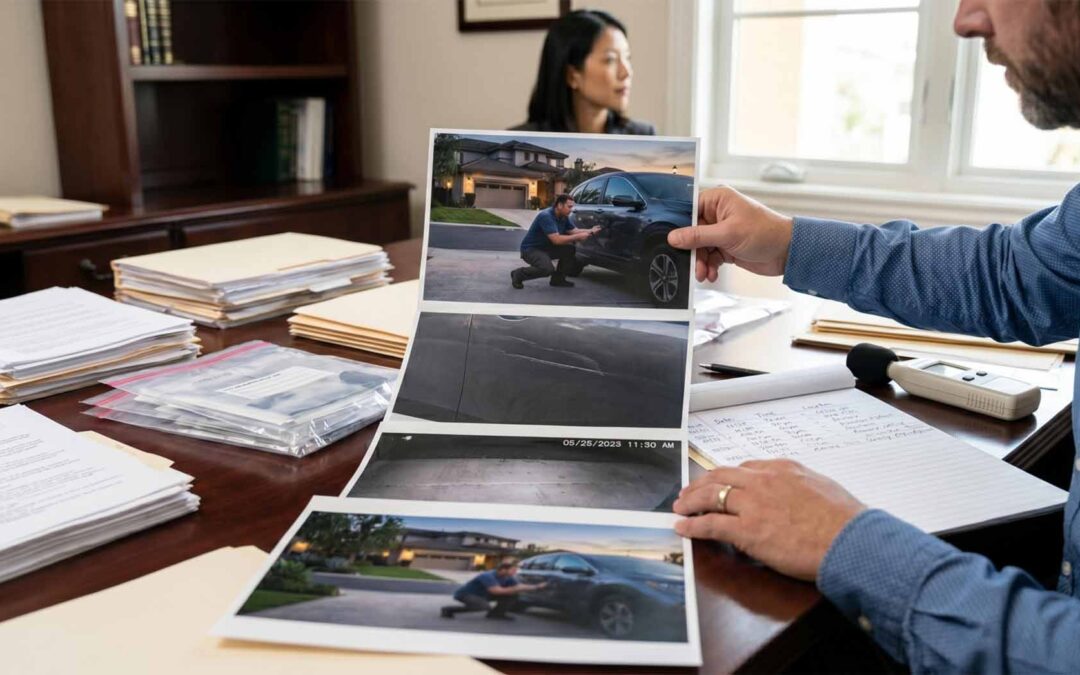
- Homeowners place themselves in a substantially stronger position when they document nuisance-related conduct carefully and provide clear notice to the HOA. Incident logs, photographs, recordings, police reports, witness statements, surveillance footage, emails, and written complaints frequently become critically important once disputes escalate into formal enforcement proceedings or litigation. HOA boards often minimize, misunderstand, or outright deny the seriousness of nuisance-related complaints until homeowners begin presenting organized and corroborated evidence documenting the conduct over time.
- If your HOA refuses to reasonably investigate serious nuisance complaints, call the HOA attorneys at MBK Chapman. Nuisance disputes inside California HOAs frequently involve overlapping issues concerning governing-document enforcement and actionable nuisances under the Civil Code. The HOA attorneys at MBK Chapman are among the most respected and well-known homeowner-side HOA attorneys in the State of California, and we have vast experience representing homeowners who seek only to compel their HOAs to investigate and act on verified, actionable nuisance complaints.
California law gives HOA boards substantial discretion when evaluating nuisance complaints, but that discretion has limits. HOA boards may decline to involve themselves in ordinary interpersonal conflict that does not materially interfere with another homeowner’s quiet enjoyment, safety, or use of property. Once credible evidence establishes objectively serious nuisance-related conduct, however, HOAs cannot simply ignore the problem, refuse enforcement, or hide behind the Business Judgment Rule. Homeowners who carefully document escalating conduct, preserve evidence, involve law enforcement where appropriate, and provide clear notice to the HOA place themselves in the strongest possible position once nuisance disputes escalate into formal enforcement proceedings or litigation.
FAQs
Can an HOA simply ignore valid nuisance complaints by calling them “private neighbor disputes”?
No. HOA boards frequently attempt to avoid involvement by characterizing serious nuisance complaints as purely personal disagreements between neighbors. But once credible evidence establishes conduct materially interfering with another homeowner’s quiet enjoyment, safety, or use of property, particularly where the conduct implicates nuisance provisions or other governing-document restrictions, the HOA cannot simply refuse involvement altogether.
Does the Business Judgment Rule protect HOA boards that refuse to investigate serious nuisance complaints?
No. Corporations Code 7231 protects many discretionary decisions made in good faith after HOA boards reasonably evaluate the evidence before them. But the Business Judgment Rule does not shield HOA boards that blindly ignore credible evidence, refuse to investigate objectively serious complaints altogether, or selectively refuse to enforce governing-document restrictions. HOA boards retain discretion regarding how to respond to nuisance complaints, but they do not receive blanket immunity for complete inaction once credible evidence establishes objectively serious conduct occurring within the community.
Can a homeowner sue both the offending neighbor and the HOA in the same lawsuit?
Yes. Homeowners frequently pursue claims simultaneously against both the offending homeowner and the HOA where the HOA allegedly ignored credible evidence of nuisance-related conduct or failed to reasonably enforce the governing documents. These lawsuits often involve overlapping allegations concerning nuisance-related misconduct, selective enforcement, HOA inaction, harassment, vandalism, or repeated interference with quiet enjoyment. Civil Code 5975 also exposes the offending neighbor and the HOA to attorneys’ fees liability if the homeowner prevails.
Why does documentation matter so much in HOA nuisance disputes?
Because bad HOAs routinely minimize, misunderstand, or dispute the seriousness of nuisance-related complaints until homeowners begin presenting organized evidence documenting the conduct over time. Incident logs, recordings, photographs, police reports, witness statements, surveillance footage, emails, and written complaints frequently determine whether the HOA continues characterizing the dispute as ordinary interpersonal conflict or instead recognizes it as objectively serious nuisance-related conduct requiring intervention. Strong documentation also becomes critically important later if the dispute escalates into formal enforcement proceedings or litigation.

About Michael Kushner
Michael Kushner is a California attorney with over 30 years of experience representing homeowners in disputes with their HOAs. He is widely regarded as California’s leading homeowner-side HOA attorney, and has built one of the state’s most prominent law practices dedicated to holding HOAs accountable under the Davis-Stirling Act and California law.
In addition to his law firm’s work, Michael is a recognized lecturer, author, and the host of the hit HOA HELL podcast, where he provides homeowners living in HOA-governed communities with clear, practical strategies for dealing with bad HOAs. He’s also the author of the best-selling book, HOA HELL | California Homeowners’ Definitive Guide to Beating Bad HOAs, which has become a go-to resource for both homeowners seeking real-world solutions to their HOA disputes, as well as those good HOA board members who are interested in doing a good job.
About MBK Chapman Fact Sheets
Homeowners searching for answers online will often come across articles that appear authoritative, but are actually written as search-engine marketing content rather than by an experienced HOA lawyer. These pieces tend to prioritize keyword density over clarity, accuracy, or legal context, which often leaves homeowners more confused than informed.
At MBK Chapman, our Fact Sheets are part of our HOA Law Library and are written by Michael Kushner, an HOA lawyer with decades of hands-on experience representing California homeowners. In fact, Michael Kushner is the HOA lawyer who pioneered the systems and strategies used by some of California’s most successful homeowner-side HOA law firms.
Each Fact Sheet is deliberately concise, statute-based, and designed as a quick-reference guide to help homeowners understand key HOA laws and enforcement rules at a glance.
AND DON’T FORGET TO TUNE INTO MY PODCAST, HOA HELL
YOU CAN ALSO ORDER MY GROUNDBREAKING BOOK
HOA HELL | California Homeowners’ Definitive Guide to Beating Bad HOAs
Amazon | Barnes & Noble
