
Overview
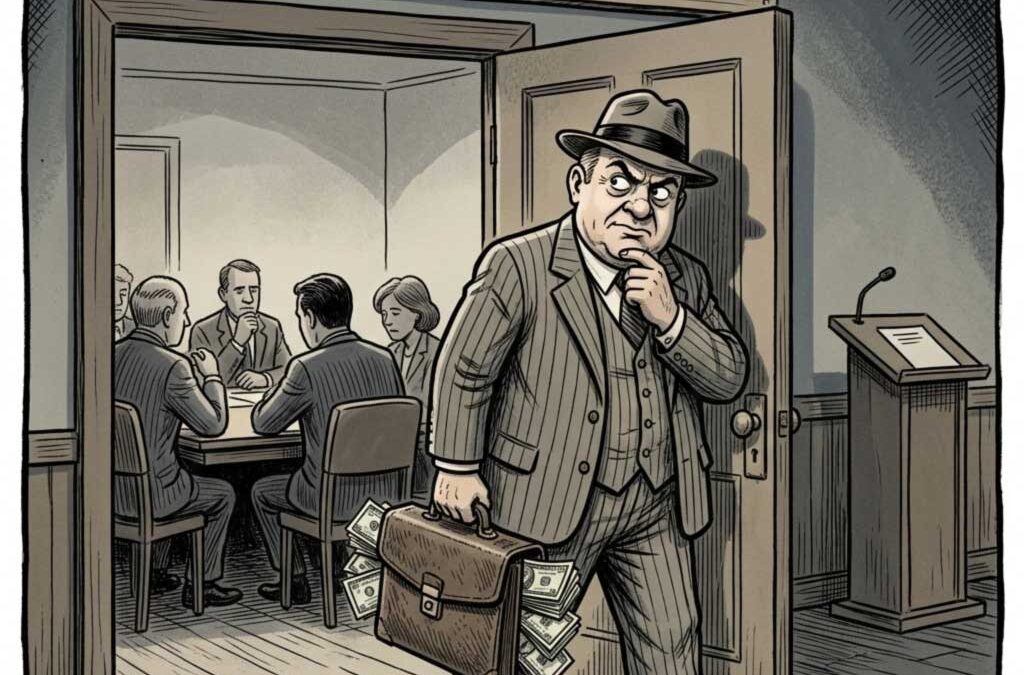
Most homeowners assume HOA embezzlement must involve complicated financial tricks or sophisticated accounting fraud. In reality, the opposite is usually true. HOA embezzlement almost always relies on simple tactics that work because nobody is paying close attention. When HOA boards control the money, approve the contracts, and supervise the records, even basic schemes can quietly drain association funds for years before anyone notices.
The cases that make headlines usually follow the same pattern. A board member steers contracts to insiders, inflates invoices for routine maintenance work, or approves payments to companies connected to friends or family members. Sometimes the work is partially performed but billed at wildly inflated prices. Other times the work never happens at all. When homeowners later ask why dues keep increasing or why special assessments keep appearing, the financial trail begins to unravel.
This Fact Sheet explains the most common ways bad HOAs embezzle money in California communities. It breaks down the schemes that appear again and again in real cases, including fake or padded invoices, insider vendor contracts, improper reserve transfers, and kickback arrangements that funnel homeowner money back to people inside the HOA’s decision-making structure.
If you want to understand how these schemes usually reveal themselves, see the companion Fact Sheet “How to Tell if Your California HOA Is Embezzling Money,” which explains the warning signs homeowners should watch for. And if you already suspect something is wrong inside your association, the third Fact Sheet in this series, “What Should California Homeowners Do If They Suspect HOA Embezzlement?,” walks through the practical steps homeowners can take to investigate and respond.
For a deeper discussion of this issue, see my article “HOA Embezzlement: Real HOA Theft Cases in California.” You can also watch my two-part HOA HELL podcast episode on HOA embezzlement (Part 1 & Part 2), where I break down real cases and explain how these schemes typically unfold.
Key Points
Bad HOAs rarely invent new ways to steal money. Most embezzlement cases follow a small number of predictable patterns that repeat themselves across California communities. Once homeowners understand how these schemes work, they become far easier to recognize and challenge before the financial damage grows even larger.
- Fake or padded invoices are one of the most common ways HOA insiders embezzle money. In these schemes, the HOA pays for work that was never performed or pays dramatically inflated prices for routine services. Sometimes the vendor exists only on paper. In other cases, the vendor performs legitimate work but charges several times the market rate. The difference between the real cost and the inflated invoice often flows back to the insider who approved the contract.
- Insider vendor contracts allow board members to funnel HOA money to friends, relatives, or companies they secretly control. Instead of soliciting competitive bids, a board member steers work to a preferred vendor and pushes the contract through the approval process with little scrutiny. The vendor may be a relative, a business partner, or a shell company connected to the director. Once the contract is in place, inflated billing, kickbacks, and unnecessary projects can quietly drain association funds.
- Shell companies and disguised ownership structures help conceal embezzlement schemes. Some insiders attempt to hide their involvement by creating companies that appear unrelated to the board. The company name may sound legitimate, but the ownership traces back to a director, a family member, or a close associate. When homeowners eventually examine the payment records, they often discover that HOA funds have been flowing to companies tied directly to the people who approved the spending.
- Inflated or fabricated maintenance projects are another frequent tactic. A board member may approve projects that sound legitimate such as maintenance upgrades, repairs, or consulting work. In reality, the work may never occur, may occur only partially, or may cost a fraction of what the HOA pays. These schemes often rely on vague descriptions such as “facility improvements” or “maintenance consulting,” which make it difficult for homeowners to determine what work was actually performed.
- Improper transfers from reserve accounts can hide or temporarily cover missing money. Reserve funds exist to repair or replace major common area components such as roofs, elevators, or structural elements. When embezzlement occurs, insiders sometimes move reserve money into operating accounts to cover shortfalls created by fraudulent spending. That maneuver may delay discovery of the theft, but it often leads to depleted reserves and sudden (or eventual) special assessments imposed on homeowners.
- Kickback arrangements between insider-affiliated vendors and HOA insiders frequently accompany these schemes. A contractor may receive an inflated contract price in exchange for secretly returning a portion of the payment to the director who arranged the deal. These arrangements often appear legitimate on the surface because invoices and payments exist. The corruption becomes visible only when homeowners compare prices, examine the relationships between vendors and directors, or question why certain companies receive repeated contracts without competition.
- Homeowner vigilance is often what exposes HOA embezzlement. In many of the cases that eventually become public, the fraud begins to unravel only after one or more homeowners start reviewing financial records and asking direct questions about suspicious payments. That scrutiny frequently reveals patterns such as repeated invoices from the same vendors, unexplained spending, or projects that residents never saw performed.
- If you believe your HOA may be stealing HOA funds, contact the HOA attorneys at MBK Chapman. Embezzlement cases require careful investigation of financial records, vendor relationships, and board decision making. Experienced HOA lawyers, like those at MBK Chapman, can determine whether suspicious financial activity reflects poor management or something far more serious.
These schemes thrive in environments where HOA boards operate without meaningful scrutiny. When homeowners understand how embezzlement usually occurs and remain attentive to financial activity inside their communities, the opportunity for insiders to misuse association funds becomes far more limited.
FAQs
Can an HOA board legally take HOA money for personal use?
No. HOA board members owe fiduciary duties to the homeowners they serve. Those duties require directors to manage association funds honestly and in the best interests of the community. When a board member diverts HOA money for personal benefit through inflated contracts, kickbacks, fake invoices, or other schemes, that conduct can constitute embezzlement and expose the individual to both civil liability and criminal prosecution.
How do most HOA embezzlement schemes begin?
Most HOA embezzlement schemes begin with dishonest insiders who control or influence how HOA money gets spent. A board member with authority over vendor contracts, invoices, or reimbursements may exploit that position to approve inflated bills, steer work to insiders, or authorize payments for projects that were never performed. In many cases, the theft continues because other directors trust the person handling the finances and fail to closely review the invoices or contracts being approved. That lack of scrutiny does not create the scheme, but it can allow the misconduct to continue long enough for significant HOA funds to disappear.
Are insider vendor contracts automatically illegal in California HOAs?
No. An HOA may contract with a company connected to a director if the relationship is fully disclosed and the board follows proper procedures when approving the contract, including making sure that the deal is reasonable and in the best interest of the HOA. The problem arises when a director hides the relationship, bypasses competitive bidding, or approves fraudulently inflated invoices that benefit the insider financially. Those situations can quickly cross the line into self-dealing or embezzlement.
Do dishonest directors sometimes mask embezzlement by taking money from reserves?
Yes. In some embezzlement cases, insiders attempt to conceal missing money by quietly transferring funds out of the HOA’s reserve accounts into the operating account. Reserve funds are supposed to pay for major repairs or replacements of common area components such as roofs, landscaping, elevators, or structural elements. When those funds are diverted to cover unexplained shortfalls in the operating budget, it can temporarily hide the financial damage caused by inflated invoices, insider contracts, or other schemes. Homeowners may not notice the problem immediately, but the consequences usually surface later when reserves suddenly appear depleted or the HOA imposes special assessments to replace money that should never have disappeared in the first place.
Why do HOA embezzlement schemes often continue for years before anyone notices?
HOA embezzlement often continues for long periods because the people responsible for approving payments are the same people who control the financial records and vendor contracts. When one or two insiders dominate financial decisions, inflated invoices, insider contracts, or unnecessary projects may appear legitimate on the surface. In many communities, other directors assume the spending has already been reviewed, and most homeowners never see the underlying invoices. The schemes usually begin to unravel only after homeowners start asking questions about unusual spending patterns or repeated special assessments.
What can homeowners do if they suspect or discover HOA embezzlement?
Homeowners should start by carefully reviewing the HOA’s financial activity and asking direct questions about any suspicious spending. That often includes examining vendor contracts, invoices, and payment records to determine whether the work being billed actually occurred and whether the vendors have any connection to HOA insiders. Homeowners should also compare the association’s spending patterns with what they see happening in the community, since embezzlement schemes often involve projects that appear overpriced or never performed at all. If the answers provided by the HOA board do not make sense or the financial records reveal serious irregularities, homeowners should consult experienced California HOA lawyers who can investigate the financial activity, analyze vendor relationships, and determine whether association funds were misappropriated.

About Michael Kushner
Michael Kushner is a California attorney with over 30 years of experience representing homeowners in disputes with their HOAs. He is widely regarded as California’s leading homeowner-side HOA attorney, and has built one of the state’s most prominent law practices dedicated to holding HOAs accountable under the Davis-Stirling Act and California law.
In addition to his law firm’s work, Michael is a recognized lecturer, author, and the host of the hit HOA HELL podcast, where he provides homeowners living in HOA-governed communities with clear, practical strategies for dealing with bad HOAs. He’s also the author of the best-selling book, HOA HELL | California Homeowners’ Definitive Guide to Beating Bad HOAs, which has become a go-to resource for both homeowners seeking real-world solutions to their HOA disputes, as well as those good HOA board members who are interested in doing a good job.
About MBK Chapman Fact Sheets
Homeowners searching for answers online will often come across articles that appear authoritative, but are actually written as search-engine marketing content rather than by an experienced HOA lawyer. These pieces tend to prioritize keyword density over clarity, accuracy, or legal context, which often leaves homeowners more confused than informed.
At MBK Chapman, our Fact Sheets are part of our HOA Law Library and are written by Michael Kushner, an HOA lawyer with decades of hands-on experience representing California homeowners. In fact, Michael Kushner is the HOA lawyer who pioneered the systems and strategies used by some of California’s most successful homeowner-side HOA law firms.
Each Fact Sheet is deliberately concise, statute-based, and designed as a quick-reference guide to help homeowners understand key HOA laws and enforcement rules at a glance.
AND DON’T FORGET TO TUNE INTO MY PODCAST, HOA HELL
YOU CAN ALSO ORDER MY GROUNDBREAKING BOOK
HOA HELL | California Homeowners’ Definitive Guide to Beating Bad HOAs
Amazon | Barnes & Noble
