
REAL ESTATE
RESIDENTIAL & COMMERCIAL
CALIFORNIA
CONTACT US
MBK Chapman can help
AREAS OF EXPERTISE
MBK Chapman’s highly experienced real estate lawyers have helped thousands of clients secure their real estate-related objectives in all manner of real estate disputes, contract preparation, and negotiations. Our attorneys begin by partnering with our clients to understand their specific goals and objectives, after which we devise the most efficient and effective approach to ensure the best possible result. The firm’s real estate attorneys are well known experts in both commercial and residential property laws and regularly represent property owners in a variety of matters, including: neighbor harassment, negotiating complex real estate deals, drafting highly sophisticated real estate contracts, HOA disputes, nuisance, trespass, encroachment, easements, adverse possession, neighbor disputes, evictions, destruction of property, illegal cutting/removal of trees, partition actions, first-party bad faith insurance, failure to disclose, and fraud.
DISPUTES INVOLVING YOUR HOA
If you live in a community governed by an HOA, then you’re subject by law and contract to abide by your HOA’s governing documents. The most well known of those documents are the CC&Rs. Regardless of whether or not your HOA is required to enforce the governing documents against its members, if your HOA does not do so, you have the legal right to step in and do it yourself. (Civ. Code, § 5975.) More importantly, if you prevail in an action to enforce your association’s governing documents, you’re entitled to reimbursement for your attorneys’ fees and costs. (Ibid.)
Disputes between an HOA and a homeowner like you can take many forms, but most of the time, the dispute involves one or more of the following issues:
- violations of the Davis-Stirling Act (e.g., HOA’s failure to: maintain common areas, conduct reserve studies, hold proper elections, provide an accounting, etc.) (Civ. Code, §§ 4775; 5550; 5100 et seq; and 5305);
- failure to maintain the common areas (Civ. Code, § 4775);
- breach of the governing documents (e.g., CC&Rs, bylaws, rules, architectural guidelines, etc.);
- harassment by the HOA or another owner/resident;
- illegal discrimination by the HOA or another owner/resident;
- disputes between owners/residents of the HOA (e.g., excessive noise, odors, health and safety violations, spite fences, and other private nuisances);
- the HOA’s selective enforcement of the CC&Rs or other governing documents;
- unfair or improper levying of fines or suspension of privileges;
- illegal suspension of right to vote in HOA election (Civ. Code, § 5105(g)(1);
- breach of fiduciary duty (e.g., misappropriation or embezzlement of HOA funds); or
- negligence (e.g., damage to your property).
If you want to learn more about disputes between homeowners and their HOAs, take a look at the following articles:
- “Can You Take Your HOA to Court?“;
- “Getting Your Attorneys’ Fees Back When You Sue Your HOA in California“; and
- “Owner’s Guide to California HOA Laws.”
Contact Us to Discuss Your Dispute By Calling: (949) 767-3910
FAILURE TO DISCLOSE / FRAUD
Concealment, failure to disclose known/suspected defects, and intentional/negligent misrepresentation are all forms of fraud that form the basis of many real estate disputes. Generally, you may have a claim for fraud if:
- there was an intentional misrepresentation;
- you justifiably relied on the misrepresentation; and
- you were damaged by the misrepresentation.
(Civ. Code, §§ 1709 and 1710(4); Daniels v. Select Portfolio Servicing, Inc. (2016) 246 Cal.App.4th 1150, 1166; Chapman v. Skype Inc. (2013) 220 Cal.App.4th 217, 230-231; Engalla v. Permanente Med. Grp., Inc. (1997) 15 Cal. 4th 951, 974.)
There are a variety of remedies available to a defrauded party, including rescission of the contract (i.e., unwinding the transaction), compensatory damages (i.e., making the defrauded party financially whole), and in certain cases, punitive damages.
Contact Us to Discuss Your Dispute by Calling: (949) 767-3910
DISPUTES BETWEEN NEIGHBORS
Because most of us live in close proximity to others, it’s no mystery as to why there are so many conflicts that arise between neighbors. When those conflicts affect your right to the quiet enjoyment of your property, you can enforce your rights by filing a claim. For example, you may have a legal claim against your neighbor if they:
- build an unnecessarily high fence right next to your property line—i.e., a spite fence (Civ. Code, § 841.4);
- allow branches or leaves from their trees to either cause damage to, or land on, your property (see Bonde v. Bishop(1952) 112 Cal.App. 2d 1);
- allow roots from their trees to damage your property;
- trespass onto your property—either directly by walking onto your property, or indirectly, such as by allowing water to spread onto, or under, your property (Cassinos v. Union Oil Co. (1993) 14 Cal.App.4th 1770, 1778);
- participate in illegal activities (e.g., drug dealing, non-permitted activities, etc.) (Civ. Code, §3479); or
- engage in excessively noisy activities—or for that matter, any other activities—that interfere with your reasonable use and quiet enjoyment of your property (Adams v. MHC Colony Park, L.P. (2014) 224 Cal.App.4th 601, 610; Monks v. City of Rancho Palos Verdes (2008) 167 Cal.App.4th 263, 302-303).
Depending on whether the nuisance caused by your neighbor is permanent or continuing, you may be entitled to monetary damages, as well as an injunction (which means that the court would order your neighbor to do or not do something).
Contact Us to Discuss Your Dispute by Calling: (949) 767-3910
PRIVATE NUISANCE & HARASSMENT
Simply put, a cause of action for private nuisance requires you to prove that a neighbor interfered with your use and quiet enjoyment of your property. (Civ. Code, § 3479; Adams v. MHC Colony Park, L.P. (2014) 224 Cal.App.4th 601, 610; McBride v. Smith (2018) 18 Cal.App.5th 1160, 1180.) The most common private nuisance claims involve things like:
- causing damage to your property (e.g., invading tree branches and roots or vandalism);
- causing excessive noise;
- engaging in illegal activities;
- causing offensive odors, debris, or dust; and
- violating your privacy rights (e.g., cameras pointed towards your property).
Contact Us to Discuss Your Dispute By Calling: (949) 767-3910
TRESPASS / ENCROACHMENT
A trespass occurs when someone (or something) enters onto land that you have the right to possess without your permission. (Wilson v. Interlake Steel Co. (1982) 32 Cal.3d 229, 233; Cassinos v. Union Oil Co. (1993) 14 Cal.App.4th 1770, 1778.) This means that a renter can sue for trespass because the renter maintains the right to possess the land. (Dieterich Int’l Truck Sales, Inc. v. J.S. & J. Servs. Inc.(1992) 3 Cal.App.4th 1601, 1608–10.)
When most people think of trespass, they are thinking of someone entering onto their land. And that is absolutely accurate. But trespass can also occur even if nobody else physically enters onto your land. For example, if your neighbor’s pool leaks onto your property, or your neighbor’s broken pipe allows sewage from their property to leach onto yours, those too can be deemed trespasses.
You may have noticed that in some cases, trespass seems very similar to a nuisance. You’re not alone. But there is a difference. A trespass refers to a physical invasion of your property—either by persons entering the property, a substance that is dumped, has drained onto, or under your property (e.g., drainage, toxic spills, etc.), or the encroachment of a physical object, such as a structure built over a property line. A nuisance, on the other hand, is based on a property’s owner’s use of his or her own property in a way that adversely affects other property owners. Typical examples of a nuisance include things like excessive noise, vibrations, odors, illegal activities, etc.
While injunctive relief (i.e., a court order to stop the trespass) is typically available for most types of trespass (e.g., injunctive relief is NOT available for invasion of your neighbor’s tree branches or roots because the law presumes that you’ll engage in “self-help” by dealing with the problem yourself), the type of monetary damages available depend on whether the trespass is still ongoing or not.
Contact Us to Discuss Your Dispute By Calling: (949) 767-3910
EASEMENTS
Simply put, an easement is an interest in someone else’s land which gives the “owner” of the easement a limited right to use the other’s property. There are many different types of easements (e.g., express, implied, by necessity, prescriptive, etc.). You’ll probably be surprised to learn that your property is subject to at least one easement, probably in favor of the power/utility companies. If you’re curious, obtain a title report for your property and take a look.
The most common disputes that occur concerning easements usually involve either the land owner interfering with someone else’s easement (onto the owner’s land), or the owner of the easement (the one who does not own the land) going beyond the rights granted in the easement. For example, a new homeowner might discover that a neighbor is using the owner’s private driveway to access the neighbor’s property. Whether the new homeowner has the right to block such access or not depends upon whether a valid easement exists.
If you are the “owner” of an easement (i.e., you have a right to enter or use a defined portion of someone else’s property) who is being denied access, or if you are the property owner facing someone else who is violating the terms of an existing easement (or claiming to have an easement where none exists), you can obtain monetary and injunctive relief to enforce your rights.
Contact Us to Discuss Your Dispute By Calling: (949) 767-3910
ADVERSE POSSESSION
Many people are surprised to learn that under very specific circumstances, someone else can trespass on their land (or, more likely, a portion of their land) and eventually gain legal ownership of that part of their land. The legal doctrine that allows this involuntary transfer of ownership is called adverse possession.
Sometimes the adverse possessor is intentionally attempting to take someone else’s property, but more often it’s done unintentionally (usually as a result of an honest mistake). And while adverse possession doesn’t happen nearly as much today as it used to, it does still happen.
To succeed on a claim for adverse possession (i.e., to adversely possess all or a portion of someone else’s land), the adverse possessor must:
- openly exercise exclusive possession of the land;
- continuously for at least 5 years; and
- pay the property taxes on the land (or portion of land at issue).
(Civ. Code, § 325; Mehdizadeh v. Mincer (1996) 46 Cal.App.4th 1296.)
Contact Us to Discuss Your Dispute By Calling: (949) 767-3910
EVICTIONS
Most people already know that landlords have the right to evict tenants for a whole host of reasons (e.g., nonpayment of rent, violation of a lease/rental agreement, causing a nuisance, etc.). Sometimes, however, a tenant simply refuses to leave. When that occurs, the law does not allow a landlord to engage in what is often called “self help” (i.e., hiring movers to forcibly remove the residents, turning off the power/water, etc.). Instead, a landlord must file a lawsuit called an unlawful detainer.
Unlawful detainer actions are most commonly filed against tenants who:
- fail to pay rent even after receiving a 3-day notice to pay or quit*;
- refuse to leave a property at the end of the lease term;
- engage in activities that constitute a nuisance and refuse to cease such behavior;
- fail to comply with a lease provision despite receiving a notice to perform or quit;
- cause damage to a leased property; and
- participate in illegal activities on the property.
(See Code of Civ. Pro., § 1161.)
Contact Us to Discuss Your Dispute By Calling: (949) 767-3910
TREE REMOVAL / CUTTING DOWN TREES
“Trespass to timber” is the wrongful removal, destruction, or injury to any trees or underwood located on someone else’s property without permission. (Code Civ. Pro., § 733.) It is illegal to engage in any trespass to timber.
If someone cuts down, removes, or injures any trees or underwood on your property, you have the right to sue for trespass to timber. The amount of monetary damages to which you’ll be entitled to depends on the facts:
- If the court finds that the trespass was unintentional (e.g., the trespasser had a reasonable basis to believe that the trees/underwood were on his or her property, and not yours), you’re entitled to double the value of the trees/underwood destroyed;
- If the trespass was intentional, you’re entitled to triple the value of the trees/underwood destroyed; and
- If the trespass was committed by someone from the government (say, to make repairs to a highway or bridge), you’re entitled to just the value of the trees/underwood destroyed.
(Civ. Code, § 3346.)
Contact Us to Discuss Your Dispute By Calling: (949) 767-3910
PROPERTY DAMAGE
Generally speaking, there are two broad categories of property: real property (i.e., land or the structures built on land) and personal property (i.e., virtually everything else, including tangible personal property like all of your “stuff”).
For obvious reasons, destroying someone else’s property without their permission is almost always illegal. For example, you can’t decide to smash your neighbor’s windows, nor can you crush your neighbor’s car with your giant pickup truck. Not only is such conduct a crime (Pen. Code, § 594), it can also subject the wrongdoer to significant civil liability. Of course, intentional acts of vandalism aren’t the only way to cause damage to someone else’s property. For example, if a neighbor’s tree branches or roots invade your side of the property line and damage something on your property, your neighbor is liable for that damage.
Since property damage is almost always a byproduct of another wrongful act (whether intentional or not), most cases of property damage occur because someone else was:
- acting negligently;
- causing a nuisance;
- trespassing;
- guilty of conversion (i.e., the term for the civil claim of theft); or
- committing a trespass to chattels, which is a fancy term for interfering with someone’s lawful possession of their tangible personal property.
You can file a claim to recover your losses resulting from someone else’s damage to your property, and in certain cases, where the property damage is ongoing, you can obtain injunctive relief to stop the damage from continuing.
Contact Us to Discuss Your Dispute By Calling: (949) 767-3910
CONVERSION / THEFT
Conversion is the civil version of the crime of theft. Conversion occurs when someone else takes control over your personal property (or continues to maintain control when you’ve demanded that they return your property to you). (Welco Electronics, Inc. v. Mora (2014) 223 Cal.App.4th 202, 208.) Money can be converted if the amount taken is a specific sum capable of identification. (Id. at 216.)
If someone converts (i.e., steals or takes control over) your property, you may have a claim not only for the value of the property at the time of the conversion, but fair compensation for the time and money expended pursuing the property. (Virtanen v. O’Connell (2006) 140 Cal.App.4th 688, 708; Civ. Code, § 3336.) Punitive damages may be available if the plaintiff shows that the defendant acted oppressively, fraudulently, or maliciously. (Civ. Code, § 3294.)
Trespass to chattels v. conversion. While both trespass to chattels and conversion are similar, there is a difference. Conversion arises from the complete dispossession of the personal property, while trespass to chattels deals with a lesser degree of interference. Note that neither tort is appropriate in the context of real property.
Contact Us to Discuss Your Dispute By Calling: (949) 767-3910
INSURANCE BAD FAITH
If your insurance company denies a claim (or withhold benefits or payments) that reasonably should’ve been covered under your policy, you may sue your insurance company for bad faith. (Major v. Western Home Ins. Co. (2009) 169 Cal.App.4th 1197, 1209.) This is called a first party bad faith claim.
There is an implied promise of good faith and fair dealing in every contract, including insurance policies. That “implied promise” includes a duty on the part of an insurance company to not unreasonably withhold or delay benefits due under a policy, and to not do anything to interfere with the right of the insured party to receive the benefits under the policy. And in the context of a bad faith insurance claim, that implied promise includes a duty on the part of an insurance company to not unreasonably withhold or delay benefits due under a policy. (Maslo v. Ameriprise Auto & Home Ins. (2014) 227 Cal.App.4th 626, 633.) In fact, courts have gone so far as to say that insurance companies must “give at least as much consideration to the welfare of its insured as it gives to its own interests.” (Egan v. Mut. of Omaha Ins. Co. (1979) 24 Cal.3d 809.)
Contact Us to Discuss Your Dispute By Calling: (949) 767-3910
ACTIONS TO PARTITION
There are a variety of reasons why someone would share title to real property (i.e., land) with someone else. For example, a married couple will often both be on title to their home, as will business partners, unmarried couples, friends, or even investment groups. Likewise, two or more people might inherit property and wish to do different things with it. Unfortunately, sometimes disagreements arise between property owners regarding important issues such as whether to spend money making improvements, whether to keep or sell the land, or whether to live at the property or rent it out.
Prior to January 1, 2023, when the owners couldn’t resolve such disagreements amongst themselves, their only legal option was to file a lawsuit more commonly known as a partition action, where the court would either: (i) terminate the owners’ common ownership in the same property, order a sale of the property (in most cases), and decide on how to divide the proceeds of the sale; or (ii) actually partition the property itself (i.e., physically split it up in what’s known as a partition in kind). (Code of Civ. Proc., § 872.010 et seq.; 14859 Moorpark Homeowner’s Ass’n v. VRT Corp. (1998) 63 Cal.App.4th 1396.)
There were, of course, exceptions to the forced sale, such as when the parties agreed to what’s called a partition by appraisal. A partition by appraisal basically permits an owner to remain at the property by buying out the ownership interests of the other owner(s) without having to incur the significant expenses of an actual real estate sale. (Cummings v. Dessel (2017) 13 Cal.App.5th 589, 598.) Instead, the court would determine the value of the property (assuming the parties weren’t in agreement as to its value), and then come up with a calculation that would compensate the seller owner(s).
On January 1, 2023, however, California’s Partition of Real Property Act (“PRPA”) went into effect. Aside from addressing how partition by appraisals (see below) work, the PRPA established guidelines that courts must consider in deciding whether a partition in kind order would prejudice the other owners. Those factors include:
- whether the property itself can be practicably divided among the co-owners;
- whether the partition in kind would significantly lessen the fair market value of the property as a whole;
- the collective duration of ownership and possession of the co-owners and their predecessors;
- a co-owner’s sentimental attachment to the property;
- the lawful use being made of the property by a co-owner and the degree to which the co-owner might be harmed if that co-owner couldn’t continue to use the property in the same way;
- the degree to which the co-owners have contributed to their pro rata shares of the taxes, insurance, and other expenses necessary to maintain the property; and
- any other relevant factor the court wishes to evaluate. (CCP § 874.319.)
With respect to partitions by appraisals, under the PRPA, the consent of all the co-owners is no longer required. If the owner bringing the partition by appraisal action wishes to pay the appraised value, then that owner can compel the other owner(s) to sell. Rather, the court will appoint an appraiser and allow that independent appraiser to establish the fair market value of the property (again, assuming that the parties aren’t in agreement regarding the property’s value). (Code of Civ. Proc., § 874.316.) Once that occurs, each party will be notified, and they will have the right to challenge the value established by the appraiser. Subsequently, the court will notify the party demanding the partition of his or her right to buy-out the other owner(s). (Code of Civ. Proc., § 874.317.) If this looks a lot like a right of first refusal, you’re correct. That’s exactly what it is.
Contact Us to Discuss Your Dispute By Calling: (949) 767-3910
QUIET TITLE
The purpose of a quiet title lawsuit is to establish or clarify title to a parcel of land—such as when there are current or potential adverse claims to that title from others. Bringing a lawsuit for quiet title is sometimes referred to as quieting title to a parcel of land, and it is controlled by statute. (Code Civ. Proc., §§ 760.010 to 764.080.) Quiet title claims must be brought in the county where the property is located. (Code Civ. Proc., §§ 760.050.) Once the court rules on a quiet title claim, the prevailing party will have clear title to the land. In other words, the court’s ruling is final as to the ownership of the property.
A lawsuit to “quiet title” in a parcel of land may be appropriate in a variety of situations, such as when:
- there are discrepancies among two or more recorded documents regarding the same piece of property (e.g., see Claudino v. Pereira (2008) 165 Cal.App.4th 1282);
- someone else is encroaching on your land, or otherwise trying to establish some rights to all or a portion of your property (such as through a prescriptive easement or adverse possession); or
- there is a discrepancy between where a boundary line is actually located.
Contact Us to Discuss Your Dispute By Calling: (949) 767-3910
REAL ESTATE CONTRACTS / DOCUMENTS
Real estate contracts are, by and large, extremely complicated documents. Not only are they typically very long, but a lot of them rely on old fashioned phrasing and hackneyed legal jargon that sounds like the document was written 100 years ago.
The vast majority of real estate contracts can be divided into one of two categories: commercial contracts or residential contracts. Commercial real estate agreements involve the operation of a business venture, such as a commercial lease. Residential real estate agreements on the other hand involve non-commercial/non-business properties, such as your home, and might include, for example, a residential lease. There are, of course, different types of commercial leases (e.g., single-net, triple-net, full-service gross, etc.) and different types of residential leases (e.g., term for years, periodic tenancy, etc.).
In addition to leases, there are hundreds of other commercial and real estate documents that you might need, such as:
- deeds of trust;
- quitclaim deeds;
- promissory notes;
- security agreements (mortgages);
- purchase & sale agreements;
- option agreements;
- disclosures;
- facility use agreements;
- indemnity and waiver agreements;
- rental agreements; or
- 3-day, 30-day, and 60-day notices to perform or quit.
Contact Us to Discuss Your Dispute By Calling: (949) 767-3910
TESTIMONIALS
SOCIAL MEDIA





COMBINED YEARS OF EXPERIENCE
CASES LITIGATED
CONSULTATIONS
PRIORITY: YOU
OUR TEAM
MBK Chapman is led by highly experienced HOA, business, and real estate litigation attorneys with decades of real-world courtroom and transactional experience. The firm is staffed by seasoned lawyers who handle complex, high-stakes matters across homeowner-side HOA law, business litigation, real estate disputes, and corporate representation. Clients who retain MBK Chapman quickly understand why the firm has earned a strong reputation for disciplined advocacy, strategic judgment, and consistent results in difficult cases.
MBK Chapman is also widely recognized as California’s most experienced and leading homeowner-side HOA law firm. Michael Kushner, the firm’s managing partner, pioneered the systems and strategies currently used by the largest homeowner-side HOA law firms in California. Backed by those strategies and systems, Kushner and his team have spent decades representing homeowners in disputes involving issues including abusive boards, selective enforcement, illegal fines, architectural denials, records violations, and other forms of misconduct perpetrated by bad HOAs and management companies. His work in this area has helped shape how homeowner-side HOA cases are handled statewide.
Whether negotiating and resolving complex business and real estate disputes, drafting sophisticated corporate and real estate agreements, or litigating matters through trial, the attorneys at MBK Chapman bring a battle-tested approach grounded in experience, preparation, and accountability. The firm’s lawyers are known for their ability to assess risk realistically, apply pressure effectively, and pursue outcomes that protect their clients’ long-term interests.
Together with a deep bench of experienced attorneys and professional staff, MBK Chapman delivers focused, results-driven legal representation across its practice areas, combining trial experience, transactional insight, and strategic enforcement to meet the demands of complex legal disputes.

Michael B. Kushner
Managing Partner|California

William D. Chapman
Shareholder Emeritus|California

Sean Mills
Senior Partner|Florida

Jason Boss
Senior Partner|California

Jessica Grazul
Partner|California

Sara Etemadi
Partner|California

Sam Khil
Senior Associate|California

Torri Patel
Associate|California

Xu Shirly Sun
Associate|California

Denetta E.J. Scott
Senior Associate|California

Craig Koelling
Associate|Florida
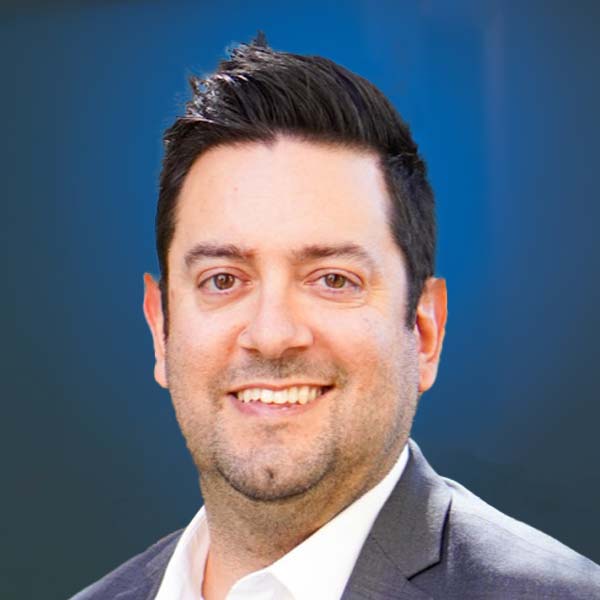
Jess Rodriguez
Senior Associate | California
Education
- J.D., University of California at Los Angeles School of Law, Los Angeles, California
- B.A., University of California at Berkeley, Berkeley, California
- Honors: Phi Beta Kappa
- Honors: With High Distinction
Bar Admissions
- California, 1998
Michael B. Kushner, Managing Partner
Mr. Kushner was born and raised in Long Beach, California. He obtained his undergraduate degree from the University of California at Berkeley, where he was inducted into Phi Beta Kappa in his third year and graduated with High Distinction and honors the following year. Mr. Kushner then attended law school at the University of California at Los Angeles. After moving to Orange County, Mr. Kushner honed his skills at two of Orange County’s most respected law firms before striking out on his own in 2005. From there, he quickly earned a reputation as a formidable and skilled trial and transactional lawyer in the areas of business and real estate law, as well as an engaging and informative lecturer on emerging legal issues.
Although Mr. Kushner had represented homeowners in HOA disputes since the early years of his practice, it was not until 2010 that he identified and deliberately created what would become the first full-scale homeowner-side niche in California HOA law. As HOA-related disputes began arriving in greater volume and with increasing severity, he recognized that the problem extended far beyond isolated misconduct by a handful of boards. Mr. Kushner identified a systemic imbalance of power embedded throughout HOA governance and, at the same time, could not identify a single California law firm that had made it its mission to represent homeowners exclusively in HOA disputes.
Against this backdrop, Mr. Kushner began delivering a series of lectures focused on the Davis-Stirling Act, California’s HOA law. Through those lectures, he reached two critical conclusions. First, homeowners living in HOA-governed communities faced a profound structural disadvantage when dealing with abusive or out-of-control HOAs (i.e., what he frequently calls "bad HOAs" or "HOAs from HELL"). Second, many real estate attorneys who purported to represent homeowners lacked a working command of the Davis-Stirling Act and its enforcement mechanisms.
Mr. Kushner decided to act. He developed proprietary processes, systems, and legal materials designed specifically to enforce the Davis-Stirling Act on the homeowner side. These methods transformed how his firm handled HOA matters, ensured that its attorneys mastered the statute in practice rather than theory, and delivered consistent, high-level representation to homeowners. Through this work, Mr. Kushner pioneered a new homeowner-side model for HOA representation, grew his firm into California’s most respected and well-known homeowner-side HOA law powerhouse, and materially raised the quality of representation available to homeowners statewide. In the process, he hired, trained, and mentored his attorneys, some of whom later went on to lead their own successful homeowner-side HOA law firms in California.
As part of his broader effort to educate and empower homeowners directly, Mr. Kushner has authored hundreds of articles, fact sheets, Guides, and legal analyses focused exclusively on California HOA law from the homeowner’s perspective. His writing emphasizes statutory enforcement, leverage, and real-world outcomes, and homeowners across the state regularly rely on his work for clear, actionable guidance under the Davis-Stirling Act.
Mr. Kushner also created and hosts the hit podcast HOA HELL, a California-focused podcast dedicated to exposing abusive HOA practices and equipping homeowners with practical, enforceable legal strategies. Through detailed episodes, legal analysis, and real-world guidance, homeowners throughout California now look to HOA HELL as a trusted resource for understanding their rights and holding their associations accountable.
Soon after launching the HOA HELL podcast, Mr. Kushner authored his book, HOA HELL | California Homeowners’ Definitive Guide to Beating Bad HOAs. The book quickly became a number one best seller on Amazon and translates nearly three decades of courtroom-tested tactics and homeowner-side strategies into a clear, step-by-step playbook designed specifically for California homeowners confronting HOA abuse, overreach, and mismanagement. HOA HELL is also available online at barnesandnoble.com.
In addition to his unmatched expertise in California HOA law, Mr. Kushner’s practice areas also include business transactions, franchise law, corporate governance, labor and employment, real estate transactions, and entertainment law. In the business and corporate arena, he brings substantial experience structuring and negotiating complex commercial transactions and drafting a wide range of business-related agreements. His corporate transactional practice includes the representation of large, established companies, as well as start-ups and family-owned businesses.
Mr. Kushner has also been repeatedly recognized as a Super Lawyer, an honor awarded to fewer than 5% of attorneys in California, reflecting peer recognition for professional achievement and legal excellence.
Mr. Kushner’s deep expertise in California homeowner-side HOA law, combined with his decades-long commitment to protecting homeowner rights, has made him a leading authority and indispensable advocate for homeowners facing abusive and out-of-control associations throughout California.
Education
- J.D., Pepperdine Law School, Malibu, California
- Honors: Dean’s List
- Philip C. Jessop International Law Moot Court Competition
- B.S., Brigham Young University, Provo, Utah
Bar Admissions
- California, 1981
William D. Chapman, Retired
Mr. Chapman was born and raised in Southern California. Mr. Chapman received his BS in business management/finance from Brigham Young University and his JD from Pepperdine University School of Law. After graduating from law school, Mr. Chapman eventually became a named partner at two of Orange County’s most respected law firms before deciding to form MBK Chapman with his partner, Michael Kushner.
Mr. Chapman has tried cases before judges and juries in state and federal courts throughout the United States at both the trial court and appellate court levels, where he has won multiple $10,000,000+ jury verdicts. Mr. Chapman’s reputation as one of California’s most distinguished trial lawyers led not only to his having been selected to the California Super Lawyers® List every year since 2009, but also to his being designated a “Fellow” of the Litigation Counsel of America, an invitation-only honorary society for trial lawyers composed of less than .5% of American lawyers.
Mr. Chapman’s clients have included Fortune 500 companies, for whom he’s litigated cases involving real estate, business finance, nutraceuticals, computer software, sales, the automotive and boating industries, and insurance bad faith.
Education
- J.D., Florida Coastal School of Law, Jacksonville, Florida
- B.A., University of Florida, Gainesville, Florida
Bar Admissions
- Florida, 2008
- New York, 2012
Sean Mills, Senior Partner (Florida)
Born in Hackensack, New Jersey, Mr. Mills has called Orlando, Florida his home for over three decades. Mr. Mills obtained his undergraduate degree from the University of Florida. After graduating from college, Mr. Mills earned his Juris Doctorate from Florida Coastal School of Law, where he served on Law Review and was a founding member of the Sports Law Society.
After briefly practicing business litigation in Jacksonville, Florida, Mr. Mills returned home to Orlando, and for over 15 years, he focused his practice on real estate law, where he represented a wide range of clients including national and local banks and private real estate investors.
Throughout his legal career, Mr. Mills has amassed extensive experience as a managing attorney for industry leading law firms, and in early 2024, Mr. Mills joined MBK Chapman PC as the senior partner in charge of the firm’s Florida office.
Mr. Mills is admitted to practice in all State, Federal, Bankruptcy, and Appellate Courts throughout the States of Florida and New York.
Education
- J.D., Whittier Law School, Costa Mesa, California
- B.A., University of California at Los Angeles, Los Angeles, California
Bar Admissions
- California, 2016
Sara Etemadi, Partner
Sara Etemadi was born and raised in Southern Orange County, California. She attended the University of California, Los Angeles, where she earned her Bachelor of Arts degree in political science. Ms. Etemadi then attended Whittier Law School, where she received the Dean’s Merit Scholarship and contributed her talents to both the Iranian Student Bar Association and the Public Interest Law Foundation, reflecting an early commitment to advocacy, leadership, and public-facing legal work.
After earning her law degree, Ms. Etemadi began her legal career at a boutique plaintiffs’ litigation firm, where she successfully prosecuted cases involving premises liability, common carrier liability, and real estate litigation. That experience provided her with a strong foundation in fact-driven litigation, client advocacy, and the practical realities of prosecuting complex claims.
Ms. Etemadi also honed her legal skills performing legal work for various non-profit organizations and governmental agencies, gaining valuable perspective on regulatory compliance, public accountability, and the intersection between legal process and institutional responsibility.
In 2017, Ms. Etemadi began working for Michael Kushner at the law firm he founded and managed. In that role, she gained extensive experience across corporate compliance and real estate law, while developing a primary focus on representing homeowners in HOA disputes. Working closely with Mr. Kushner, she became deeply immersed in homeowner-side HOA law, including enforcement strategy, statutory compliance under the Davis-Stirling Act, and the pre-litigation processes critical to holding associations accountable.
When Mr. Kushner formed MBK Chapman, Ms. Etemadi joined him at the new firm as a senior associate. In that capacity, she assumed a leadership role within the firm, heading MBK Chapman’s dedicated pre-litigation HOA disputes team. In this role, she oversees Internal Dispute Resolution and Alternative Dispute Resolution strategies, document demands, statutory enforcement efforts, and early-stage dispute frameworks designed to protect homeowners while positioning matters for successful resolution or litigation when necessary.
In addition to her HOA practice, Ms. Etemadi also leads one of the firm’s transactional law teams, with a focus on corporate compliance and critical business protection documents. Her ability to bridge litigation strategy with transactional precision allows her to deliver comprehensive, forward-looking solutions for both individual and business clients.
In recognition of her leadership, her depth of experience in homeowner-side HOA law, and her central role in the firm’s growth and operations, Ms. Etemadi was promoted to Partner in January 2026. As a partner at MBK Chapman, she continues to play a key role in shaping the firm’s HOA enforcement strategy, mentoring attorneys, and advancing the firm’s mission of disciplined, strategic advocacy on behalf of California homeowners.
Education
- J.D., Southwestern University School of Law, Los Angeles, California
- B.A., Calvin College, Grand Rapids, Michigan
Bar Admissions
- California, 2003
Jason Boss, Senior Partner
Jason Boss was born and raised in San Diego, California. He obtained his undergraduate degree from Calvin College in Grand Rapids, Michigan. After graduating from college, Mr. Boss attended Southwestern University School of Law in Los Angeles, where he was selected as a member of the Honors Trial Advocacy Team, reflecting an early and sustained commitment to courtroom advocacy.
After earning his law degree in 2003, Mr. Boss began his legal career as a prosecutor in the Los Angeles County District Attorney’s Office. In that role, he gained extensive courtroom experience, developed sharp trial instincts, and learned to evaluate cases quickly and decisively. He later transitioned into private practice, working at a civil litigation firm representing business, real estate, and employer and employee clients in complex disputes.
Mr. Boss further honed his litigation and trial skills as a senior litigator at a national law firm representing nationwide business ventures. That experience strengthened his ability to manage high-stakes cases, navigate sophisticated legal issues, and deliver results in demanding litigation environments.
In early 2021, Mr. Boss joined MBK Chapman’s litigation team as a senior associate. From the outset, he distinguished himself through his exceptional work ethic, command of litigation strategy, attentiveness to client needs, and strong courtroom presence. On January 1, 2023, the senior partners of the firm promoted Mr. Boss to Partner in recognition of his performance and leadership.
Since joining MBK Chapman, Mr. Boss has played a central role in the firm’s homeowner-side HOA litigation practice, representing homeowners in disputes governed by California’s Davis-Stirling Act. His approach combines aggressive advocacy with disciplined strategy, allowing him to apply pressure effectively while tailoring each case to the client’s objectives and circumstances. Clients and colleagues alike recognize him as a fierce and highly effective advocate, both in negotiations and in the courtroom.
In January 2026, the firm promoted Mr. Boss to Senior Partner. In that role, he manages MBK Chapman’s entire litigation team, overseeing case strategy, attorney development, and litigation execution across the firm. In addition to his litigation leadership, Mr. Boss plays an active role in the firm’s administrative and operational functions, contributing to internal systems, workflow management, and the continued growth and efficiency of the firm’s practice.
Mr. Boss has consistently earned selection as a Super Lawyer, an honor limited to fewer than 5% of attorneys in California. He is admitted to practice in all State, Federal, Bankruptcy, and Appellate Courts throughout California, as well as the United States Court of Appeals for the Ninth Circuit.
Education
- L.L.M., University of Southern California Gould School of Law, Los Angeles, California
- L.L.B., Universidade Federal de Juiz de Fora, Juiz de Fora, Brazil
Bar Admissions
- California, 2019
- Brazil, 2017
Jessica Grazul, Partner
Jessica Grazul was born and raised in Brazil, where she earned her bachelor’s degree in law before relocating to the United States to continue her legal education. She attended the USC Gould School of Law, where she received the Dean’s Merit Scholarship and earned her Master of Laws degree. While at USC, Ms. Grazul also obtained certification in Alternative Dispute Resolution, reflecting an early focus on resolving complex disputes through strategic, outcome-driven advocacy.
During her studies at USC Gould, Ms. Grazul clerked for the Major Crimes Division of the Los Angeles County District Attorney’s Office. There, she gained firsthand experience working on legally and factually intensive matters, developing strong analytical skills and a disciplined approach to evidence, procedure, and case strategy that continues to inform her litigation practice.
After completing her graduate legal education, Ms. Grazul honed her litigation skills at a civil litigation firm representing clients in personal injury cases, contract disputes, and a broad range of tort actions. In that role, she handled all phases of litigation, including motion practice, discovery, and case evaluation, and developed a strong foundation in adversarial advocacy and dispute resolution.
Ms. Grazul joined MBK Chapman in 2022 as an associate in the firm’s litigation department, where she quickly became a key member of the firm’s homeowner-side HOA practice. Since joining the firm, she has focused extensively on representing homeowners in disputes governed by California’s Davis-Stirling Act, including matters involving enforcement abuse, governance failures, statutory noncompliance, and HOA overreach. Her work in this area reflects a deep understanding of HOA law, procedural strategy, and the practical realities homeowners face when challenging their associations.
Through her HOA practice, Ms. Grazul has developed substantial experience navigating Internal Dispute Resolution and Alternative Dispute Resolution processes, managing discovery and motion practice in HOA litigation, and advancing strategies designed to hold associations accountable while protecting homeowner rights. She is known for her attention to detail, strong command of the record, and ability to translate complex statutory requirements into effective litigation positions.
In recognition of her contributions to the firm, her leadership within the litigation department, and her growing role in the firm’s HOA practice, Ms. Grazul was promoted to Partner in January 2026. As a partner at MBK Chapman, she plays an integral role in guiding homeowner-side HOA litigation, mentoring junior attorneys, and advancing the firm’s mission of delivering disciplined, strategic, and results-driven representation to California homeowners.
Education
- J.D., Suffolk University Law School, Boston, Massachusetts
- B.A., University of California at Irvine, Irvine, California
Bar Admissions
- California, 2019
Sam Khil, Senior Associate
Mr. Khil was raised in the Bay Area and has lived in Orange County since 2001. He received his undergraduate education at the University of California, Irvine, where he graduated magna cum laude with his Bachelor of Arts degrees in International Studies and Sociology. He received his Juris Doctor from Suffolk University Law School with an emphasis in business law and financial services.
Prior to joining MBK Chapman as a senior associate, Mr. Khil worked as general and litigation counsel at multiple Southern California law firms where he gained significant experience handling a wide range of real estate matters including lender rights, title actions, foreclosures, receiverships, eminent domain, forfeiture actions, municipality disputes, probate, HOA law, and general real estate issues.
He also represented HOAs throughout California, serving as general and litigation counsel. He has significant experience advising boards regarding corporate compliance, enforcing declarations, amending governing documents, board governance, the limits of their actions, vendor contracts, easements, member disputes, DFEH issues, general compliance with the Davis-Stirling Act, and a wide range of other matters affecting associations and their members. It is this background that provides Mr. Khil a unique perspective regarding HOAs and their members’ rights.
Education
- J.D., University of California, Davis School of Law, Davis, California
- B.A., Princeton University, Princeton, New Jersey
Bar Admissions
- California, 2018
Torri Patel, Associate
Ms. Patel was raised in Southern California and has lived in Orange County since 2023. She earned her undergraduate degree in Ecology and Evolutionary Biology from Princeton University, where she was also a member of the NCAA Division I Varsity Women’s Volleyball Team. She obtained her Juris Doctor from the University of California, Davis School of Law, where she completed a certificate in Intellectual Property Law and was awarded the Witkin Award for Academic Excellence in Chinese Intellectual Property Law.
Prior to joining MBK Chapman as an associate attorney, Ms. Patel spent eight years in the fashion and business sectors, where she served as an e-commerce and brand manager and later founded and led her own fashion line, BELLE + DAY. In this role, she spearheaded brand development and operations, serving as the legal liaison for both her company and other high-end contemporary and designer fashion brands and boutiques. Her work included overseeing e-commerce strategy, social media marketing, brand management, intellectual property compliance, and contract negotiation.
Ms. Patel further honed her legal skills through clerkships at firms specializing in intellectual property and maritime law and later worked as an associate attorney representing California’s top physicians in high-stakes medical malpractice litigation.
Outside of her legal practice, Ms. Patel is also a represented author with a forthcoming published book series and remains active in athletics as a competitive beach volleyball player.
Education
- L.L.M., Northwestern University Pritzker School of Law, Chicago, Illinois
- L.L.B., Shanghai International Studies University, Shanghai, China
Bar Admissions
- New York, 2021
- California, 2023
Xu Shirly Sun, Associate
Born and raised in Shanghai, China’s financial hub, Ms. Sun earned her bachelor’s degree in law from Shanghai International Studies University. After graduating from university, Ms. Sun attended Northwestern University Pritzker School of Law, where she obtained her masters degree in law.
Her professional journey post-graduation led her to work in both the Orange County and Chicago offices of a national general practice law firm, where she adeptly managed a wide array of legal matters and honed a diverse set of legal skills. Her clientele varied extensively, ranging from individual clients seeking assistance with their everyday legal concerns to international trading companies grappling with cross-border litigation and contractual disputes.
Ms. Sun joined MBK Chapman in January 2024 as an associate, focusing on the representation of homeowners in HOA disputes. She is dedicated to providing the firm’s clients with exceptional legal services and serving their best interests with an empathetic and efficient approach.
Ms. Sun is fluent in Mandarin.
Education
- J.D., Whittier Law School, Costa Mesa, California
- B.A., Pepperdine University, Malibu California
Bar Admissions
- California, 2005
- District of Columbia, 2006
Denetta E.J. Scott, Senior Associate
Born in South Carolina and raised in Southern California, Ms. Scott obtained her undergraduate degree from Pepperdine University. After graduating from college, Ms. Scott attended Whittier Law School, where she was a member of the Trial Advocacy Team and the Black Law Association.
After obtaining her law degree, Ms. Scott worked at civil litigation firms, where she successfully represented clients in a variety of cases involving automobile accidents, business, premises liability, real estate, and employment.
In early 2024, Ms. Scott joined the team at MBK Chapman as a senior associate in the firm’s litigation department. She is admitted to practice in all state, federal, and bankruptcy courts throughout California and the District of Columbia.
Ms. Scott serves on the board of the Thurgood Marshall Association and is a member of the Orange County Women Lawyer’s Association and the Orange County Bar Association.
Education
- J.D., Washington and Lee University School of Law, Lexington, Virginia
- B.A., University of Central Florida, Orlando, Florida
Bar Admissions
- Florida, 2018
Craig Koelling, Associate (Florida)
Born in Arnold, Missouri, Mr. Koelling has called Florida his home for over two decades. Mr. Koelling earned his undergraduate degree from the University of Central Florida in 2014. After graduating, Mr. Koelling attended Washington and Lee University School of Law.
Mr. Koelling started his law career as an assistant public defender, during which time he gained valuable experience in the courtroom. In 2021, Mr. Koelling left the public defender’s office and went into civil practice, where he focused on property insurance disputes and litigated numerous cases on behalf of insurance carriers throughout the State of Florida.
Mr. Koelling joined MBK Chapman in 2024 as an associate, where he represents the firm’s clients in all manner of business and real estate disputes, with a focus on representing homeowners in disputes with their HOAs.
Education
- J.D., Columbia University School of Law, New York
- B.A., University of California at Los Angeles, California
Bar Admissions
- California, 2005
Jess Rodriguez, Senior Associate
Born and raised in Orange County, Mr. Rodriguez attended UCLA, where he earned his Bachelor of Arts in Political Science. He received his Juris Doctor from Columbia University School of Law and contributed to the Science and Technology Law Review during his time there.
After earning his law degree, Mr. Rodriguez began his legal career as a prosecutor with the Orange County District Attorney’s Office, where he spent the next two decades. He conducted numerous jury trials and gained extensive litigation experience across a wide range of cases. His success in handling serious and high-profile trials led to a promotion to management, where he supervised and evaluated other prosecutors. He also frequently presented at the office’s New Deputy Training program, focusing on ethics and discovery.
In 2025, Mr. Rodriguez joined MBK Chapman, bringing his significant courtroom knowledge to the firm’s litigation department.
Outside his legal practice, Mr. Rodriguez serves as an adjunct professor at the University of California, Irvine, where he teaches students in the Master of Legal and Forensic Psychology program about the legal system.
TELL US ABOUT YOUR DISPUTE
MBK Chapman PC can help
OFFICE
120 VANTIS DRIVE, SUITE 500
ALISO VIEJO, CA 92656